Split, Croatia: Diocletian's Palace and the City That Grew Inside It
April 1, 2026 · TripOnly

Split, Croatia: Diocletian's Palace and the City That Grew Inside It
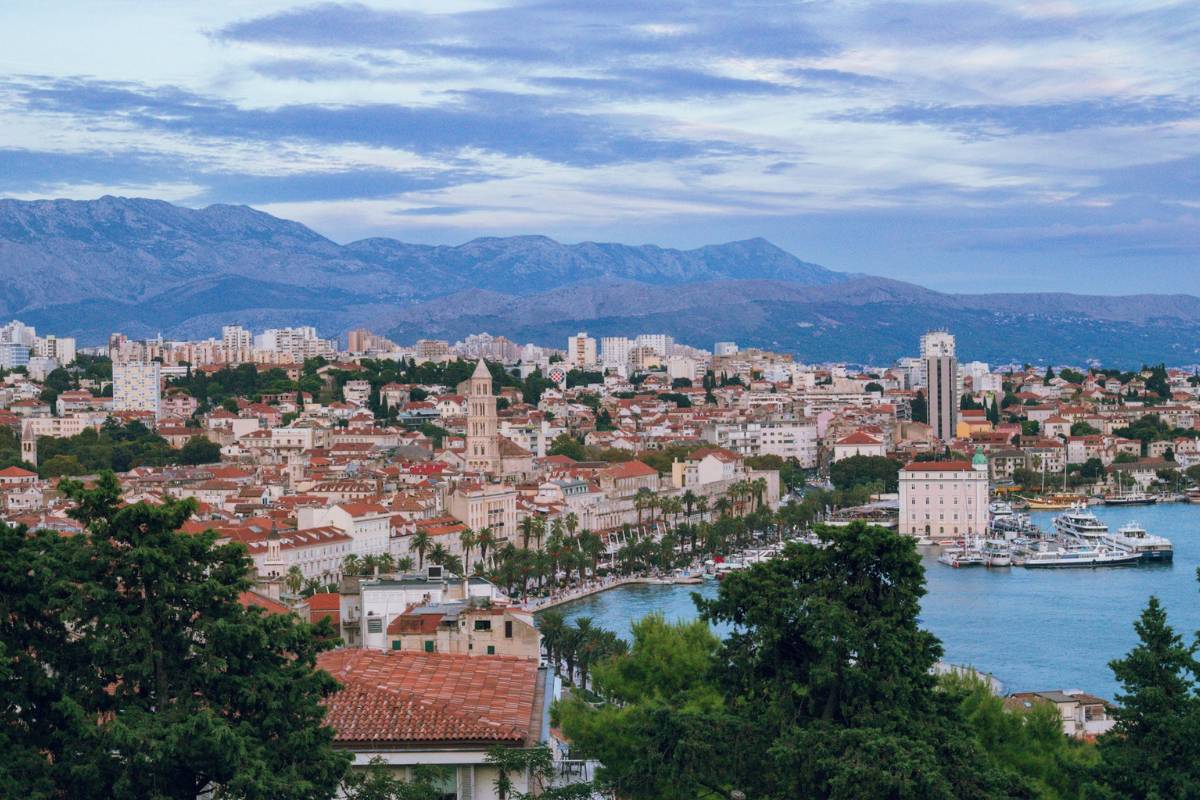
There's a moment, somewhere in Split's Old Town, when you round a corner expecting another tourist shop and find yourself instead in a Roman vestibule, or pressing through a medieval alley that opens suddenly into a peristyle courtyard where Emperor Diocletian once received his guests. The city doesn't present its history — it lives inside it, unselfconsciously, all at once.
Split is Croatia's second largest city and its main ferry hub for the Dalmatian islands. Most travellers treat it as a transit point. That's a mistake.
Getting There
Split Airport (SPU) is about 25 km northwest of the city, with good connections across Europe. The airport bus runs to the city centre in around 30 minutes; taxis take slightly less.
From Zagreb, both buses (5 hours) and trains (the night train is comfortable and scenic) connect regularly. From Dubrovnik, buses run the coastal road in about 4.5 hours, passing through the brief Bosnian corridor at Neum — keep your passport handy.
The ferry terminal is a five-minute walk from the Old Town and connects to Hvar, Brač, Vis, Korčula, and the overnight service to Ancona in Italy.
Where to Stay
Inside the Palace walls is the obvious choice for a first visit — waking up inside a 1,700-year-old Roman structure never gets old. Guesthouses here are small, often family-run, and characterful. Noise from the nightlife can be significant on weekends.
Varoš, the old neighbourhood just west of the Palace walls, is quieter, more residential, and gives a better sense of how Split actually lives. Prices are slightly lower and the morning walks to the market are genuinely lovely.
Bačvice area, southeast of the Old Town, is convenient for the beach and a bit more modern. Good for families.
Find the Perfect Stay in Split
Planning your trip to Split? From charming Old Town apartments to luxury seaside hotels, there’s something for every budget and travel style.
👉 Browse the best hotels in Split
Book early during peak summer months to secure the best locations and prices.
What to Do
Diocletian's Palace
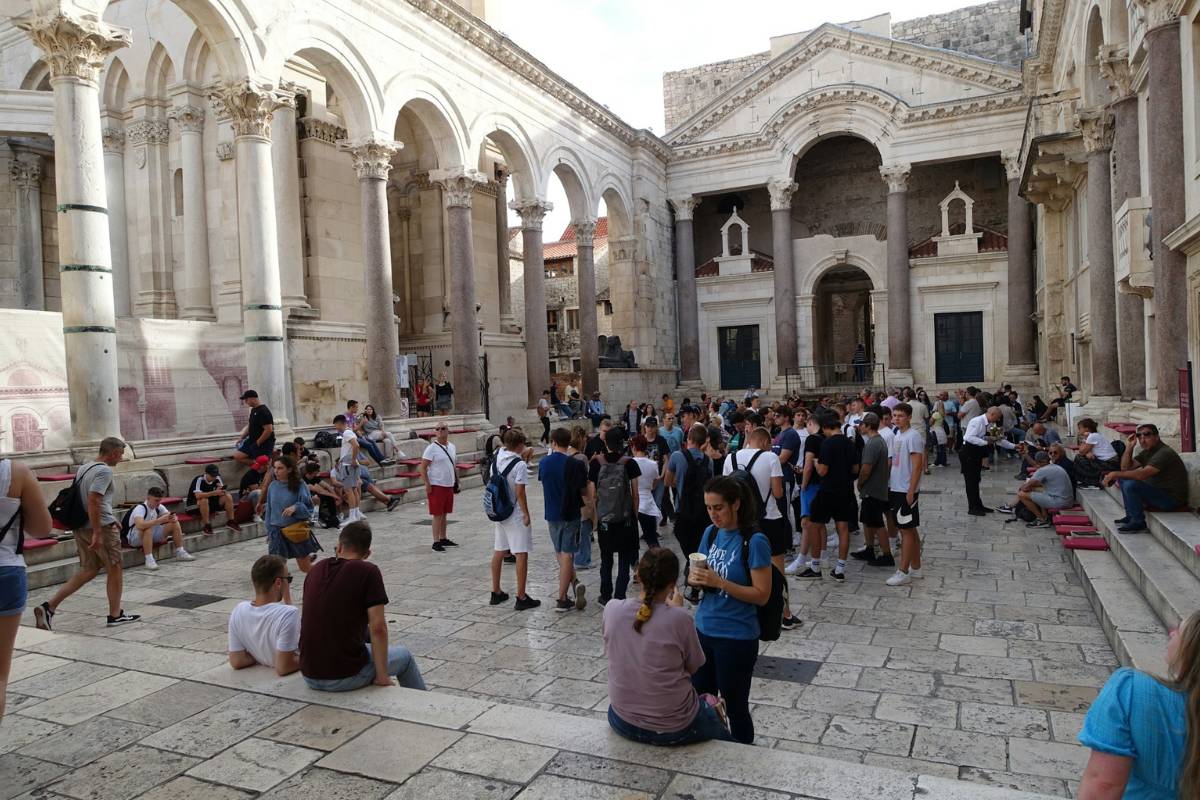 The Palace is not a museum — it's a living neighbourhood. Around 3,000 people live within the walls today, in apartments stacked inside Roman towers and medieval additions. The UNESCO-listed complex covers about 30,000 square metres and contains churches, bars, restaurants, and homes alongside the ancient structures.
The Peristyle, the central ceremonial courtyard, is the heart of it all. Sit on the steps of the Cathedral of Saint Domnius — itself converted from Diocletian's mausoleum — and watch locals argue over coffee while tourists photograph the columns behind them. It's a good place to spend time.
The basement halls (Podrum) beneath the Peristyle are the best-preserved part of the original structure and give a clear sense of the palace's original scale. Entry is a few euros and worth every one.
Marjan Hill
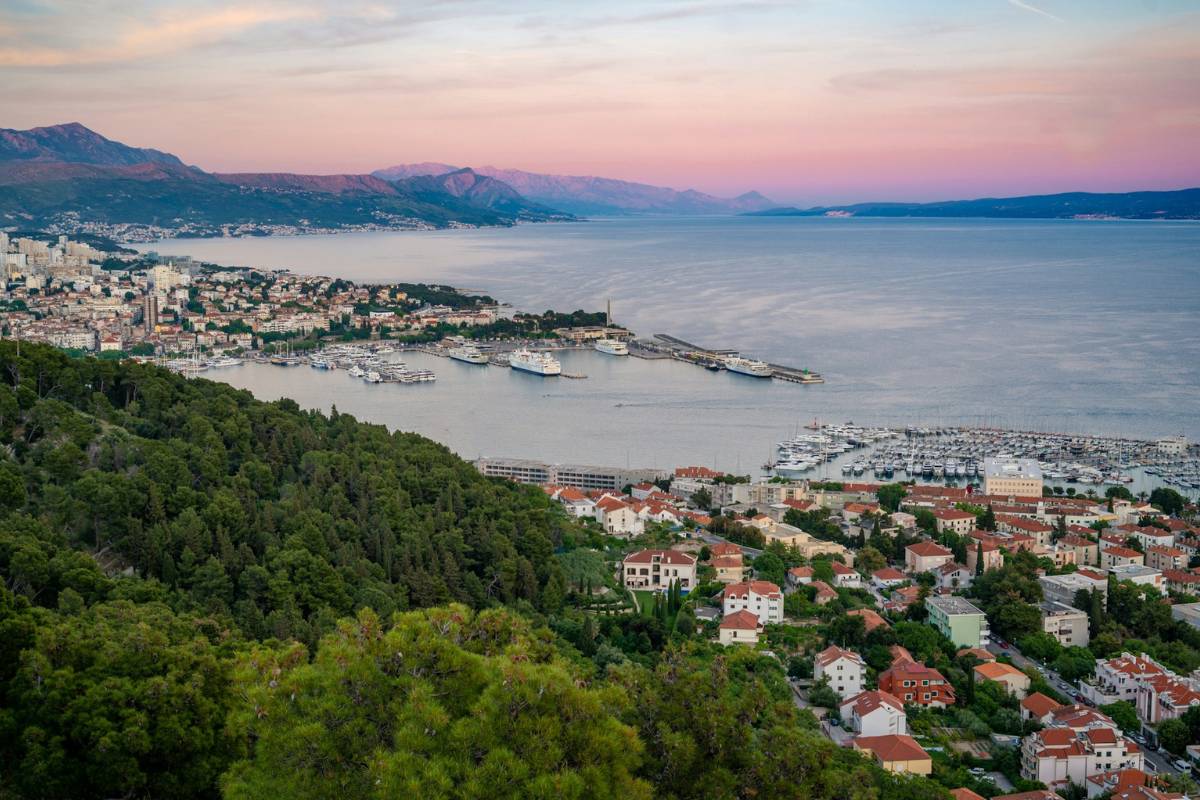 A forested peninsula just west of the Old Town, Marjan is where Split comes to breathe. Trails wind through pine and holm oak to lookout points above the city and sea. The climb to the top takes about 40 minutes at a relaxed pace; the view from Telegrin summit, at 178 metres, takes in the islands of Brač, Šolta, and Hvar on clear days.
Go in the late afternoon, when the light is soft and half of Split seems to be up there walking dogs.
Bačvice Beach
A shallow, sandy bay a ten-minute walk southeast of the ferry terminal — unusual for the Dalmatian coast, which is mostly rock and pebble. Bačvice is famous as the home of picigin, a distinctly Splitski game played in ankle-deep water involving acrobatic dives to prevent a small ball from touching the surface. Locals play it year-round. Watch from the shore, then get in the water.
The Green Market (Pazar)
Every morning, just outside the eastern palace gate, Split's open market fills with local produce, dried figs, lavender, olive oil, cheese, and everything else the region grows. It's the best hour in the city — arrive before 9 AM, buy something, eat it walking.
A Day Trip to Solin
Four kilometres north of Split, the ruins of Salona — once the Roman capital of Dalmatia and one of the empire's largest Adriatic cities — lie scattered across open fields beside the Jadro river. At its peak, Salona housed around 60,000 people; today the site is largely unexcavated, and you walk among amphitheatre walls, early Christian basilicas, and city gates mostly alone. Entry is minimal, crowds are minimal, and the contrast with Split's bustle is total. Buses from Split's main terminal run regularly; the whole trip takes half a day.
Food & Drink
Split eats well and, away from the immediate Palace perimeter, at reasonable prices.
Konoba Fetivi in Varoš is one of the city's most loved neighbourhood restaurants — Dalmatian home cooking, no-fuss atmosphere, honest prices. Book ahead or arrive early.
Paradoks is a wine bar near the Vestibule that takes Dalmatian and Croatian wine seriously. The list changes seasonally and the staff know it inside out. A good place to learn the difference between Plavac Mali, Pošip, and Grk.
The fish market (Ribarnica), just inside the eastern gate, operates every morning. Arrive early for the best selection; the scene of locals negotiating over bream and squid is worth watching even if you're not cooking.
Prstaci — date mussels — are a Split delicacy, though now protected and harder to find legally. Ask a local about it anyway; you'll learn something about the relationship between the city and its sea.
Practical Notes
- Getting around: The Old Town is entirely walkable. The rest of the city is served by a reliable bus network.
- Ferry connections: The Jadrolinija and Krilo catamarans to Hvar Town take about an hour. Book ahead in July and August.
- Crowds: Split is busy but more functional than Dubrovnik under tourist pressure — it's a real city, and the locals outnumber the visitors on most streets.
- Currency: Euros since 2023.
- Best time: May–June and September are ideal. July and August are hot, busy, and expensive but have the best island connections.
A Few Honest Words
Split rewards the visitor who slows down. The Palace is endlessly interesting if you walk it in the early morning before the tour groups arrive, duck into the quieter alleys, and look up occasionally at what's actually above you. A Roman arch here, a Venetian loggia there, a Baroque church squeezed into a space that was once a Roman hall.
It is also a city with good coffee, loud football opinions, and a population that has been living at the centre of Mediterranean history for fifteen centuries without making a particular fuss about it.
Stay at least two nights. Three is better.


