Vis, Croatia: The Island That Stayed Secret
April 3, 2026 · TripOnly

Vis, Croatia: The Island That Stayed Secret
There's a reason Vis feels different from the other Dalmatian islands. While Hvar and Brač were developing their tourism infrastructure through the 1970s and 80s, Vis was a closed Yugoslav military base — foreign visitors were simply not permitted. The island didn't open until 1989, a year before Yugoslavia began to dissolve.
The result, three decades later, is an island that moves at its own pace. The wine is extraordinary. The fish is fresh in a way that makes you reconsider fish. The two main towns feel like they belong to the people who actually live there. And the beaches — particularly the Blue Cave on nearby Biševo and the Green Cave on Ravnik — are among the most remarkable natural formations in the Adriatic.
Getting There
Jadrolinija runs car ferries from Split to Vis Town, taking about 2.5 hours. There's also a faster catamaran in season (around 1.5 hours, foot passengers only). Frequency drops significantly outside summer — check schedules if visiting in shoulder season.
Vis is the furthest inhabited island from the Croatian mainland. That distance is part of what preserved it.
Where to Stay
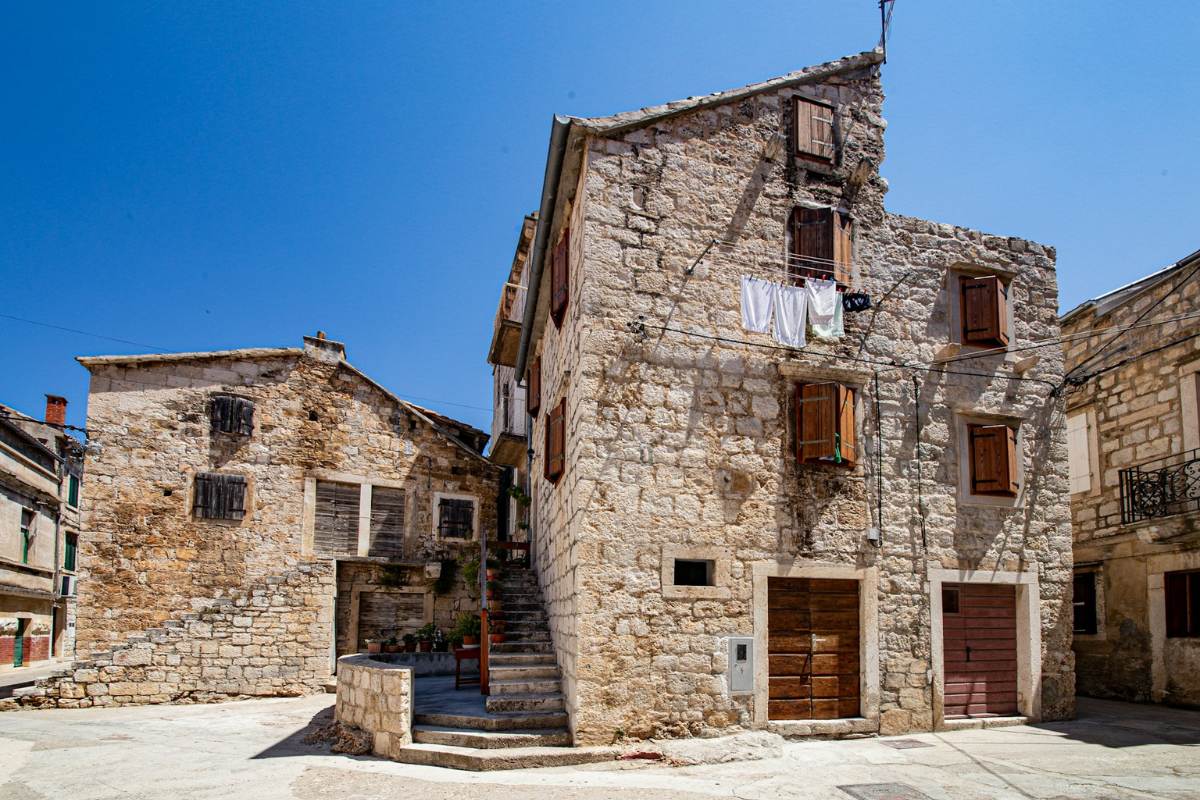
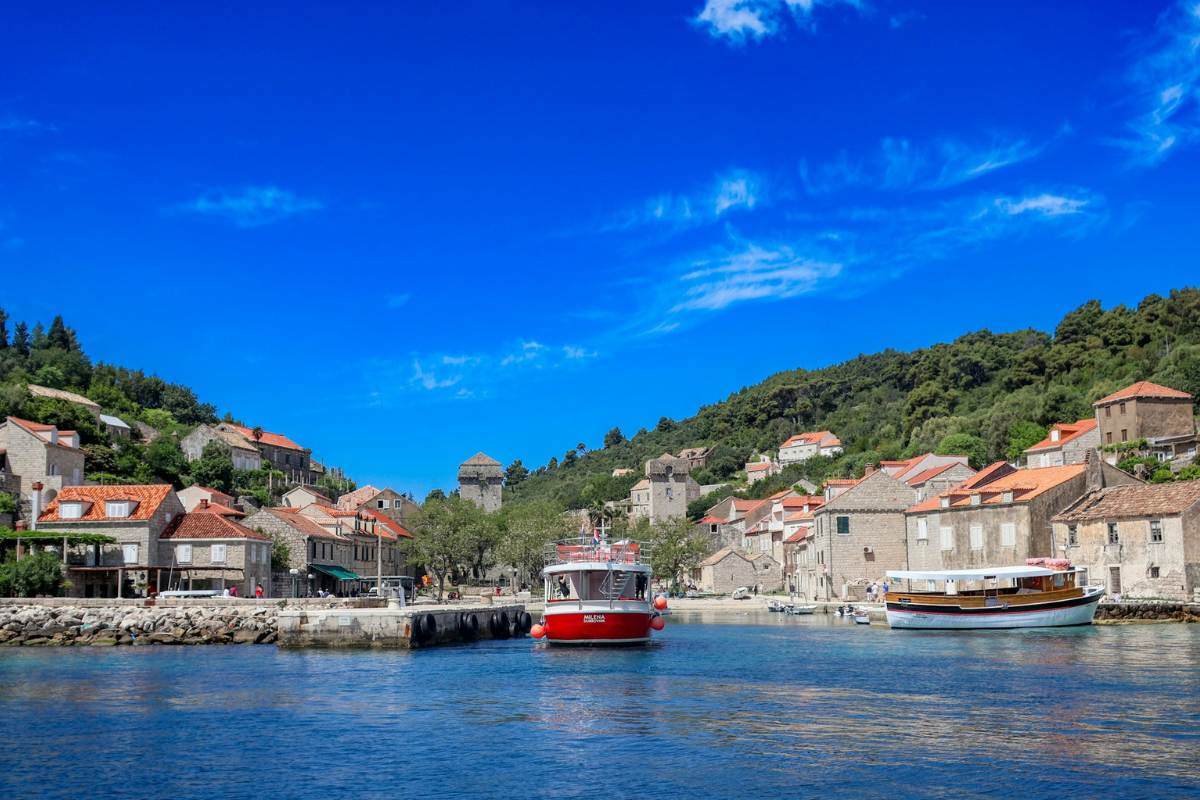
Vis Town (simply called "Vis" by locals) is on the northeast coast — a long, quiet harbour with a Venetian tower, Roman ruins embedded in the walls of ordinary houses, and a pace that feels genuinely unhurried. Most accommodation is in small family apartments.
Komiža, on the western coast, is the island's fishing village — smaller, rougher around the edges, and beloved by those who find it. The base for boat trips to the Blue Cave on Biševo. The waterfront at night, lit by the restaurant terraces and the old tower, is one of the quieter beautiful things in Dalmatia.
What to Do
The Blue Cave (Modra Špilja), Biševo
 A sea cave on the small island of Biševo, accessible only by small boat through a low entrance — passengers lie flat as the boat slides through. Inside, sunlight refracts through an underwater opening and fills the cave with an electric blue glow. The effect, between roughly 10 AM and noon when the light angle is right, is genuinely otherworldly.
Organised trips run from Komiža daily in season. Arrive early to book — capacity is limited and demand is high.
The Green Cave (Zelena Špilja), Ravnik
Less visited than the Blue Cave and, for many people, more impressive. A sea cave with an opening in the roof that sends a shaft of green light down into the water. Accessible by boat from Komiža; often combined with the Blue Cave trip. Swimming inside is permitted and the water colour is extraordinary.
Mount Hum
The island's highest point at 587 metres, reachable by a rough road and a short walk. The view takes in the entire island and the open sea in every direction — on clear days, the Italian coast is visible. The military bunkers near the summit are a reminder of what the island was doing while tourists were on Hvar.
Vis Town's Roman Heritage
Vis was the Greek colony of Issa, founded in the 4th century BC — one of the oldest urban settlements in Croatia. Roman-era remains are embedded throughout the modern town: a theatre, baths, necropolises. The Archaeological Museum in the Austro-Hungarian fortress above the harbour is small but serious.
Look at the walls of ordinary buildings as you walk. You'll start noticing carved stone, old inscriptions, column fragments built into later structures as if they were just useful pieces of rock.
The Wines of Vis
The island's indigenous grape, Vugava, produces a white wine unlike anything else in Dalmatia — pale, mineral, faintly oxidative, with a salinity that makes sense once you've seen the island's exposed limestone vineyards. The Rokis and Lipanović wineries both welcome visitors and both make bottles worth carrying home.
Plavac Mali also grows here, as it does throughout Dalmatia, but the Vis versions from the steep south-facing slopes tend toward a particular concentration. Ask a local which producer they'd drink.
Food & Drink
Konoba Jastožera in Komiža — a working lobster farm built into a cave — is one of those restaurants that sounds like a gimmick and turns out to be one of the best meals you'll eat in Croatia. Lobster from the tanks below the dining floor, straight into the pot. Book ahead; it fills weeks in advance in summer.
Pojoda in Vis Town is the island's most celebrated fine dining option — a creative menu built on the day's catch, a serious wine list heavy on Vis producers, and a terrace garden. Worth planning an evening around.
For simpler eating, the morning fish market on Vis Town's harbour sets the standard for everything that follows.
Practical Notes
- Best time: June and September. July–August brings crowds relative to capacity (the island is small), but nothing like Hvar. Winter is very quiet — many restaurants and accommodations close entirely.
- Getting around: Renting a scooter or small car is the right move. The road across the island between Vis Town and Komiža is beautiful; the side roads into the interior are worth getting lost on.
- Bring cash: ATMs exist but are limited. Some konobas and small shops operate cash only.
- Military history: The island is dotted with Yugoslav-era tunnels, bunkers, and installations. Some are accessible, some aren't. A local guide makes sense if this interests you seriously.
A Few Honest Words
Vis asks something of its visitors that the more developed Dalmatian islands don't: a willingness to slow down on the island's terms rather than your own. The boats to the caves run when the weather allows. The konobas open when the owner decides. The ferry schedule is what it is.
In exchange, it offers something increasingly rare on this coastline — the feeling that you've found something rather than been delivered to it.
Come with time, a flexible itinerary, and an appetite for fish and Vugava. Leave the itinerary anxiety on the Split ferry.


