Zadar, Croatia: Sea Organs, Roman Ruins, and the Best Sunset on the Adriatic
April 3, 2026 · TripOnly

Zadar, Croatia: Sea Organs, Roman Ruins, and the Best Sunset on the Adriatic
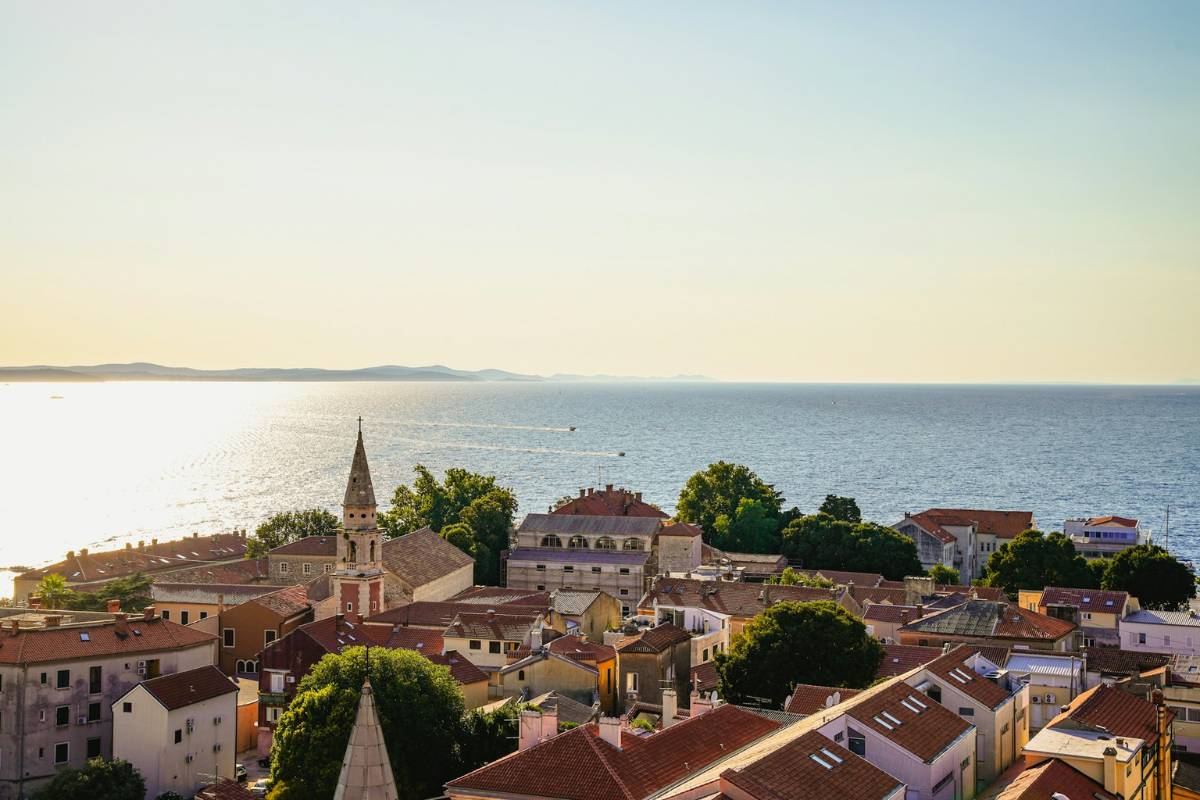
Alfred Hitchcock visited Zadar in 1964 and declared it home to the most beautiful sunset in the world. The quote is everywhere in the city now, on cafe menus and tourist boards, which would be insufferable if it weren't — on the right evening, with the light dropping behind the islands and the Velebit mountains turning purple on the mainland — entirely accurate.
Zadar is northern Dalmatia's main city, older than Split, less visited than Dubrovnik, and in many ways more interesting than either. It was heavily bombed in World War II and again during the Croatian War of Independence in the early 1990s; the scars and the repairs are both visible, and the result is a city that feels alive and inhabited rather than preserved for display.
Getting There
Zadar Airport (ZAD) has good European connections, particularly with budget carriers. It's about 8 km from the city centre; taxis and airport buses run regularly.
From Split, buses take around 3 hours on the coastal road — a scenic journey with regular stops. From Zagreb, buses take about 3.5 hours; there's also a train connection, slower but comfortable.
The ferry terminal connects to the islands of Ugljan, Pašman, Dugi Otok, and the Kornati archipelago.
Where to Stay
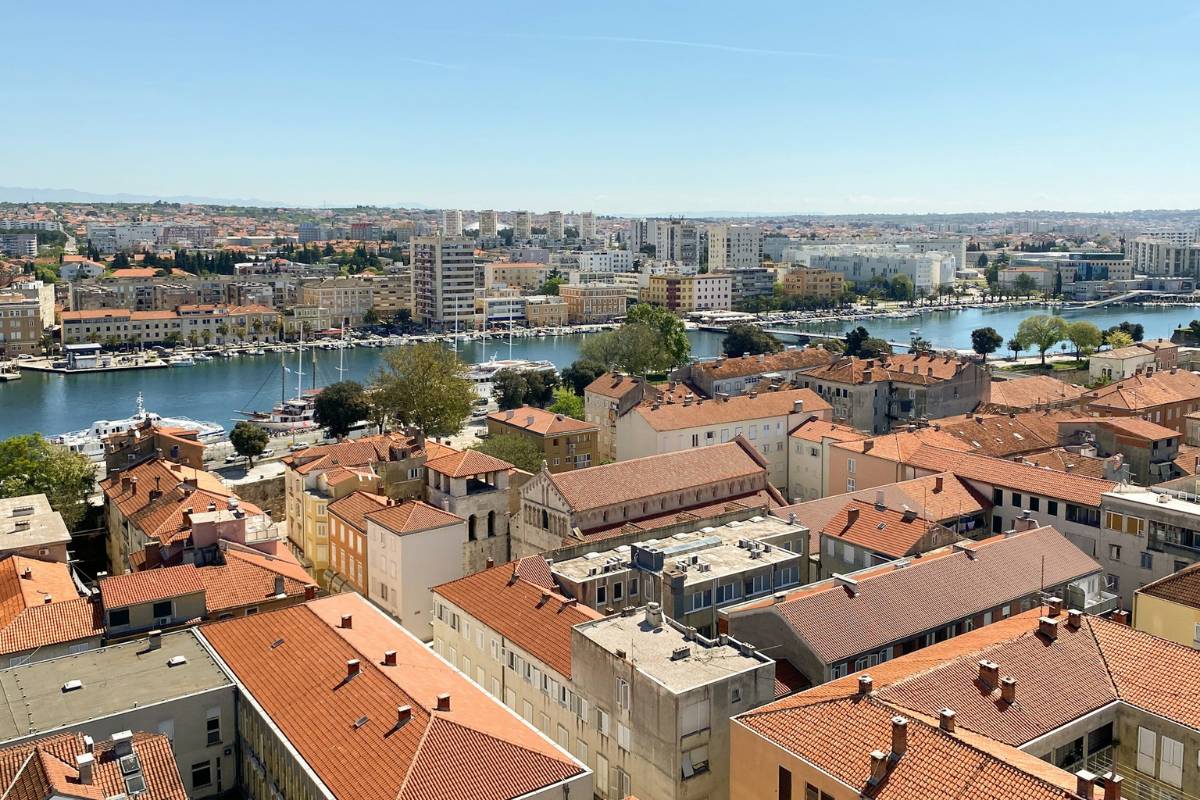 The Old Town peninsula is the obvious base — entirely pedestrianised, compact, and walkable to everything. Hotels here range from budget guesthouses to boutique properties in historic buildings.
Borik, a resort area 3 km northwest of the old town, is quieter and better for families with children — organised beaches, pine forest, easy bus connection to the city.
For the atmosphere of the old town without the old town prices, the neighbourhoods of Brodarica and Arbanasi on the landward side of the peninsula offer good apartment rentals within easy walking distance.
What to Do
The Sea Organ (Morske Orgulje)
In 2005, architect Nikola Bašić cut 35 pipes into the stone steps of the city's western waterfront. As waves push air through the pipes, they produce a continuous, gently shifting chord — part music, part weather report, different every time depending on the sea's mood.
It sounds gimmicky. It isn't. Sitting on the steps in the late afternoon, with the sound rising and falling around you and the islands visible in the distance, produces a specific calm that's hard to explain and easy to stay inside for longer than you planned.
Greeting to the Sun (Pozdrav Suncu)
Immediately adjacent to the Sea Organ, also by Bašić: a 22-metre circle of 300 multi-layered glass plates set into the pavement, collecting solar energy during the day and producing a light show after sunset. It sounds like a tourist trap. In the right company, on the right evening, it's quietly wonderful. The interaction between it and the Sea Organ — light and sound, both driven by natural forces — is what elevates both.
The Roman Forum
Zadar's forum is one of the largest Roman forums on the eastern Adriatic coast, dating to the 1st century BC. Much of it is still underfoot — the paving stones you walk across in the central square are Roman. The Church of St. Donatus, a massive 9th-century pre-Romanesque rotunda, was built directly on the forum using Roman column drums and capitals. It now serves primarily as a concert venue; the acoustics inside the circular stone interior are extraordinary.
The Cathedral of St. Anastasia
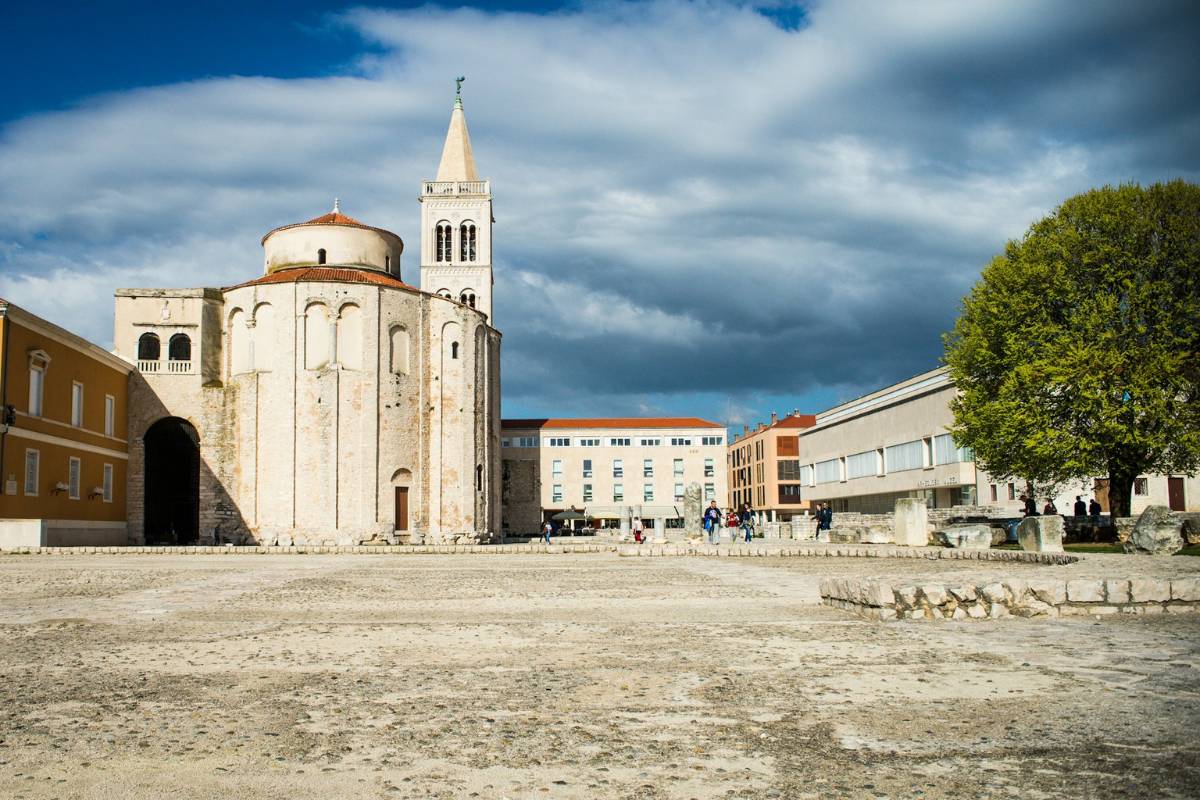 Zadar's Romanesque cathedral, completed in the 13th century, is one of the finest in Dalmatia. The west facade is particularly beautiful — blind arcading, carved reliefs, a rose window. Climb the bell tower for views across the peninsula and the archipelago.
Museum of Ancient Glass
An unexpected highlight — a serious collection of Roman-era glass objects found in and around Zadar, displayed in a beautifully renovated 19th-century palace. The craftsmanship of 2,000-year-old glassware, the delicacy of the pieces, and the quality of the presentation make this one of the better small museums in Croatia.
The Kornati Islands
A national park of 89 islands and reefs about 30 km offshore, the Kornati archipelago is one of the most dramatic seascapes in the Mediterranean — bare limestone islands rising from deep blue water, with almost no permanent habitation and no fresh water. Day trips by boat from Zadar run in season; some include swimming stops and lunch at a konoba in one of the tiny seasonal fishing settlements. A full day, not a half.
Food & Drink
Pet Bunara ("Five Wells") is one of Zadar's best restaurants, on the square of the same name — creative Dalmatian cooking, a good wine list, and a terrace that's pleasant in all but midsummer heat. Book ahead.
Konoba Stomorica is the local version of the same impulse — traditional, no-fuss, reliable, frequented by people who live nearby. Grilled fish, peka dishes, honest Dalmatian wine. The kind of place that doesn't need to advertise.
Zadar is the home of Maraschino liqueur — a clear, dry cherry liqueur made from the Marasca cherry grown in the surrounding region since at least the 16th century. The Luxardo family brought the recipe to Italy after World War II (where it became famous in cocktails), but the original production was here. Try it in the city where it was invented; the local Maraska brand is the one to look for.
The green market just outside the Land Gate operates every morning and is excellent for local produce, cheese from the inland Dalmatian villages, dried figs, and olive oil from the islands.
Practical Notes
- Getting around: The Old Town is entirely on foot. Buses connect to Borik and the surrounding area.
- Crowds: Zadar is busy in summer but substantially less overwhelmed than Dubrovnik or Hvar. The locals outnumber tourists on most streets most of the time.
- Sunset timing: The western waterfront faces the open sea and the islands — the sunset geometry is genuinely exceptional. Arrive at the Sea Organ about 45 minutes before sunset and stay through the Greeting to the Sun activation.
- Day trips: The Plitvice Lakes National Park is about 1.5 hours inland — a long but entirely feasible day trip if you have a car.
- Currency: Euros.
A Few Honest Words
Zadar is one of those cities that people discover and immediately wish they'd known about sooner. It has everything the more famous Dalmatian cities have — Roman history, Venetian architecture, a beautiful old town, excellent food, proximity to islands — without the infrastructure that turns a place into a theme park of itself.
The Sea Organ is real. The sunset is real. The forum stones under your feet are real.
Go before everyone else figures it out.


