Zagreb, Croatia: Coffee, Galleries, and a Capital That Does Things Its Own Way
April 3, 2026 · TripOnly

Zagreb, Croatia: Coffee, Galleries, and a Capital That Does Things Its Own Way
Most visitors to Croatia fly into Zagreb, spend one night, and take the morning bus to Split or the coast. This is understandable and also a genuine mistake.
Zagreb is a Central European capital with an Austro-Hungarian backbone, a café culture that treats coffee as a two-hour commitment rather than a transaction, an arts scene that punches far above its size, and a population that has very specific opinions about how life should be lived. It does not have a beach. It does not have Roman ruins. What it has is the particular pleasure of a city that exists for the people who live in it, and rewards visitors accordingly.
Getting There
Zagreb Airport (ZAG) connects to most European hubs. The airport bus to the central bus station runs every 30 minutes and takes about 25 minutes; taxis are straightforward.
From the coast, buses from Split take 5 hours, from Zadar 3.5 hours, from Dubrovnik 8–9 hours. The overnight train from Split is slow (8+ hours) but comfortable and scenic. For day connections from Ljubljana, Graz, or Vienna, trains are direct and efficient.
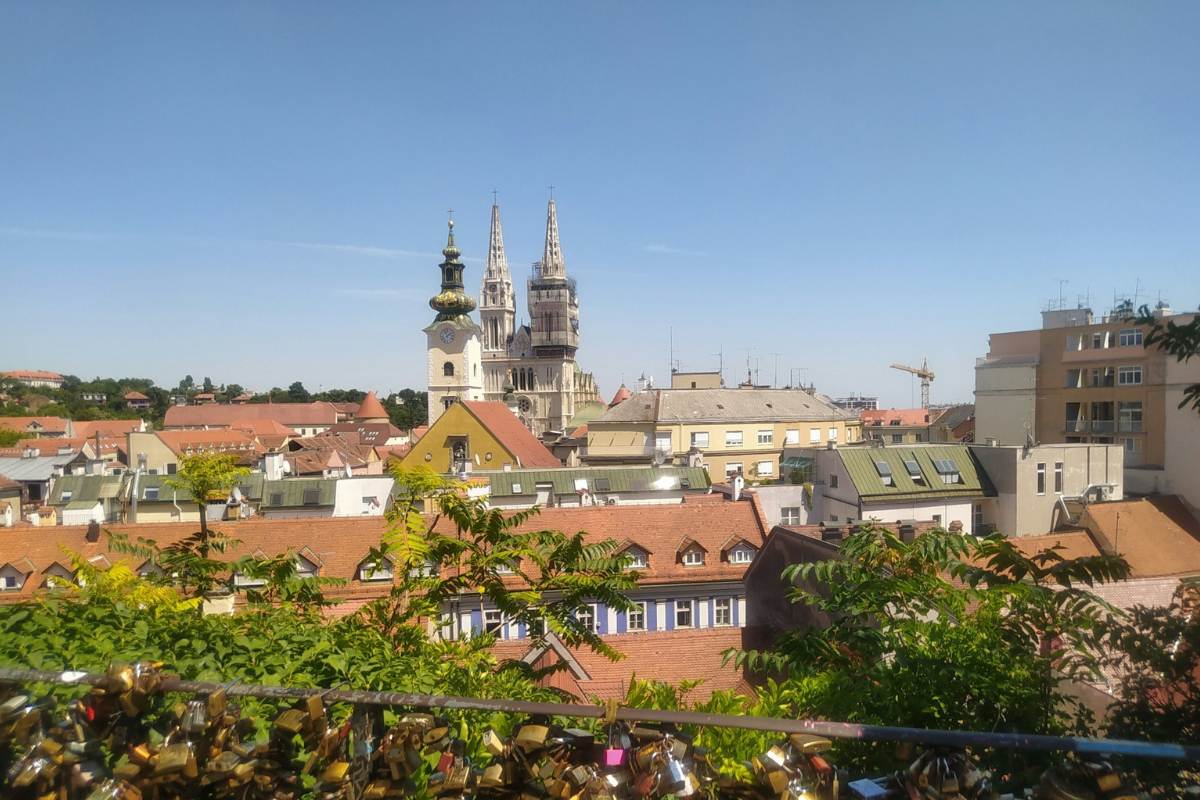
The city is extremely walkable — the historic centre is compact and almost entirely flat in the lower town, with the medieval upper town a short funicular ride (the world's shortest, at 66 metres) or easy staircase climb above.
Where to Stay
Donji Grad (Lower Town) is the most convenient base — close to the main square, the market, the museums, and the café culture that defines Zagreb life. Most hotels and apartments cluster here.
Gornji Grad (Upper Town) has a few guesthouses and is atmospheric but quiet at night — better for those who want the medieval village feel and don't mind the walk down to the action.
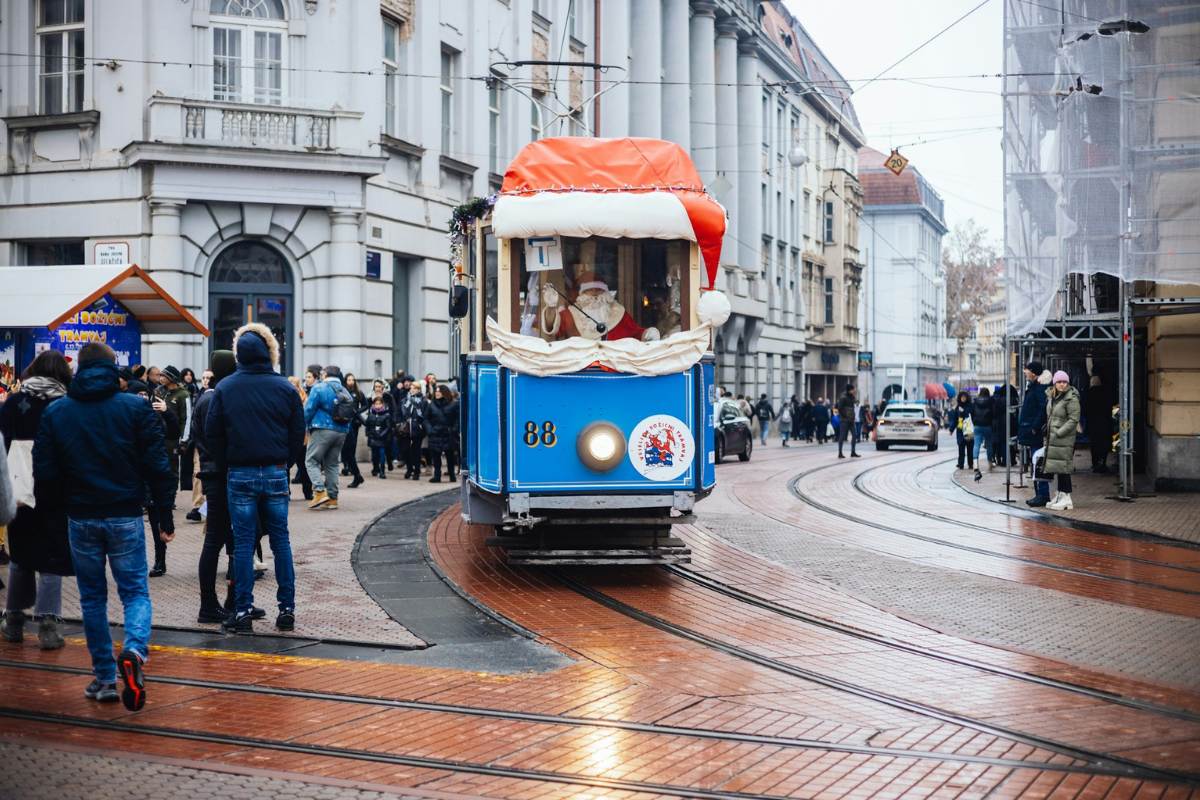
Ilica street corridor, Zagreb's main commercial artery running west from the main square, has good apartment options and feels immediately local. The morning tram ride to anywhere from here is a good introduction to how the city actually moves.
What to Do
The Upper Town (Gornji Grad)
Zagreb's medieval core sits on two hills above the lower city. Kaptol, the cathedral hill, is dominated by the twin spires of the Cathedral of the Assumption — Zagreb's landmark and, since an 1880 earthquake and subsequent reconstruction, a somewhat controversial neo-Gothic presence. The golden spires are visible from most of the city.
Gradec, the civic hill, is the older of the two settlements — a tangle of baroque palaces, small churches, and cobbled streets that feel genuinely quiet even in summer. The Stone Gate houses a 17th-century painting of the Virgin that survived a fire that destroyed everything around it; it's now a place of active pilgrimage, candles always burning, believers always present. The juxtaposition with the nearby art galleries and design studios is very Zagreb.
The Lotrščak Tower on the edge of Gradec fires a cannon at noon every day — a tradition since 1877, originally to synchronise the city's clocks. Stand on the viewing platform just before 12.
The Dolac Market
Every morning (daily except Sunday afternoons), the open-air market above the main square fills with vendors selling produce, cheese, eggs, flowers, and everything else the Zagreb hinterland grows. It's colourful, loud, and efficient — a functional market first, a tourist attraction second.
The covered market below sells fish and meat. Arrive between 8 and 10 AM for the full scene.
The Museum of Broken Relationships
One of the genuinely original museums in Europe — a collection of objects donated by people from around the world, each accompanied by a short text explaining the relationship it represents and how it ended. A rubber duck, a prosthetic leg, a toaster, an axe. The cumulative effect is unexpectedly moving. Queue times are reasonable even in season; the exhibition fits in about an hour.
The Mimara Museum
A vast private collection donated to the city — Egyptian antiquities, Venetian glass, Flemish masters, Asian decorative arts, and European sculpture across 3,500 objects spread through a 19th-century palace. Crowd levels are low enough that you can spend real time with individual pieces. The breadth is more interesting than the depth, but there are genuinely remarkable works here if you look.
The Croatian Museum of Naive Art
Housed in a baroque palace in the upper town, this is one of the best collections of Croatian naive art in the world — vivid, flat, intensely detailed paintings of village life, festivals, and landscape by self-taught artists, most from the Hlebine school. Ivan Generalić is the name to know. The paintings are joyful and strange and entirely unlike anything in the mainstream European canon.
Zrinjevac and the Green Horseshoe
Nineteenth-century city planning left Zagreb with a U-shaped sequence of parks, gardens, and neoclassical pavilions in the lower town — the Lenucijeva potkova, or Green Horseshoe. Walking it end to end takes about 45 minutes and passes through the botanical garden, several good museums, and the kind of orderly urban greenery that Central European cities do better than anywhere else.
Coffee Culture
Zagreb's relationship with coffee is serious and specific. The city's café tradition is built around the concept of špica — the Saturday morning ritual of dressing well, going to a café on or near Ilica street, and spending two to three hours talking. It is not about the coffee itself; it is about the time made around it.
The main café streets — Ilica, Tkalčićeva, and the terraces around Flower Square (Cvjetni trg) — fill from 10 AM on weekends with a cross-section of Zagreb that includes everyone from elderly neighbours to the design and media crowd. Observe the ritual. Participate in it. Order a bijela kava (white coffee) and stay longer than you planned.
Cogito Coffee, Velvet Café, and Kava Tava are among the more serious options for specialty coffee; the older café institutions along Ilica are better for atmosphere.
Food & Drink
Zagreb's food scene has developed significantly in the past decade and now has genuine depth beyond the traditional Croatian standards.
Vinodol, in a vaulted courtyard just off the main square, is the reliable standard-bearer for traditional Croatian cooking — roast lamb, veal under the peka, local sausages, hearty soups. Old-school, generous, consistent.
Agava in Tkalčićeva is where the city's food-conscious crowd gravitates — creative cooking that takes seasonal Croatian produce seriously, a good natural wine selection, a terrace in a street that fills with people on warm evenings.
Stari Fijaker 900 is one of Zagreb's oldest restaurants, serving old Austro-Hungarian Zagreb food — štrukli (baked cheese pastry), goulash, roast meats. The kind of place that requires no justification beyond being exactly what it is.
Zagreb is štrukli territory. The baked version (zapečeni štrukli) — cottage cheese filling in thin pastry, baked until the top is golden — is the city's comfort food. Order it as a starter everywhere it appears on the menu.
The local craft beer scene, centred around producers like Zmajska and Garden Brewery, is worth exploring if you're staying more than a day.
Practical Notes
- Getting around: Trams are efficient, frequent, and cheap. The historic centre is entirely walkable.
- Weather: Zagreb has a genuine continental climate — cold winters, hot summers, dramatic spring and autumn. May–June and September–October are ideal. July and August are hot and many locals leave for the coast.
- Nightlife: Tkalčićeva street is the main bar corridor; the clubs around Jarun Lake to the southwest are where nights go late. The city has a young population and an active music scene.
- Day trips: Samobor (historic town and castle, 30 minutes west), Varaždin (baroque town, 1.5 hours north), and the Zagorje region (castles, rolling hills, thermal spas) are all accessible without a car.
- Currency: Euros since 2023.
A Few Honest Words
Zagreb is not selling anything. It doesn't have the dramatic landscape of the coast or the ancient stones of Split. What it has is the accumulated character of a city that has been going about its business for a long time without particularly caring whether outsiders noticed.
The café culture is real. The art scene is real. The Saturday morning špica — the entire city apparently deciding to drink coffee outside simultaneously — is one of the more charming things a city can do.
Give it two nights minimum, preferably three. Walk the upper town at dusk. Have štrukli for breakfast. Sit in a café long enough to feel like you're not in a hurry anymore.
That's the Zagreb way of doing things, and it turns out to be quite a good way.


