Hvar Croatia Travel Guide: Things to Do, Beaches, Stari Grad & Pakleni Islands
April 1, 2026 · TripOnly

Hvar, Croatia: Lavender, Stone, and the Adriatic's Most Beautiful Town
The ferry from Split takes about an hour on the fast catamaran, and as it rounds the headland into Hvar's harbour the town appears exactly as it has for five centuries — a long stone waterfront, the cathedral bell tower rising above terracotta rooftops, the Venetian loggia at the harbour edge, and above it all the fortress of Fortica on its rocky hill.
Hvar has a reputation as the party island of the Adriatic, which is accurate and also somewhat unfair. The nightlife is real, and in July it overruns the harbour. But the island is long and varied — 68 km of it — and beyond the town the lavender fields, the quiet villages of the interior, and the Pakleni Islands offshore offer one of the most beautiful landscapes in the Mediterranean.
Getting There
The main ferry connection is Split–Stari Grad (on the northern coast of the island), a 2-hour car ferry that runs multiple times daily. From Stari Grad, buses connect to Hvar Town in about 20 minutes.
Faster: the Krilo or Jadrolinija catamarans run Split–Hvar Town directly in about 1 hour. Foot passengers only, but for most visitors this is the right choice. Book ahead in summer — they sell out.
From Dubrovnik, a catamaran runs seasonally via Korčula. The journey is beautiful and saves the overland backtrack through Split.
Where to Stay
Hvar Town itself is the centre of the action — convenient, atmospheric, and expensive in high season. Small boutique hotels and apartments in the old town fill up months in advance for July and August.
Stari Grad, on the north coast, is Hvar's oldest settlement (founded by Greek colonists in 384 BC) and far quieter. A genuinely lovely town in its own right, with a UNESCO-listed agricultural plain behind it. Staying here and day-tripping to Hvar Town is a sensible strategy.
Jelsa, in the middle of the island, is family-friendly, affordable, and has good beaches. Less glamorous, more liveable.
Find your perfect stay in Hvar—from lively harbor hotels to peaceful seaside villas across the island.
👉 Browse top-rated stays in Hvar
Hvar Town is the most popular base, but quieter spots like Stari Grad or Jelsa offer a more relaxed vibe—book early in summer.
What to Do
Hvar Town
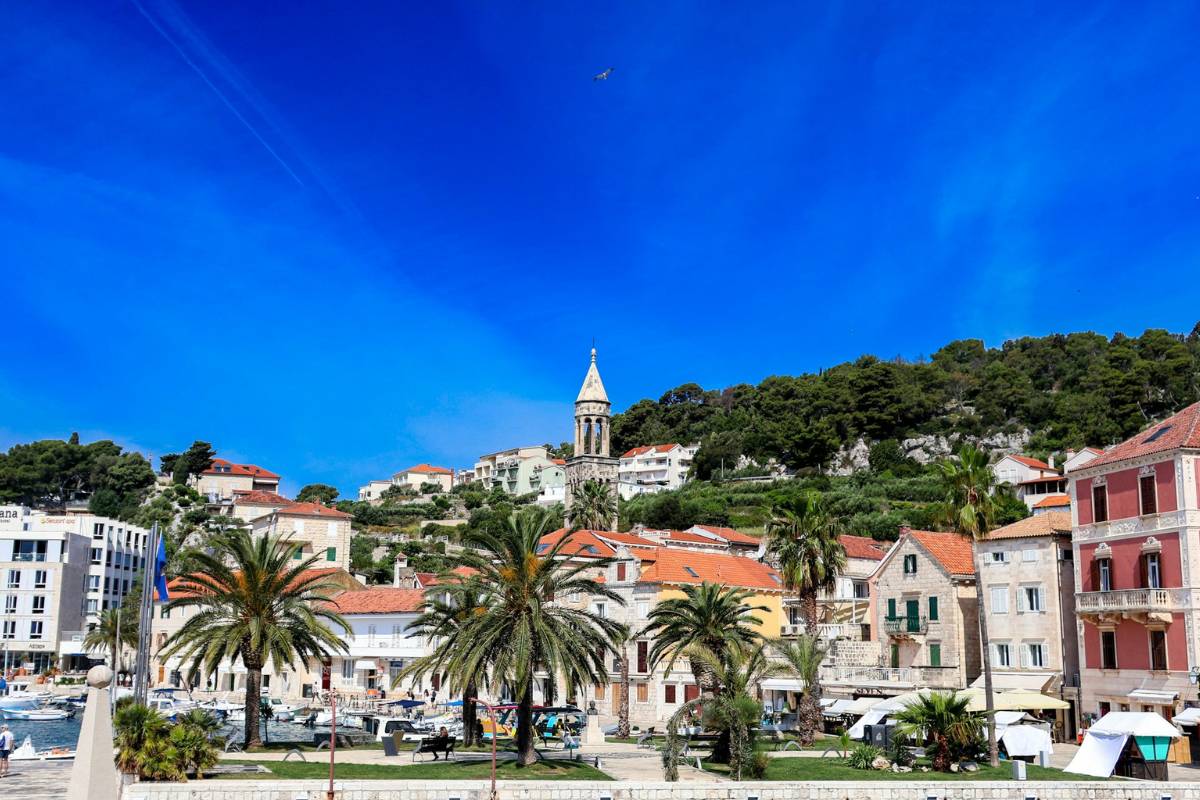 The main square, Trg Svetog Stjepana, is one of the largest in Dalmatia and one of the most beautiful in Croatia — the 16th-century Cathedral of Saint Stephen at one end, the Venetian Arsenal and loggia at the other, and the harbour beyond. It rewards time spent doing very little.
The Fortica fortress above the town offers the best view on the island — the entire southern coast, the Pakleni Islands scattered below, and on clear days the mountains of the mainland. The climb takes about 20 minutes and is worth every step. Go at sunset.
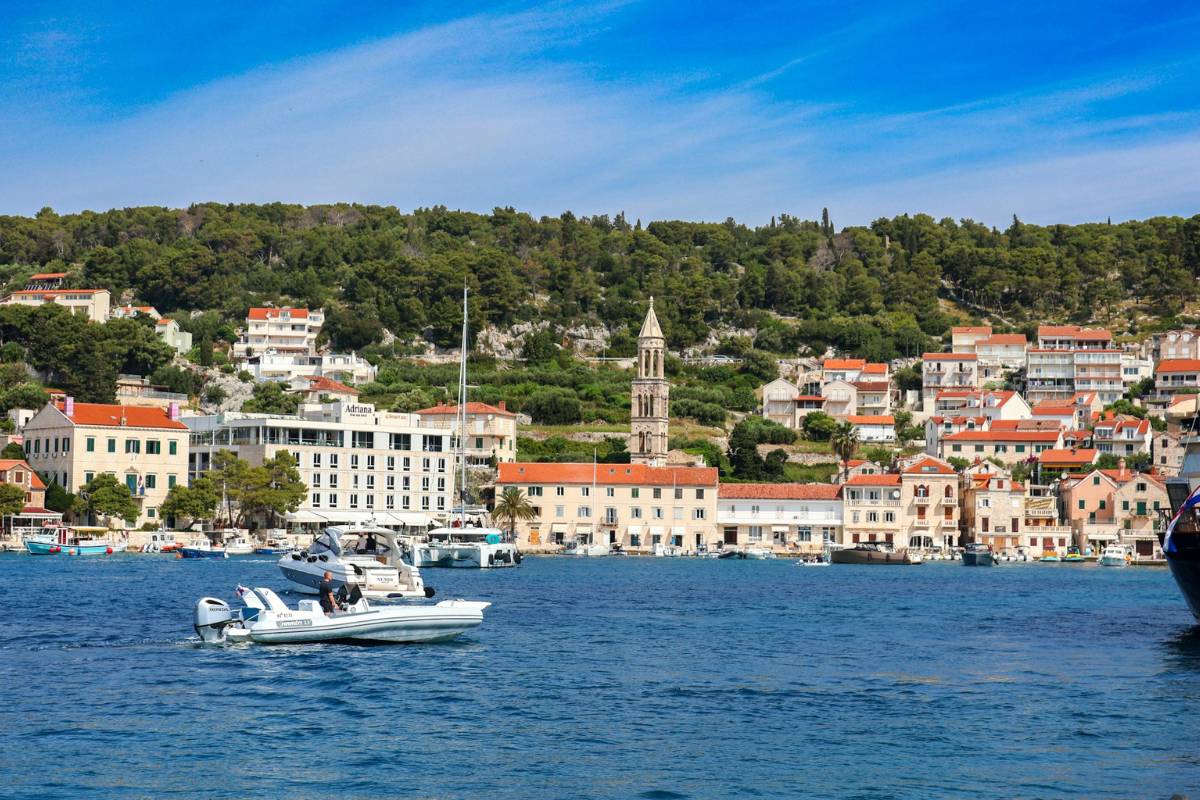 The Franciscan Monastery on the eastern headland, a 10-minute walk from the square, houses a small museum with an extraordinary 16th-century Last Supper painting, a beautiful cloister, and garden views over the bay. Quiet and often overlooked.
The Pakleni Islands
A chain of small wooded islands just offshore from Hvar Town, reachable by water taxi in 10–20 minutes. Palmižana on Sveti Klement island is the most developed — a sheltered bay, a good restaurant, clear water for swimming, and a botanical garden. Jerolim is a naturist beach island. The further islands are largely uninhabited and accessible by kayak.
A few hours on the Pakleni makes the crowds of Hvar Town feel like they happened somewhere else entirely.
The Lavender Fields and Interior Villages
Hvar's interior — the hills and valleys behind the coast — is where the island's older identity survives. The villages of Velo Grablje and Malo Grablje are nearly abandoned stone settlements where lavender farming kept communities alive for generations; today Velo Grablje hosts a lavender festival in late June that draws back descendants of the original families.
The fields bloom in June and early July. Driving or cycling the interior roads in that window, through clouds of purple and the particular smell of Dalmatian lavender in the heat, is one of the better things you can do in Croatia.
Stari Grad Plain
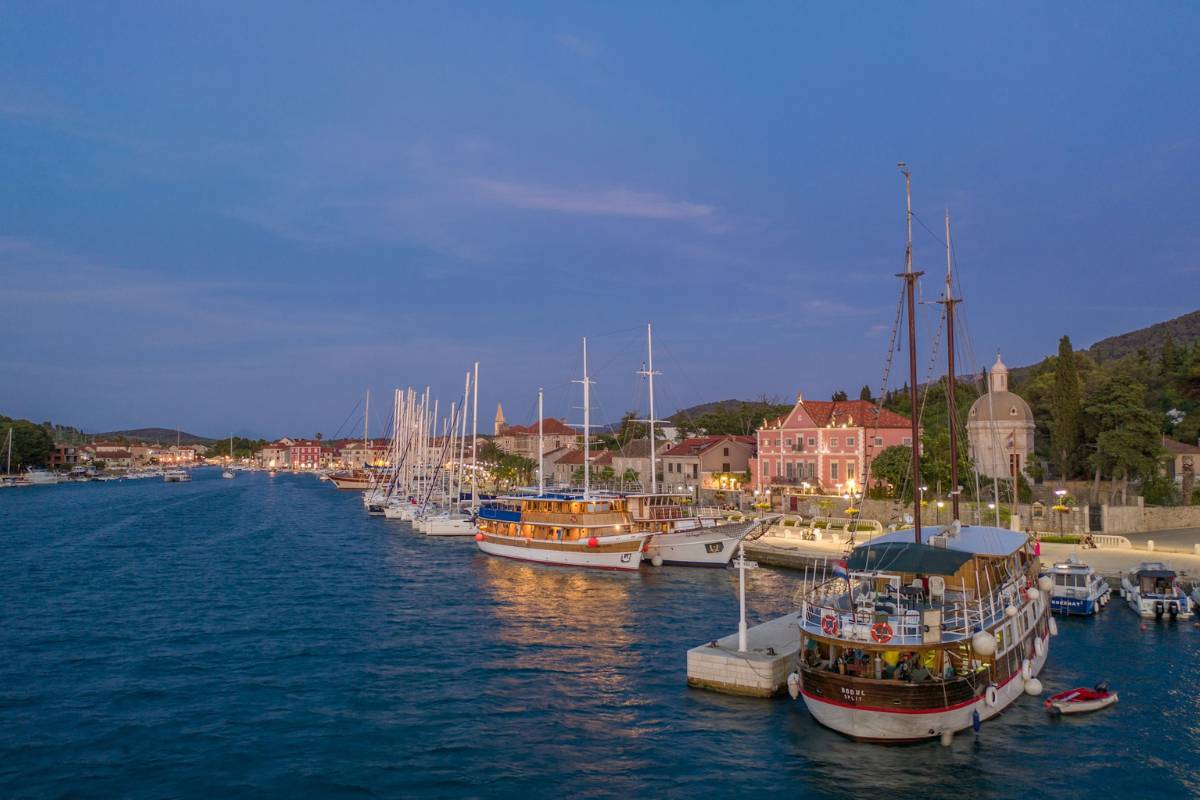 A UNESCO World Heritage Site and one of the oldest continuously cultivated agricultural landscapes in the world — Greek colonists laid out this grid of fields and dry-stone walls in the 4th century BC, and the division of plots has barely changed since. Walking the paths between the walls in the early morning, with the sea visible on both sides of the island, is quietly extraordinary.
Party Hvar vs Chill Hvar: Which One Are You?
Hvar is famous for two completely different experiences. Most people only know one side.
Party Hvar (The Loud One)
- Best for: 18-35 age group, groups of friends, nightlife lovers
- Where: Hvar Town harbour & surrounding bars/clubs
- Vibe: Loud music, boat parties, crowded waterfront bars, all-night drinking
- Best time: July & August
- Where to stay: Hvar Town (especially near the harbour)
- Typical day: Sleep till noon → beach club → sunset drinks → club till 5am
- Downside: Very crowded, expensive, noisy, can feel like Ibiza
Chill Hvar (The Real Soul)
- Best for: Couples, solo travellers, nature lovers, people over 30
- Where: Stari Grad, Jelsa, interior villages, Pakleni Islands (far side)
- Vibe: Peaceful lavender fields, quiet pebble beaches, slow mornings with coffee, sunset at the fortress
- Best time: May–June & September–October
- Where to stay: Stari Grad or small villages
- Typical day: Rent scooter → explore lavender fields → swim in hidden coves → fresh seafood dinner → early night
- Big advantage: Much more authentic, cheaper, and beautiful
My Honest Take
You don’t have to choose only one.
The smartest way is to experience both.
Stay 1-2 nights in Hvar Town for the energy and nightlife, then move to Stari Grad or Jelsa for the peaceful island life. This way you get the best of both worlds without burning out.
Food & Drink
Konoba Menego, up the steps above the main square, is the local answer to Hvar Town's more tourist-facing restaurants — traditional Dalmatian dishes, house wine, atmosphere accumulated over decades. Cash only, no reservations, arrive hungry.
Palmižana Restaurant on the island of Sveti Klement is one of the best restaurants in the region — lunch only, reached by water taxi, with a menu built around that morning's catch and a wine list that takes Dalmatian varieties seriously. The setting, in a garden above the bay, is exceptional. Book ahead.
Hvar produces its own wine — the Bogdanuša white grape is indigenous to the island and makes light, mineral, slightly aromatic wines that taste best within sight of the vineyard. Ask for it by name anywhere you see a local list.
Practical Notes
- Crowds: Hvar Town in July–August is genuinely overwhelming. The harbour is impassable by early evening. Come in May, June, or September for the town without the chaos.
- Getting around the island: Buses connect the main towns; renting a scooter or car opens up the interior and the quieter eastern end of the island.
- Nightlife: Real and concentrated around the harbour and the stairs below the fortress. Hula Hula beach bar is the famous pre-party sunset spot; Carpe Diem Club on Stipanska island runs late. None of this is hard to avoid if it's not your thing.
- Swimming: The best beaches are outside town — Dubovica, a 20-minute drive east, is one of the most beautiful on the island.
- Currency: Euros.
A Few Honest Words
Hvar has two simultaneous identities and manages to hold them without obvious contradiction — the party harbour and the ancient island, the superyacht crowd and the lavender farmers in the hills. Both are real. The trick is deciding which one you came for, and then finding it.
The town is genuinely beautiful enough to absorb the crowds without losing itself entirely. The interior is genuinely quiet enough that you can forget the harbour is there.
Stay two nights minimum in the town to earn the early mornings, when the square is empty and the light comes off the sea at a low angle and you can see what it looked like before anyone decided it was fashionable.
Then rent a scooter and go inland.


