Stockholm, Sweden: The Complete Travel Guide to the City on the Water
July 17, 2026 · TripOnly

Stockholm is built across fourteen islands where Lake Mälaren meets the Baltic Sea, and the city has never once let you forget it. Water is everywhere — glittering between neighborhoods, lapping at the foundations of centuries-old buildings, carrying ferries between islands that look more like oil paintings than real places. In summer, the light lasts until nearly midnight and turns everything to gold. In winter, the city retreats into a kind of candlelit cosiness that the Swedes have elevated to a philosophy.
For a capital city of fewer than a million people, Stockholm punches well above its weight. It's given the world flat-pack furniture, streaming music, Nobel Prizes, and the cinnamon bun. It runs on coffee and quiet competence. And for visitors, it offers the rare combination of genuine history, extraordinary food, world-class museums, and some of the most beautiful urban scenery in Europe — all without the shoulder-to-shoulder crowds of Paris or Rome.
This guide covers everything you need to know.
Getting There
Flying In
Most international flights arrive at Stockholm Arlanda Airport (ARN), roughly 40 kilometres north of the city centre. It's well-connected and efficiently run — Swedish infrastructure tends to be.
From Arlanda, you have two main options into the city. The Arlanda Express train covers the journey in 18 minutes and deposits you directly at Stockholm Central Station. It costs around 320 SEK (roughly €28) one way, which feels steep until you factor in that you've just landed in a foreign country and will be at your hotel within the hour. Buy tickets online in advance — there's usually a discount, and it avoids the machines.
The Flygbussarna coach takes about 45 minutes and costs around a third of the price. It's comfortable, reliable, and perfectly reasonable if you're not in a rush or if you're arriving at an off-peak time with light luggage.
A small note: Stockholm Skavsta Airport is used by Ryanair and a handful of low-cost carriers, but it's 100 kilometres south of Stockholm, closer to Nyköping than the capital. Read your booking carefully before assuming it's convenient.
Getting Around the City
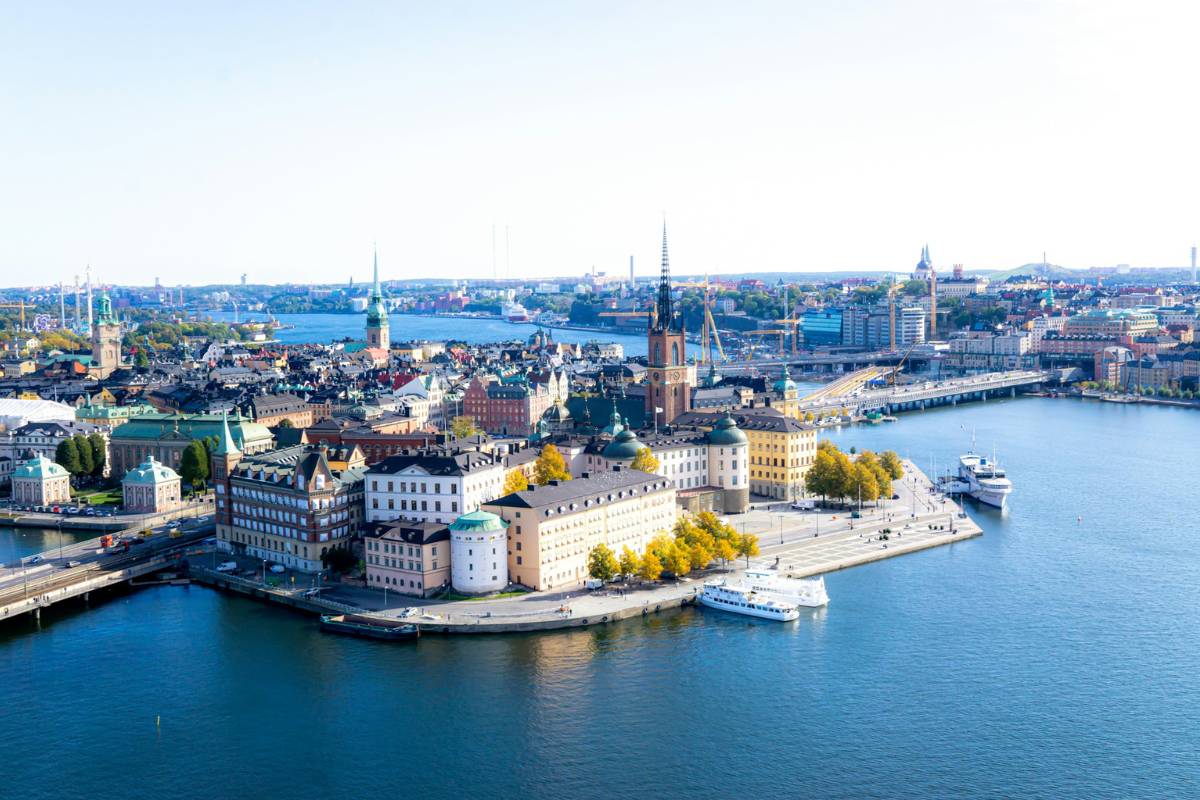
Stockholm's public transport — operated by SL — is one of the best arguments for leaving the rental car at home. The metro (called the Tunnelbana), buses, trams, and ferries all run on the same ticketing system and cover the city comprehensively.
The most practical option for visitors is a timed travel pass: 24 hours costs around 175 SEK, 72 hours around 265 SEK, 7 days around 400 SEK. Load it onto the SL Access card or use the SL app. For most trips, the 72-hour pass pays for itself by the second day.
One important note: the Tunnelbana doubles as an art gallery. Over 90 stations feature permanent installations commissioned from Swedish and international artists. Kungsträdgården, Solna Centrum, and T-Centralen are particularly remarkable — worth going slightly out of your way to see even if you're not riding through them.
Walking is also excellent and often underused by visitors. The distance from Gamla Stan to Södermalm to Östermalm is entirely manageable on foot, and the route between them passes some of the city's best scenery.
When to Go
June through August is the headline season. The famous Swedish summer delivers long, warm days — daylight stretching past 10pm in midsummer — outdoor seating everywhere, the archipelago fully open, and a palpable collective joy from a population that has earned the sun after a long winter. Book accommodation well in advance; Stockholm fills up.
Midsommar (late June) deserves a paragraph of its own. It's the Swedish summer solstice celebration, and it's unlike anything else in Europe — flower crowns, maypoles, herring, schnapps, and dancing that starts in the afternoon and doesn't really stop. If you can be in Sweden for it, including a smaller town or village rather than the city, don't miss it.
May and September offer genuine advantages: reasonable crowd levels, very pleasant temperatures, and a city that still has everything open. September in particular is excellent for food — the autumn harvest produces extraordinary mushrooms, game, and the kind of root vegetable cooking that Swedish chefs do better than almost anyone.
December is cold, dark by mid-afternoon, and genuinely magical. The Christmas markets in Gamla Stan are atmospheric rather than commercial, the Julbord (traditional Christmas table) smörgåsbord is one of the great seasonal eating experiences in Scandinavia, and the darkness is offset by more candles, more hygge, more warmth inside than you'd think possible. Dress seriously. Wool, not fleece.
Neighborhoods
Gamla Stan — The Old Town
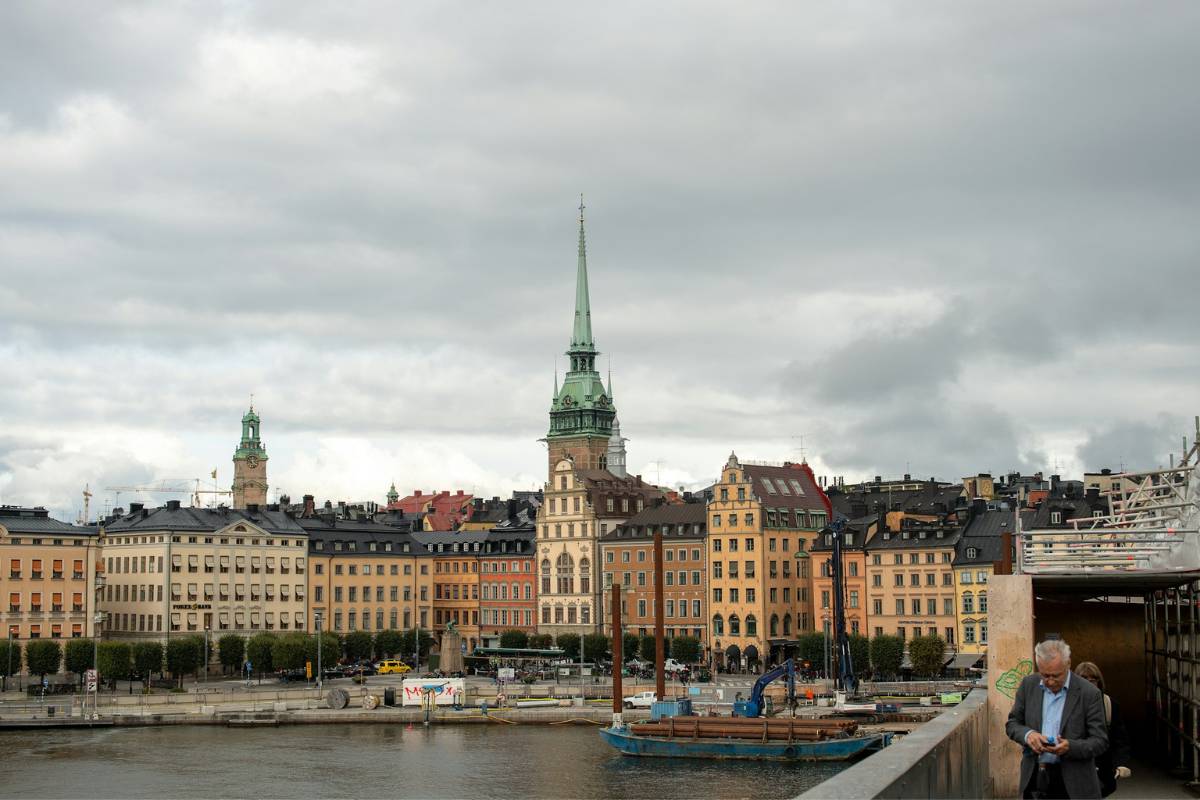
Every Stockholm visit starts here, and that's not a criticism of tourists — it's a recognition that Gamla Stan is simply extraordinary. Three small islands form the medieval heart of the city: Stadsholmen (the main island), Riddarholmen, and Helgeandsholmen. Together they contain the Royal Palace, the parliament building, the oldest church in Stockholm, and a dense network of cobbled lanes that have changed very little in 500 years.
The Royal Palace (Kungliga Slottet) is the world's largest palace still used as an official royal residence, with over 600 rooms open to the public. The Changing of the Guard takes place daily at noon in summer — arrive 15 minutes early for a decent vantage point.
Stortorget, the main square, is one of the oldest public squares in Stockholm and surrounded by the coloured merchants' houses that have become the defining image of the city. Sit and absorb it, but skip the restaurants facing directly onto the square — they know they have a captive audience, and the prices reflect it. Walk one street in any direction and the quality improves noticeably.
The underrated part of Gamla Stan is Riddarholmen, the smallest of the three islands and the most serene. The Riddarholmen Church is the burial site of Swedish monarchs for nearly four centuries. The views from the western side across Riddarfjärden bay and towards Södermalm are among the best in the city, and on a weekday morning you may have them entirely to yourself.
Södermalm
Södermalm sits on a large island south of Gamla Stan, elevated on a ridge that provides the best elevated views in the city, and it is — by some margin — the most interesting neighborhood in Stockholm to spend time in.
Götgatan is the main artery, running north-south through the island and lined with independent shops, vintage stores, record shops, and a concentration of excellent coffee. The area south of Folkungagatan is known informally as SoFo — South of Folkungagatan — and it's where the creative class lives, eats, and works. More interesting restaurants per square metre than anywhere else in the city. More street art. More of the city's actual character.
Monteliusvägen is a cliff-top path along the northern edge of Södermalm with views over Gamla Stan, Riddarfjärden bay, and the city's western waterways. It's free, it's extraordinary at golden hour, and it's one of those Stockholm experiences that quietly becomes the thing you remember most from the trip.
Fotografiska, the international photography museum, is on Södermalm's waterfront in a converted Art Nouveau customs house. The rotating exhibitions are consistently world-class, the permanent collection is strong, and the museum is open until 11pm most evenings — making it one of the best evening options in the city. The rooftop restaurant is excellent.
Östermalm
Östermalm is where Stockholm shows its formal face. Wide boulevards, late 19th-century apartment buildings with ornate façades, designer boutiques on Biblioteksgatan, embassies, and the kind of confident quietness that comes from old money and good taste.
The unmissable stop is Östermalms Saluhall, an 1888 indoor market that was completely renovated and reopened in 2020. It's beautiful — a vaulted brick hall lined with the finest food producers in Sweden. Gravlax, smoked fish, aged cheeses, reindeer, elk, organic produce, traditional crispbreads. Go hungry, eat a real lunch at one of the market stalls, buy something to take home.
Humlegården is a pleasant park in the heart of the neighborhood — good for the morning coffee routine, good for sitting with the locals and watching the city move.
Djurgården
Djurgården is technically a royal park and practically Stockholm's cultural district, occupying a large island east of the city centre connected by bridge and ferry. It's where you spend a full day.
The Vasa Museum is the centrepiece and one of the great museum experiences in Europe. In 1628, the warship Vasa sank on her maiden voyage less than a nautical mile from shore — a catastrophic naval embarrassment that the Swedish navy quietly tried to forget. In 1961 she was raised from the harbour mud, nearly intact, after 333 years underwater. The museum built around her is simply astonishing: a 69-metre wooden warship, fully preserved, in a purpose-built building that lets you walk around and above her at multiple levels. Budget at least 90 minutes and consider the audio guide.
Skansen is the world's oldest open-air museum, opened in 1891. Across 75 hectares, historic Swedish buildings were relocated from across the country — farmhouses, manor houses, windmills, a working glassblower's studio — staffed by people in period costume doing period work. There's also a zoo of Nordic animals: moose, bears, wolves, lynx. It's genuinely wonderful and often underestimated by visitors who hear "open-air museum" and picture something dull.
Moderna Museet is on the neighbouring island of Skeppsholmen and holds one of Europe's strongest collections of 20th-century art — Matisse, Picasso, Dalí, Warhol — alongside a strong programme of temporary exhibitions. Entry to the permanent collection is free.
The ABBA Museum is here too. It is exactly what it sounds like. It is completely committed to what it is. If you have any affection for the band, go.
Vasastan
A largely residential neighbourhood north of the city centre that rewards visitors who wander into it. Excellent neighbourhood restaurants, the large Observatorielunden park on a hill with views, and a genuinely local atmosphere that has remained largely undisturbed by tourism. Rolf's Kök, one of the best neighbourhood restaurants in the city, is here.
Food & Drink
Fika
The most important word in Swedish culinary culture is not a food and not a drink — it's a practice. Fika is the coffee break elevated to a philosophy: proper coffee, something sweet, and a deliberate pause from whatever you're doing. Swedes take it twice a day. Workplaces schedule it. Turning down a fika invitation is a mild social offence.
For visitors, fika is the best recurring excuse to slow down and sit in Stockholm's extraordinary café culture. What you order: coffee (filter coffee is still common alongside espresso-based drinks), and either a kanelbulle (cinnamon bun) or a kardemummabulle (cardamom bun). The cardamom bun is the better call.
Fabrique is a bakery chain with locations across the city that does both exceptionally. The buns are baked fresh, they're enormous, and they smell the way all bakeries should.
Swedish Food Worth Knowing
Swedish meatballs (köttbullar) need no introduction, but the supermarket version has done the original a disservice. The real thing — served with mashed potato, lingonberry jam, and a proper cream sauce — is a very different experience. Meatballs for the People in Södermalm serves multiple varieties including reindeer and moose, uses quality ingredients, and is the correct place to eat them in Stockholm.
Husmanskost is traditional Swedish home cooking — hearty, seasonal, unfussy. Pea soup is eaten on Thursdays by tradition, going back centuries. Janssons frestelse — a gratin of potato, cream, and anchovy — is richer than it sounds. Pytt i panna is a hash of leftover meat and potatoes, pan-fried until crisp.
Gravlax — cured salmon with dill and mustard sauce — is arguably Sweden's greatest export. Order it everywhere that has it. The quality in Stockholm, unsurprisingly, is exceptional.
Herring is served pickled, fried, in cream sauce, or with mustard and dill. It appears on every proper smörgåsbord and deserves more of an open mind than most visitors arrive with.
The smörgåsbord itself is worth seeking out — the full Swedish spread of cold and hot dishes is best experienced at a traditional lunch restaurant rather than a tourist buffet. Operakällaren's Bakficka does a particularly good version.
Where to Eat
Ekstedt — Nils Ekstedt's Michelin-starred restaurant cooks everything over open fire and birchwood. The flavours that produces are unlike anything in a conventional kitchen, and the tasting menu is one of Stockholm's definitive dining experiences. Book weeks in advance.
Rolf's Kök (Vasastan) — A neighbourhood bistro that's been quietly excellent for decades. The food is seasonal Swedish-French, the wine list is well-curated, and the room feels genuinely lived-in. Locals love it, which is always the right signal.
Hötorgshallen — An indoor market hall in the city centre, excellent for a fast, affordable, high-quality lunch. The variety is wide — sushi, falafel, traditional open-faced sandwiches, pastries — and the quality is consistently good. One of the better lunch options in the city for value.
Östermalms Saluhall — For a more considered market lunch, the stalls inside the Saluhall are excellent. More expensive, but the produce quality is exceptional.
Pelikan (Södermalm) — A traditional Swedish beer hall opened in 1904, wood-panelled, loud, and serving husmanskost that hasn't chased trends. The herring and the meatballs are what you order. The atmosphere is irreplaceable.
Drinks
Sweden has a genuinely strong craft beer scene. Stockholm Brewing Co. and Omnipollo are the two local names most worth knowing, and both have taprooms in the city.
Aquavit is the traditional Scandinavian spirit — distilled from grain or potato and flavoured with caraway, dill, or fennel. It's an acquired taste and best experienced in context: with herring at a proper lunch, or as a shot at midsommar. Avoid ordering it at a cocktail bar where it will be treated as an exotic ingredient — it deserves better.
One piece of practical information: Systembolaget is the Swedish state alcohol monopoly. All wine, spirits, and beer above 3.5% ABV is sold exclusively through Systembolaget stores. They're well-stocked, the staff are knowledgeable, and the pricing is reasonable. They are closed on Sundays and have limited Saturday hours. Plan accordingly.
Culture & Sights
The Vasa Museum
Already covered under Djurgården, and worth the repetition: this is one of the finest museum experiences in Europe. Go.
Stockholm City Hall (Stadshuset)
Stadshuset sits on the waterfront in Kungsholmen and is one of the great civic buildings of the 20th century — a 1923 masterpiece of National Romantic architecture in dark red brick, with a tower topped by three golden crowns, the symbol of Sweden.
This is where the Nobel Prize banquet takes place every December 10th. The Blue Hall — where the banquet is held, and which is, confusingly, not blue; the architect changed his mind mid-construction but the name had already stuck — holds 1,300 guests. The Golden Hall upstairs, where the Nobel dance takes place, is lined with 18 million gold and coloured glass mosaic tiles depicting Swedish history. It's extraordinary.
Guided tours run daily in multiple languages — the interior is only accessible by tour, and it's well worth it. In summer (June through August), the tower is open to visitors: 365 steps, no lift, and panoramic views over the city that justify every one of them.
Fotografiska
Already mentioned under Södermalm, but it bears repeating in any list of Stockholm's essential cultural stops. The photography on display is consistently at the level of the world's best photography museums, the building is beautiful, and the late opening hours make it practical for a city where the summer evenings beg to be spent outside.
Nationalmuseum
Sweden's largest art museum, recently returned from a decade-long renovation that transformed it into one of the finest museum buildings in Scandinavia. The collection spans Swedish and Nordic art from the Middle Ages to the early 20th century, plus an exceptional decorative arts and design collection that documents the evolution of the aesthetic sensibility that gave the world Scandinavian design. The 18th-century Swedish paintings and the Carl Larsson rooms are particularly strong.
Moderna Museet
Free entry to the permanent collection, which alone makes it exceptional value. The 20th-century holdings are among the best in Europe — and the building on Skeppsholmen, designed by Rafael Moneo, is a pleasure to spend time in regardless of what's on the walls.
The Tunnelbana Art
One final cultural note that most guides undervalue: the Stockholm metro system as an artwork. Over 90 of the 100 stations feature permanent art commissions, and several are so extraordinary they've become destinations in their own right. Kungsträdgården (vaulted blue rock, archaeological artefacts embedded in the walls), Solna Centrum (blood-red cave-like ceiling, political murals), Stadion (rainbow arches), and T-Centralen (blue vine patterns across every surface) are the four most visited. A few hours riding the blue and red lines and looking up costs nothing.
The Outdoors & The Archipelago
The Stockholm Archipelago
If there is one thing that separates Stockholm from every other European capital, it is this: step onto a ferry at the city centre, and within 70 minutes you're on a small island that feels like another world. The Stockholm Archipelago comprises approximately 30,000 islands, islets, and skerries stretching from the city out into the Baltic. In summer, they're dotted with wooden cottages painted in traditional Falun red, wildflowers growing through granite rock, and a quietness that is genuinely difficult to find elsewhere in Northern Europe.
Waxholmsbolaget operates the archipelago ferry network, and a Båtluffarkort (archipelago hopping card) gives you unlimited travel across the network for a set period — excellent value if you plan to explore multiple islands.
Vaxholm is the nearest island and the easiest entry point: 70 minutes by ferry, a well-preserved wooden town, a 16th-century fortress visible from the water, and reliable restaurants serving fresh seafood. Good for a half-day or a full day.
Grinda is a larger island further out, popular with Swedes for longer stays. Beautiful walking paths, swimming from smooth rocks, a good restaurant, and relative seclusion even in peak summer.
Sandhamn is the furthest of the commonly visited islands — about three hours from the city — and the most dramatically different. It's an old sailing and pilot station community at the outer edge of the archipelago, with the open Baltic visible beyond. The wooden town is charming, the sailing crowd gives it a particular atmosphere, and the seafood restaurant at Sandhamns Värdshus is consistently excellent.
Go on a weekday if possible. The islands fill with Stockholm residents on summer weekends, and ferry queues can be long.
Kayaking
Kayaks can be rented directly in the city — several operators work from Djurgården — and a two-hour paddle through Djurgårdskanalen past Skansen and around the island gives views of Stockholm that no other transport mode can match. The water is calm, no prior experience is required, and the rental companies provide full briefings.
City Parks
Kungsträdgården in the city centre becomes one of the most photographed spots in Stockholm every April, when the Japanese cherry trees planted along its central avenue bloom simultaneously. For perhaps two weeks, the park looks implausible.
Djurgården itself is a royal park in addition to a museum district — large sections of it are simply forest and meadow, with walking and cycling paths and views of the water between the trees.
Hagaparken, north of the city, is an 18th-century English landscape park with royal pavilions, a butterfly house, and a large lake. Less visited than Djurgården and worth it for that alone.
Seasonal Outdoors
Summer needs no selling — long days, warm weather, the archipelago, outdoor everything. But Stockholm's other seasons have outdoor character too.
In autumn, the forests on Djurgården and in Hagaparken turn and the low light is exceptional for photography. Foraging is taken seriously here — mushrooms, lingonberries, cloudberries — and the forests around the city are open to it under the Swedish right of public access (Allemansrätten).
In winter, the city itself becomes the outdoor experience: ice skating on frozen lakes when conditions allow, walking the lit streets of Gamla Stan in early darkness, and — if you travel north — the Northern Lights and the genuine silence of a Swedish forest in snow.
Practical Information
Money
Sweden uses the Swedish krona (SEK). For practical reference: 100 SEK is approximately €9 or $9.50 at current rates, though this fluctuates.
More importantly: Sweden is functionally cashless. The vast majority of shops, restaurants, cafés, ferries, and market stalls operate exclusively on card payments. Carrying cash is not necessary and is occasionally actively inconvenient — some places will look mildly confused if you produce banknotes. A travel card with no foreign transaction fees handles everything.
Stockholm is genuinely expensive. A realistic daily budget for mid-range travel — accommodation, two meals, transport, and one or two paid activities — is around €150–200 per day. That said, several of the city's best experiences cost nothing: the Tunnelbana art, the parks, Moderna Museet's permanent collection, the Monteliusvägen path, the archipelago ferry views.
The Stockholm City Card
The Stockholm City Card covers entry to over 60 attractions including the Vasa Museum, Skansen, Moderna Museet, Nationalmuseum, and Fotografiska, plus unlimited SL public transport. A 24-hour card costs around 669 SEK; 48-hour and 72-hour cards are also available.
Whether it's worth it depends entirely on your itinerary. If you plan to visit the Vasa Museum (195 SEK), Skansen (220 SEK), and Fotografiska (195 SEK) in a single day while using SL transport, the 24-hour card pays for itself before noon. Run your specific plans through the calculator on their website.
Language
Swedish is the official language and is not especially easy for English speakers to pick up casually. It doesn't matter. English fluency in Stockholm approaches universality — spoken without accent, switched into automatically when a foreign visitor is detected, occasionally before the visitor has said anything at all. You will not need a phrase book, though a few words of Swedish (tack for "thank you," förlåt for "excuse me") are always appreciated.
Safety
Stockholm is very safe by any objective measure. Standard urban sense applies in the main tourist areas — Gamla Stan, the Central Station area — where pickpocketing occurs in peak summer. Beyond that, it's a well-functioning, well-policed city where serious crime is rare and visible.
Sustainability
Stockholm was named Europe's first Green Capital in 2010 and has continued to build on it. The city is designed for walking and cycling, the public transport system is excellent, and the cultural default is environmental consciousness — not performatively, just structurally. Lean into it: the best way to see Stockholm is on foot and by Tunnelbana, and the best way to reach the archipelago is by the same ferries the locals use.
Allemansrätten — the Swedish right of public access — allows anyone to walk, camp, and forage on uncultivated land regardless of who owns it. Outside the city, this opens up the countryside in ways that feel genuinely radical if you're from a country where land access is restricted.
Useful Links
- SL — Stockholm Public Transport
- Arlanda Express
- Waxholmsbolaget — Archipelago Ferries
- Stockholm City Card
- Visit Stockholm
- Vasa Museum
- Fotografiska
Stockholm rewards the visitor who slows down. The city is designed, at some fundamental level, for exactly that — coffee that takes its time, ferries that move at the pace of water, parks that ask nothing of you, evenings that don't end. Come with a loose plan, a good pair of shoes, and a willingness to follow the light wherever it goes.
It will take you somewhere worth being.


