Cinque Terre Travel Guide: Five Villages, One Coastline, Zero Regrets
June 17, 2026 · TripOnly

Why Cinque Terre
The name means Five Lands, and that's exactly what you get: five villages — Monterosso al Mare, Vernazza, Corniglia, Manarola, and Riomaggiore — strung along a 12-kilometre stretch of Ligurian coastline where the Apennines refuse to ease into the sea and instead plunge straight off a cliff into it. The result is a place that shouldn't really exist: terraced vineyards hammered into vertical rock, pastel towers stacked one on top of another above tiny harbours, hiking paths that feel like they were built by people who didn't own maps.
It's on every Instagram feed and every bucket list, which is either a problem or a reason to stop overthinking it. The villages are genuinely, stubbornly beautiful. The seafood is excellent. The local white wine will make you miss your train on purpose.
The Five Villages
Monterosso al Mare — The Beach Town
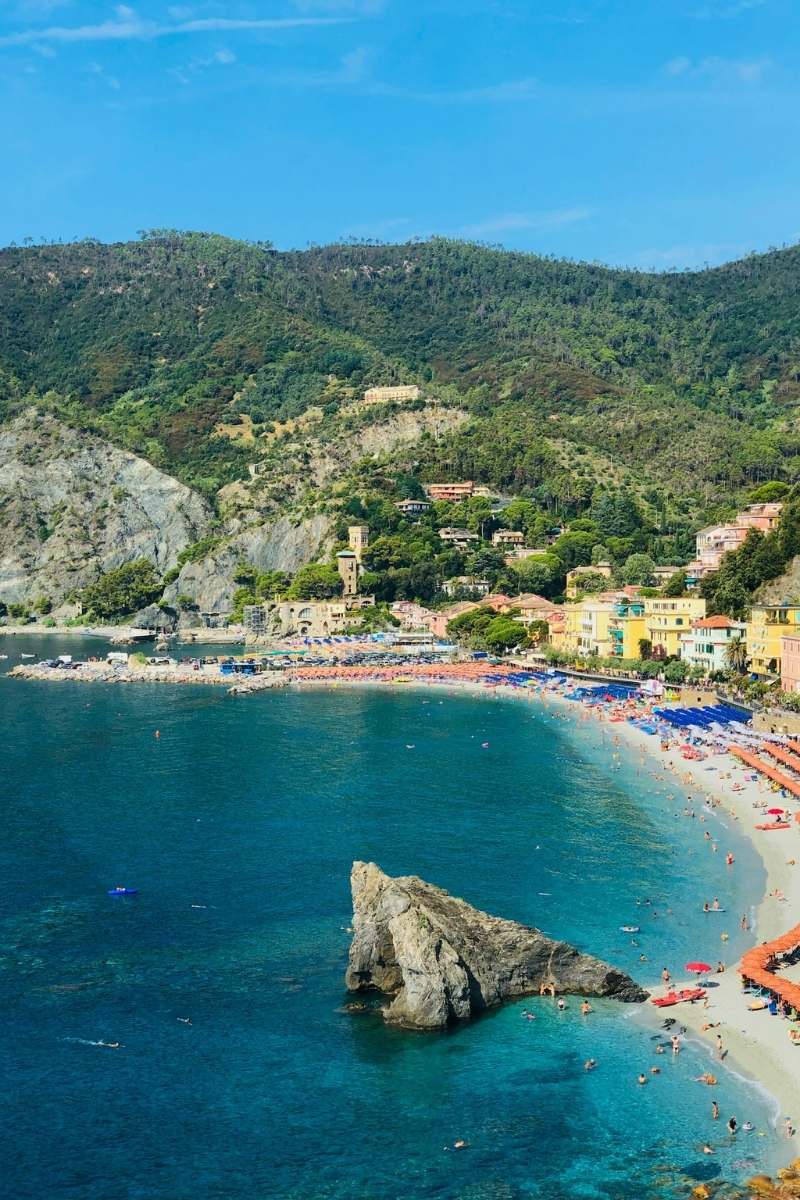
Monterosso is the biggest, the flattest, and the most tourist-infrastructure-heavy of the five. It has an actual beach — a long sandy one, split into a free section and a sea of rented sun loungers — which makes it the odd one out architecturally but a genuine relief after a long hiking day. The old town on the western end is a proper medieval tangle of alleys and archways; the new town to the east is where the hotels and aperitivo bars cluster. Eat the anchovies here. Monterosso's salt-cured anchovies are a protected local product and worth every bite.
Vernazza — The Postcard
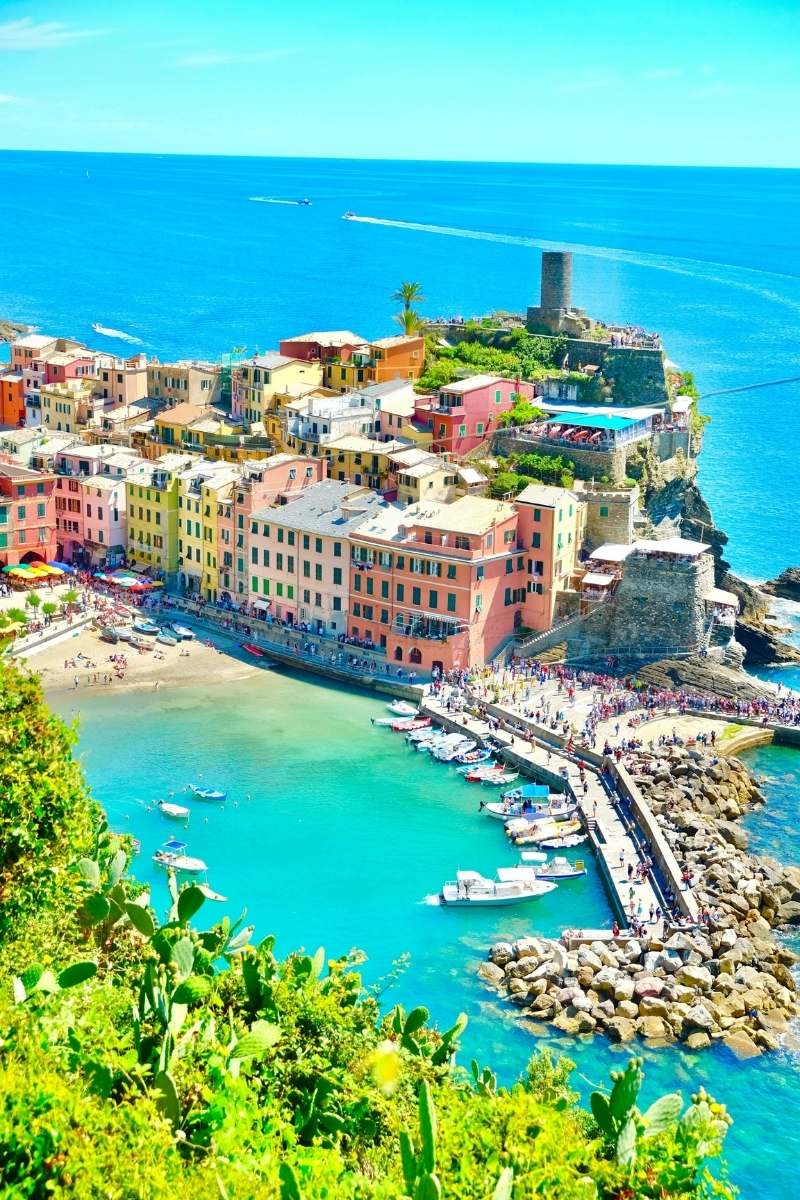
Vernazza is the one on every cover of every Italy travel magazine, and it earns it. The harbour is perfectly proportioned — small enough to feel intimate, dramatic enough to stop you mid-sentence. The castle tower above the village (Doria Castle, 11th century) gives the best overhead view of the whole setup. Climb it in the early morning before the day-trippers arrive by train. The main street fills up fast; the alleyways behind it stay quiet.
Corniglia — The Hermit
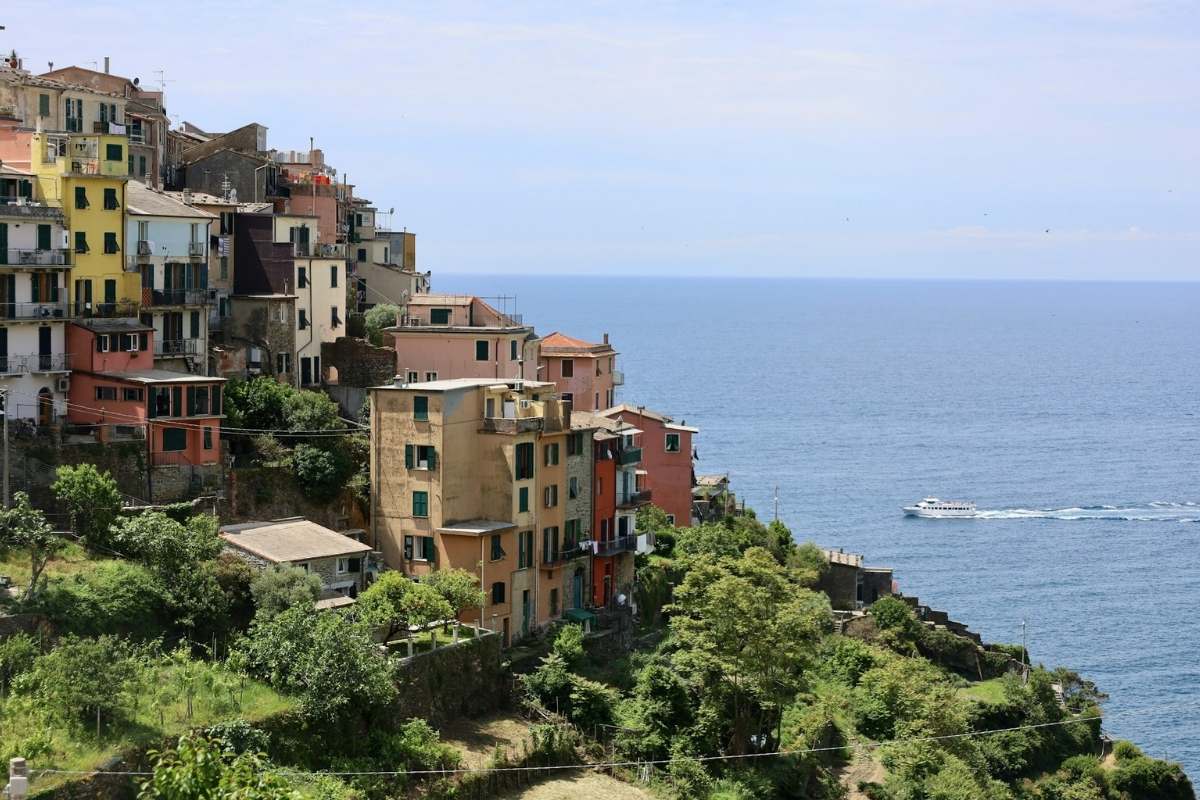
Corniglia sits in the middle of the five but doesn't touch the sea — it perches on a headland 100 metres above it, reachable by a 377-step staircase from the station (the lardarina) or by shuttle bus if you'd prefer dignity. Fewer tourists make it up here. The village square has one bar, the views are absurd, and the whole place feels like somewhere that actively resists being discovered. It's the right place to sit down with a glass of Sciacchetrà and pretend you live here.
Manarola — The Evening Light
Manarola is where the long-exposure night photos come from — the ones with the harbour lights reflected in the black water, the coloured tower houses stacked up behind. They're not exaggerated. Arrive in the late afternoon, walk out along the rocky coastal path to the viewpoint above the harbour, and wait for golden hour. It delivers every single time. The village itself is smaller and quieter than Vernazza, with a working fishing culture that hasn't been entirely swallowed by tourism.
Riomaggiore — The Gateway
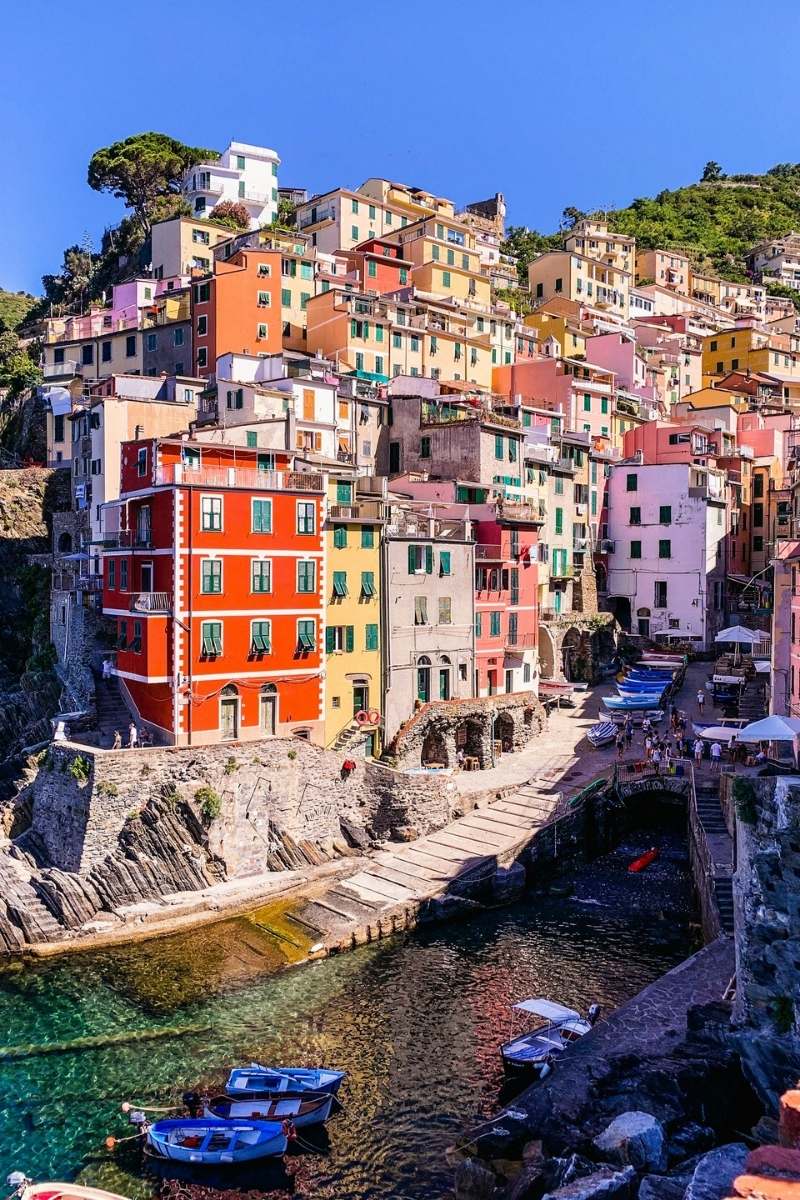
Riomaggiore is the southernmost village and usually the first stop coming from La Spezia, which means it's also often the most crowded. It's also the steepest, built into a narrow gorge with a main street that climbs almost vertically. The harbour is smaller than Vernazza's but no less photogenic. Come here for the boat rentals — hiring a small motorboat and puttering along the coastline for a few hours is one of the best things you can do in Cinque Terre and most people somehow miss it.
Getting There and Around
The Cinque Terre Express train from La Spezia Centrale is the main artery — frequent, cheap, and the only sensible way to hop between villages if you're not hiking. La Spezia is connected directly to Genoa (about 1.5 hours) and Florence (about 2.5 hours). From Milan, count on 3 hours.
The Cinque Terre Card covers unlimited train rides between all five villages plus the national park hiking trails. Buy it at any train station or park office. Versions with ferry access are also available and worth it if you want to approach the villages from the water.
Ferries run seasonally between the villages and out to Portovenere. Taking the boat one way and hiking the return is a legitimate and satisfying plan.
Driving to Cinque Terre is not recommended and occasionally not possible — roads are narrow, parking is expensive and scarce, and cars can't enter the village centres anyway. Take the train.
Hiking the Trails
The classic route is the Sentiero Azzurro (Blue Trail, Trail 2), which once connected all five villages along the cliff edge. Two of the most scenic sections are currently open: the stretch from Monterosso to Vernazza (about 3.5 km, genuinely strenuous with steep climbs) and Vernazza to Corniglia (another 4 km, equally demanding). Both require the Cinque Terre Card.
For something less crowded and more panoramic, the Alta Via delle Cinque Terre (Trail 1) runs along the ridge high above the villages, passing through chestnut forests and vineyard terraces with views down to all five. It's longer, harder, and almost nobody's on it. Roughly 35 km end to end if you do the whole thing; most people pick a section.
The short walk from Manarola south to the Via dell'Amore (Lovers' Lane) viewpoint has recently reopened after years of restoration — easy, flat, and worth it for the coastal views even if the full path still has closures.
Start early. Trails get genuinely hot and crowded by mid-morning in summer. Bring water, real shoes, and sun protection.
Food and Wine
Pesto in Liguria is not what you've had everywhere else. The local basil is smaller-leafed and sweeter; the DOP version made with Ligurian olive oil and no substitutions is a different thing entirely. Order it on trofie pasta and stop ordering it everywhere else for a while.
Anchovies — fresh, marinated, salt-packed — appear on every menu and deserve attention each time. The Monterosso variety are the most famous but every village has its own preparation.
Farinata is a thin, crispy chickpea flatbread cooked in a wood-fired oven. It's a Ligurian staple, sold by the slice from small bakeries, and excellent at any hour.
Sciacchetrà is the local dessert wine — sweet, amber, slightly oxidised, made from partially dried Bosco and Albarola grapes grown on the terraced vineyards above the villages. It's rare, expensive, and exceptional. Buy a bottle from a local producer rather than a tourist shop.
For food with a view and without the tourist markup, walk away from the harbours. The restaurants one or two streets back are almost always better value and equally good.
When to Go
May and early June are the sweet spot: trails are open, the weather is reliably warm, and the summer crowds haven't peaked. The light in June is long and golden.
September and October are nearly as good and often better for hiking — cooler, quieter, and the grape harvest gives the whole place a working-village energy that July's beach tourism doesn't.
July and August are genuinely overwhelming. The villages weren't built for the volume of people who show up, the trails feel like airport queues, and accommodation books out months in advance. If summer is your only option, arrive before 9 AM, stay overnight to see the places without the day-trippers, and lower your expectations for the experience itself.
November through March: quiet, atmospheric, and sometimes wet. Some restaurants and ferries close. Worth it for the solitude if you're not there to swim.
Practical Notes
- The national park charges an entrance fee for the hiking trails — factored into the Cinque Terre Card.
- Most village centres are pedestrian only. Don't arrive expecting to drive to your accommodation.
- Book accommodation early, especially for weekends and summer. The number of beds available is tiny relative to demand.
- Cinque Terre is more strenuous than it looks on a map. If you're hiking between villages, pack as if you're actually hiking — not strolling.
- The villages are small. They close early. Dinner tends to start around 7 PM and kitchens shut by 10.
- There are no ATMs in Corniglia. Cash matters more here than in most of Italy.
- Riomaggiore to La Spezia is 10 minutes by train. La Spezia makes a perfectly reasonable base if you want more accommodation options and a calmer place to sleep.


