Paris: The Complete Travel Guide to the City That Invented the Art of Living Well
June 22, 2026 · TripOnly

Paris: The Complete Travel Guide to the City That Invented the Art of Living Well
There are cities you love. And then there is Paris — which is a different category entirely, a city so embedded in the collective imagination, so thoroughly mythologised by a century of films and songs and novels and paintings, that arriving for the first time feels less like visiting somewhere new and more like recognising somewhere you have always known.
The question is whether the real Paris can survive the weight of that expectation. The answer, consistently and generously, is yes.
France's capital sits on the Seine in the north of the country, a city of two million within the périphérique and twelve million across the metropolitan area — one of the great world capitals by almost any measure you care to apply. It has more Michelin-starred restaurants than any city on earth. More UNESCO World Heritage sites within its limits than most countries. A museum that is the most visited on the planet. A cathedral that collapsed and rose again. A tower that was meant to be temporary and became permanent, iconic, and somehow still moving when you see it rise above the rooftops for the first time.
It also has neighbourhood bakeries where the same baguettes have been made the same way for generations. Street markets on Tuesday and Saturday mornings. A canal lined with houseboats and Sunday picnickers. The best pharmacies in the world, if you have ever needed one. Bookshops along the Seine where the same second-hand paperbacks have been selling since before you were born. A café crème and a tartine at a zinc bar at 8am that costs €6 and contains something close to everything.
Whether you're standing before Winged Victory with your neck craned back, eating a duck confit at a red-checked tablecloth bistro, cycling along the Canal Saint-Martin, or watching the Eiffel Tower pulse with lights at midnight — Paris delivers. It delivers on the myth and it delivers something the myth doesn't quite prepare you for, which is the specific, daily, unhurried pleasure of being in a city that has spent a very long time learning to do ordinary things extraordinarily well.
People come for a long weekend and rebook before they leave. They come back and start looking at language schools. They look at language schools and six months later find themselves signing a lease in the 11th arrondissement and claiming it was all very spontaneous.
This is everything you need to know.
Why Paris?
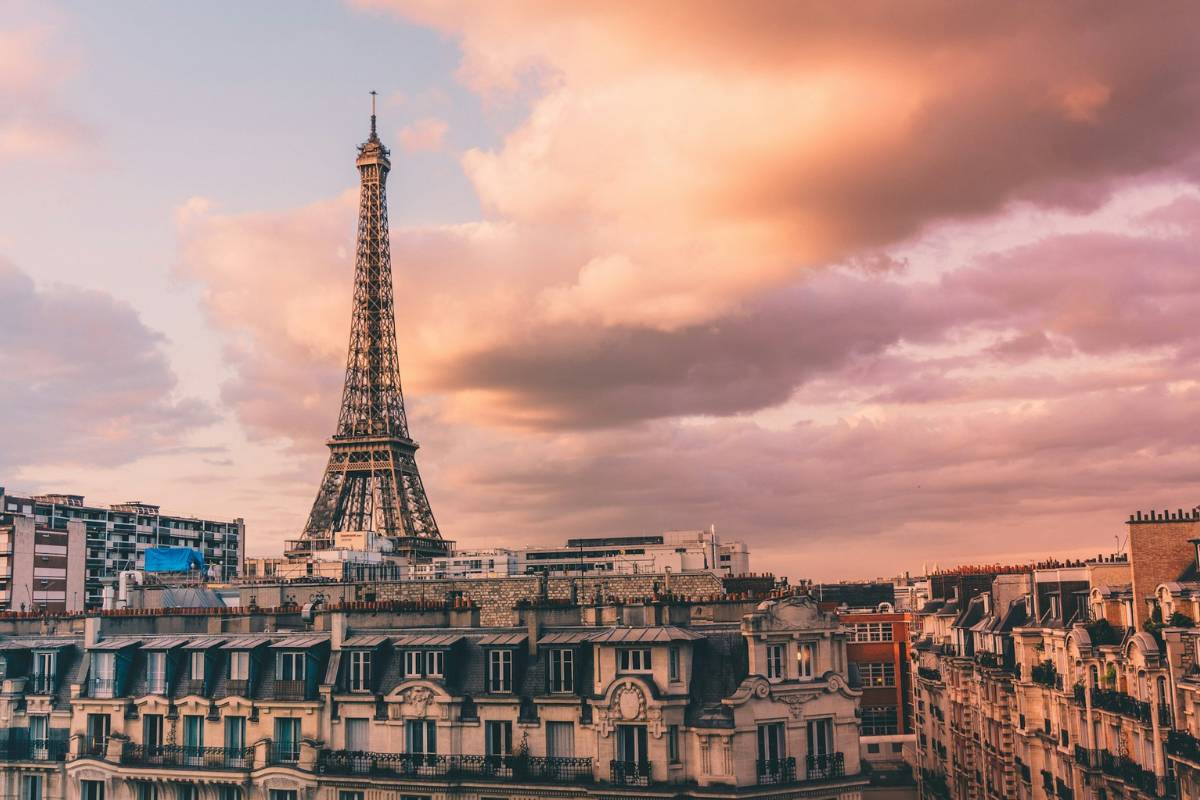 There's a reason Paris receives more international visitors than any city in the world, and still manages, in its quieter arrondissements and slower hours, to feel like something discovered privately.
The city is organised around the Seine in a spiral of twenty arrondissements — neighbourhoods that ring outward from the islands at the historic centre, each with its own character, its own market, its own particular mix of the magnificent and the everyday. The 1st and 4th hold the Louvre, the Marais, Notre-Dame. The 5th and 6th are the Latin Quarter and Saint-Germain-des-Prés. The 7th holds the Eiffel Tower and the Musée d'Orsay. The 9th is grand boulevards and Opéra Garnier. The 10th and 11th are the Canal Saint-Martin, the covered passages, the neighbourhood bistros. The 18th is Montmartre. And on outward, through Belleville and the Batignolles and the Buttes-Chaumont — a Paris that most tourists never reach, and which is worth the metro ride.
Spring brings the chestnut trees into bloom along the boulevards and the café terraces filling at the first hint of sun. Summer is long evenings, the Tuileries fair, and picnics on the Seine. Autumn turns the parks to amber and the restaurant season to its most serious. Winter strips the tourist volume back, brings fairy lights to the Champs-Élysées, and delivers what many argue is the best time to see Paris — cold, clear, beautifully lit, and almost entirely yours.
When to Go
Spring (April–June) is what the postcards were made from — chestnut blossoms, open terrace doors, the Luxembourg Gardens at full green, a light that falls on old stone in a way that genuinely looks like a painting. April and May are ideal; June is still excellent before the summer peak builds.
Summer (July–August) is high season and the city is busy, which the city handles better than most. Longer evenings, the Seine beaches (Paris Plages), outdoor cinema, the Bastille Day celebrations on July 14. Locals famously flee in August, leaving a quieter, more tourist-owned Paris — easier for some things (restaurants), more closed for others (small boutiques, neighbourhood traiteurs).
Autumn (September–November) is the connoisseur's season. The summer crowds have thinned, the restaurant and cultural calendar cranks into gear, the parks go gold, and the light — the famous Paris light, the one the Impressionists chased — is at its most extraordinary. October and November are underrated months for a first-time visit.
Winter (December–March) offers the Christmas markets along the Champs-Élysées and at La Défense in December, the lowest hotel prices of the year in January and February, and a city that belongs far more to its residents than its visitors. Wet and occasionally cold, but reliably beautiful and easier to navigate.
Getting There
By air: Paris Charles de Gaulle (CDG) is the main international hub, 30 kilometres northeast of the city. The RER B train connects CDG to central Paris in about 35 minutes (around €12) — the most reliable and often fastest option. Taxis to central Paris cost approximately €55–65 fixed rate. Uber operates but can be slow from the taxi ranks during peak hours.
Paris Orly (ORY) handles a mix of European and domestic flights, 14 kilometres south. The Orlyval monorail connects to the RER B, or take a direct bus or cab to the city.
By Eurostar from London: 2 hours 16 minutes from London St Pancras to Paris Gare du Nord. The train is the only rational choice between these two cities — city centre to city centre, no airports, no security theatre, and you arrive in the middle of Paris ready to go. Book 4–6 weeks ahead for the best fares.
By TGV from the rest of France and Europe: Gare du Nord (London, Brussels, Amsterdam), Gare de Lyon (Lyon, Marseille, Geneva, Barcelona), Gare Montparnasse (Bordeaux, Nantes, Spain), Gare de l'Est (Strasbourg, Frankfurt, Vienna). Paris is the hub of the European high-speed rail network. From Brussels: 1h22. From London: 2h16. From Amsterdam: 3h30. From Barcelona: 6h30.
Within the city: The Métro is the spine of Parisian life — 16 lines, 302 stations, running from 5:30am to 1am Sunday through Thursday and until 2:15am on Friday and Saturday nights. Buy a Navigo Easy card (or use your contactless bank card directly at the turnstile) and load single tickets or a carnet. The Vélib' bike-share system covers the entire city with docking stations every few hundred metres. Walking between neighbourhoods — Marais to Île Saint-Louis, Latin Quarter to Saint-Germain, Opéra to Palais Royal — is often faster and always more enjoyable than the Métro.
Where to Stay
Paris rewards neighbourhood choice above almost everything else. Where you sleep determines what your mornings feel like, which bakery becomes yours, and how much of the real city you accidentally absorb.
The Marais (3rd and 4th arrondissements) is the ideal first-Paris base — centrally located, architecturally beautiful, full of excellent cafés and restaurants, and lively without being overwhelming. Hôtel du Petit Moulin (in a Victor Hugo–designed building) and Hôtel de la Bretonnerie are standout boutiques. The kosher bakeries, the gay bars, the ancient hôtels particuliers now housing art galleries — the Marais contains more per square metre than any neighbourhood in the city.
Saint-Germain-des-Prés (6th) is the Paris of Sartre and Beauvoir, Hemingway and Fitzgerald — Left Bank intellectual romance, now expensive and tourist-aware but still beautiful. Hôtel d'Aubusson, Relais Christine, and L'Hôtel (where Oscar Wilde died, now transformed into a supremely elegant boutique property with a pool in the medieval cellar) are the flagship choices.
The 7th arrondissement for quiet elegance and proximity to the Eiffel Tower and Musée d'Orsay — more residential than the Marais, less café-dense, excellent for couples. Hôtel Montalembert and Le Narcisse Blanc are strong options.
Canal Saint-Martin and the 10th for the most genuinely local, non-tourist experience in inner Paris — Sunday flea markets, the covered passages, the best natural wine bars in the city, a younger neighbourhood energy. More Airbnb and apartment-rental territory than hotels, though Hôtel du Nord carries the literary history of the canal.
Montmartre (18th) is the romantic hilltop — cobblestones, vineyard, the Sacré-Cœur on the summit — but logistically awkward for reaching most major sights. Best experienced as a neighbourhood to visit rather than a base.
Budget: Paris hostels range from basic to genuinely good. The Generator Paris (near the Canal Saint-Martin) and St Christopher's Inn near the Gare du Nord are well-run options. For apartments, Marais and Bastille are the best-value neighbourhoods for short-stay rentals.
What to See and Do
The Louvre
Start here. You have to start here — even if you've been before, even if every picture of the Mona Lisa has prepared you to be underwhelmed, even if you plan only one museum visit.
The Musée du Louvre is the most visited museum in the world for a reason: it is incomprehensibly large, staggeringly wealthy in content, and contains works — the Winged Victory of Samothrace, the Venus de Milo, Delacroix's Liberty Leading the People, David's Coronation of Napoleon, and yes, the Mona Lisa — that justify the admission in isolation.
The strategy is not to see everything. It is to pick three rooms and see them properly. The Winged Victory at the top of the Daru Staircase stops people mid-step every time. The Sully wing's Mesopotamian galleries are extraordinary and consistently uncrowded. The Denon wing holds the Italian Renaissance masterworks and the inevitable Mona Lisa crowd — go early.
Book skip-the-line tickets online. The queue without them is real.
Notre-Dame de Paris
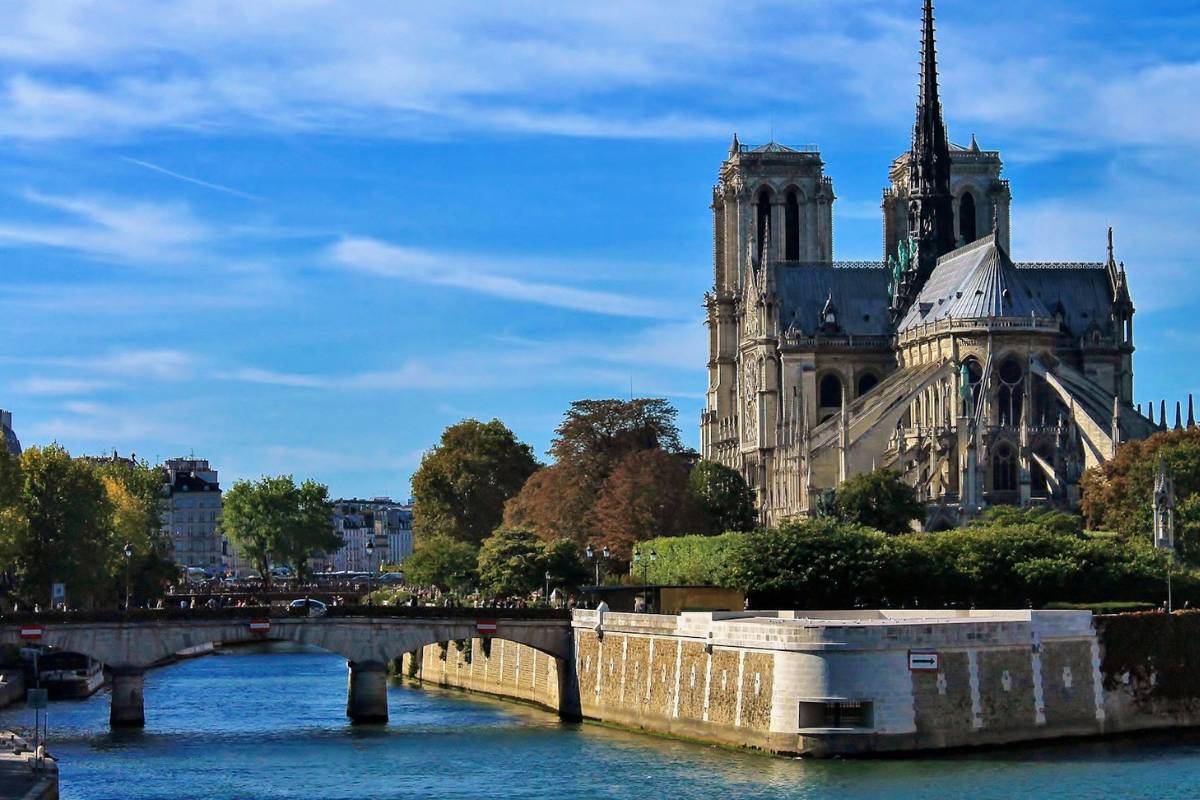
Notre-Dame went into flames on April 15, 2019, and the world watched the spire fall. The cathedral reopened in December 2024 after a restoration effort of remarkable speed and ambition, and what has emerged is the cathedral as it was imagined — perhaps more complete and more luminous than it was before the fire.
The interior, newly restored, is extraordinary: the rose windows restored to a brilliance they hadn't had in decades, the choir and nave returned to their medieval colour and proportion. The exterior towers and flying buttresses, visible from every bridge crossing the Seine near the Île de la Cité, remain one of the great Gothic statements in architecture.
Climb the towers if the queues allow — the view over the Seine, the left and right banks, and across to the Eiffel Tower on the western horizon, is the most complete view of Paris there is. Book online.
The Eiffel Tower
It was built as a temporary exhibit. Gustave Eiffel's 300-metre iron lattice tower went up in 1889 for the World's Fair and was scheduled for demolition twenty years later. The city kept it because it proved useful as a radio antenna, and because demolishing it would have felt, by then, like a small crime against the world.
Everyone goes. Go anyway.
The second floor has the best combination of view and accessibility — the summit is dramatic but the crowds and wind at 300 metres are challenging in a way the second floor (115 metres) isn't. Book tickets well in advance, particularly for the top. The elevator queue without a booking can be two hours on summer afternoons.
The Eiffel Tower at midnight, when it pulses with its hourly light show — 20,000 bulbs across the structure blinking and sparkling for five minutes on the hour — is a Paris experience that shouldn't work as well as it does and absolutely does.
Musée d'Orsay
If the Louvre is the Vatican, the Musée d'Orsay is the Sistine Chapel — smaller, more focused, and arguably more purely pleasurable to spend time in.
Housed in a magnificent converted 1900 Beaux-Arts railway station, the d'Orsay holds the greatest collection of Impressionist and Post-Impressionist painting in the world: Monet's haystacks and water lilies and Rouen cathedrals. Van Gogh's bedroom and self-portraits. Renoir's Bal du Moulin de la Galette. Degas's dancers. Cézanne's bathers. Seurat's Le Cirque. These aren't reproductions you've grown up with on mugs and calendars — they are the originals, full-scale, and the difference matters.
Book online, arrive at opening, and plan to stay three to four hours.
Musée de l'Orangerie and the Water Lilies
A short walk along the Tuileries from the d'Orsay, the small Orangerie holds Monet's Nymphéas — the eight enormous water lily panels painted in the last years of his life and installed in two elliptical rooms built to his specifications. They are immersive in a way that photographs can't communicate, designed to be experienced as environments rather than paintings, and they remain one of the most tranquil, emotionally affecting rooms in any museum anywhere.
Go in the morning, when the natural light from above fills the rooms as Monet intended. Allow more time than you think you need.
Sainte-Chapelle
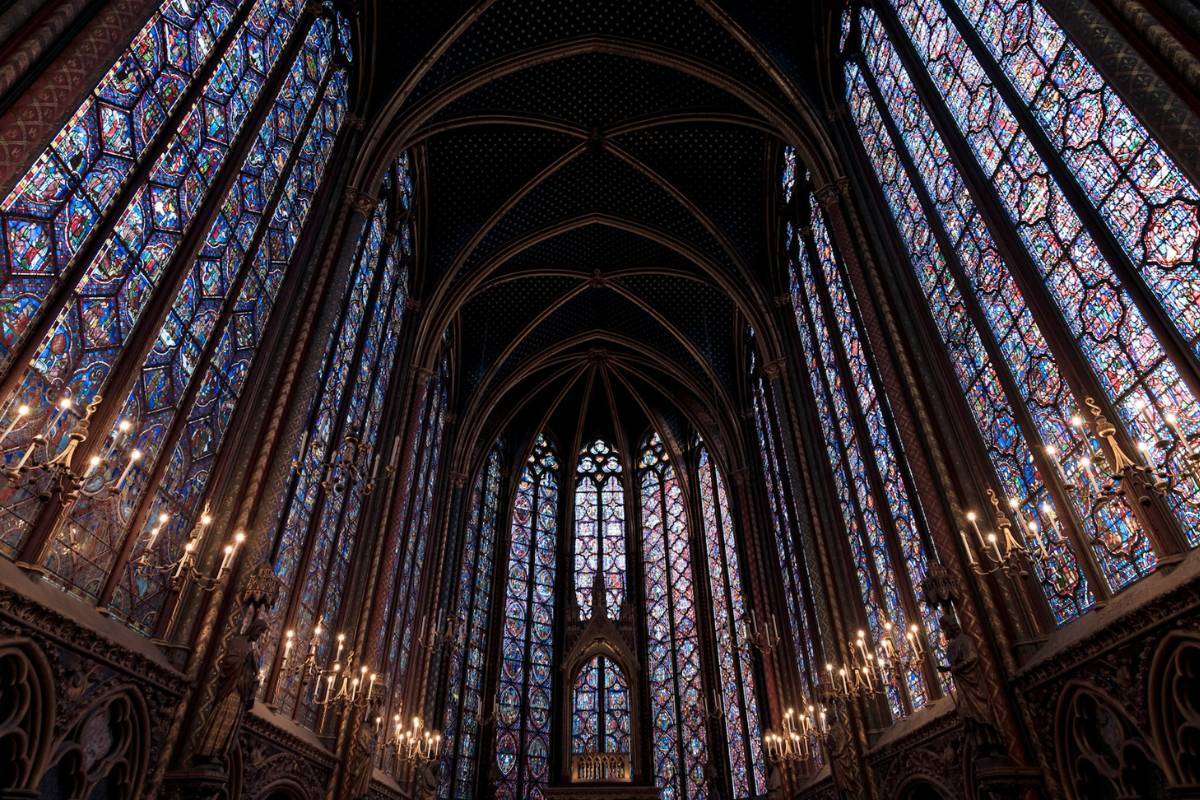 Tucked inside the Palais de la Cité on the Île de la Cité, Sainte-Chapelle is the most overlooked major monument in Paris and the most purely beautiful interior in the city. Built by Louis IX in the 1240s to house holy relics (including what was claimed to be the Crown of Thorns), its upper chapel is essentially a cage of stone holding 1,113 stained glass panels — 15 metres tall, covering 600 square metres, filling the entire room with coloured light on a sunny day.
It is genuinely unlike anywhere else in the world. Arrive at opening; it is enormously busy by mid-morning.
The Marais and Île Saint-Louis
The Marais is Paris at its most immediately liveable — Place des Vosges (the city's oldest planned square, from 1612, a perfectly proportioned arcade of red brick and white stone surrounding a fountain-centred garden), the Centre Pompidou (the inside-out Renzo Piano building that remains, fifty years on, the most radical architectural statement on the Parisian skyline), the Jewish quarter on Rue des Rosiers, and the LGBTQ+ bars and clubs radiating from Rue Sainte-Croix-de-la-Bretonnerie.
Cross the bridge onto the Île Saint-Louis for the quietest streets on any island in any European capital, Berthillon ice cream (one scoop of their salted caramel, one of blackcurrant, eaten walking along the Quai de Bourbon), and the view back toward Notre-Dame that every Parisian eventually learns is the one to use when words aren't enough.
Palais Royal and the Covered Passages
The Palais Royal garden — just north of the Louvre — is a colonnaded 18th-century courtyard garden that feels like a secret despite its central location. Antique dealers and specialist bookshops line the galleries under the arcades; Daniel Buren's striped black-and-white columns in the courtyard divide opinion sharply and photograph beautifully.
Connected by a short walk, the covered passages (galeries couverts) of the 2nd arrondissement — Galerie Vivienne, Galerie Colbert, Passage Jouffroy, Passage Verdeau — are 19th-century iron-and-glass shopping arcades, largely unchanged, containing stamp dealers, antique toy shops, tearooms, and bookshops. They feel like something that shouldn't still exist in the 21st century. They are the best rainy-day walk in Paris.
Montmartre and Sacré-Cœur
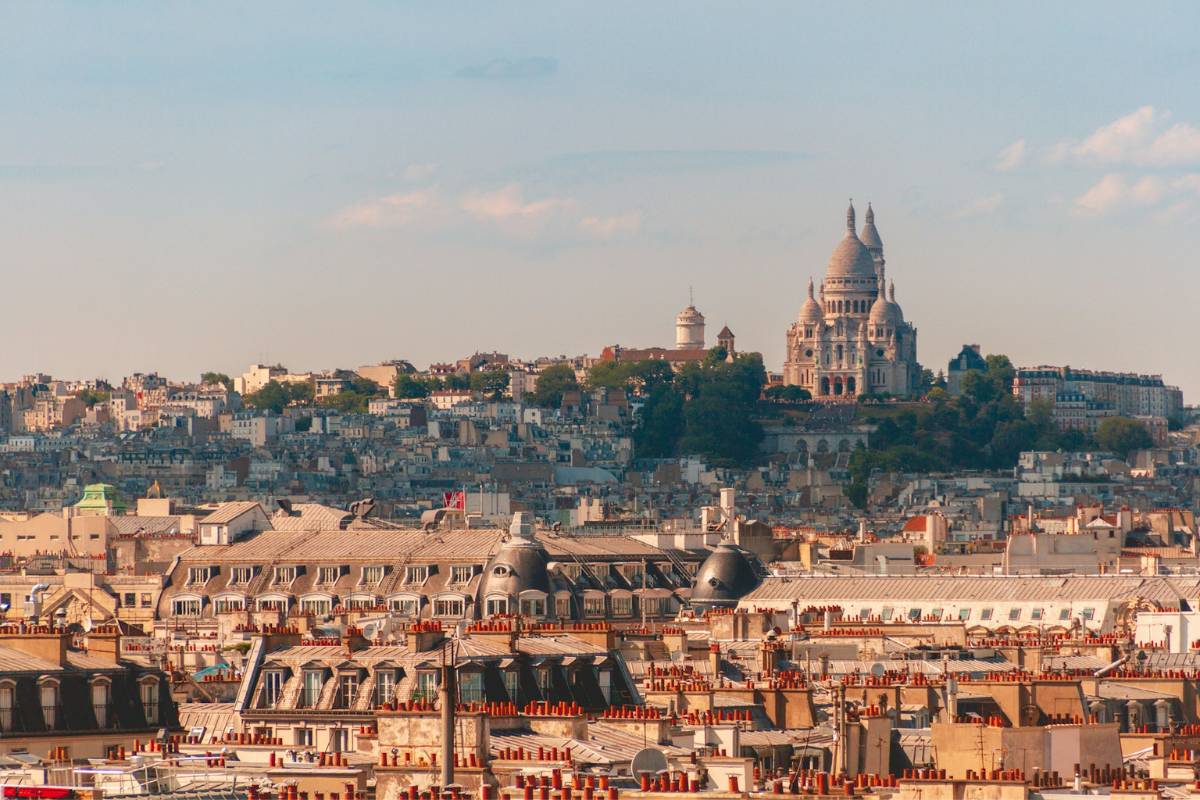
The hill of Montmartre in the 18th is Paris's most romantically positioned neighbourhood — the artists' village of Toulouse-Lautrec, Picasso, and Utrillo, steep cobblestone streets and a vineyard, the white domes of the Sacré-Cœur on the summit visible from much of the city below.
The Sacré-Cœur is worth the climb, but the views from the Place du Tertre (the famous square of artists' stalls, crowded and touristy but worth a look), the Rue Lepic market, and the Bateau-Lavoir — where Picasso painted Les Demoiselles d'Avignon — give the neighbourhood its texture. The tourist-trap restaurants directly around the Sacré-Cœur are avoidable; walk five minutes downhill to find the neighbourhood's actual dining and café life.
Canal Saint-Martin and Belleville
The Canal Saint-Martin in the 10th is the Paris that Paris residents actually live in — a tree-lined, lock-dotted waterway running from the Place de la République toward the Bassin de la Villette, lined on weekends with picnickers, cyclists, and the kind of low-key riverside afternoon that every great city needs.
Walk the canal on a Sunday morning, stopping at Du Pain et des Idées bakery on Rue Yves Toudic for one of the great croissants aux amandes in Paris. Continue north to the multicultural energy of Belleville, where Vietnamese and Chinese restaurants, Tunisian pastry shops, and wine bars share blocks with street art murals on a hillside that offers one of the least-photographed and most genuinely Parisian panoramas of the city below.
The Luxembourg Gardens and Père Lachaise
The Jardin du Luxembourg in the 6th is Paris's most beloved park — formal French garden geometry, the Medici Fountain in the northeast corner, wooden chairs set out around the central pool that anyone can arrange however they like. Sit. Read. Watch students from the Sorbonne conduct their lives at a pace that makes a persuasive argument for academic life.
Père Lachaise Cemetery in the 20th is the most literary and musical cemetery in the world — Oscar Wilde, Édith Piaf, Jim Morrison, Chopin, Marcel Proust, Colette, and a rolling cobbled hillside of extraordinary funerary sculpture that makes for one of Paris's most genuine, unexpected afternoons. Pick up a map at the entrance; Morrison's grave has its own trail of pilgrims, but the rest of the cemetery is largely peaceful.
Where to Eat and Drink
Paris invented the restaurant. It invented the brasserie, the bistro, the café, the boulangerie as a cultural institution, the crêperie, the traiteur, and the concept of eating as an act worth taking seriously. The scene is, as a result, somewhat intimidating and entirely worth the effort to navigate properly.
Bakeries: The baguette tradition from any artisan boulangerie is the daily baseline — get it in the morning, eat it within hours. Du Pain et des Idées for the extraordinary croissants and pain des amis. Sain Boulangerie in the 10th for naturally fermented sourdough. Maison Landemaine across multiple arrondissements for reliable, excellent everyday bread.
Croissants: The croissant at Stohrer (Paris's oldest pâtisserie, founded 1730) is historically correct. The croissant at Frédéric Kassel, Des Gâteaux et du Pain, or Cyril Lignac's shops is a modern, flaky, buttery argument for staying another week.
Pâtisseries: Pierre Hermé for macarons that recalibrate what macarons can be. Ladurée for the original macaron in a setting that feels like eating inside a Rococo painting. Jacques Genin for the most extraordinary caramel chocolates and millefeuille in the city.
Classic bistro cooking: Le Comptoir du Relais in Saint-Germain for the whole roast pig on Saturday evenings. Septime in the 11th for the most intelligent modern bistro in the city (reserve months ahead). Frenchie near the covered passages. Le Baratin in Belleville for the wine list and cooking that critics have been praising quietly for thirty years. Aux Deux Amis for a standing natural wine and plate of charcuterie at the zinc bar that represents, at around €15 per person, the best value in Paris.
Steak-frites: At Le Relais de l'Entrecôte — no reservations, one item on the menu (steak-frites in their famously secret sauce, automatically refilled), queue from 15 minutes before opening. It is exactly as good as it sounds.
Markets: Marché d'Aligre in the 12th on Saturday and Sunday mornings, a covered market and outdoor flea market combined, attended primarily by Parisians and producing one of the genuinely authentic street-food-and-produce experiences left in inner Paris. Marché des Enfants Rouges in the Marais (the oldest covered market in Paris, 1615) for midday lunch at the Moroccan, Japanese, and Antillean stalls.
Natural wine bars: The 10th and 11th have become the natural wine capital of the world, with no hyperbole intended. Aux Deux Amis, Cave du Paul Bert, Le Verre Volé, and La Buvette (a tiny cave bar on Rue Mouffetard in the 5th) are essential stops for anyone interested in wine and not yet resigned to ordering by colour alone.
Coffee: Parisian café coffee was, for decades, a small strong cup served without apology. It has improved dramatically. Café Lomi and Telescope in the 1st, Fragments in the Marais, and Ten Belles on the Canal Saint-Martin are doing third-wave specialty coffee properly.
Cheese and charcuterie: Visit any fromagerie — Laurent Dubois, Barthélémy, or Marie-Anne Cantin — and ask for a selection for tonight and a selection for tomorrow morning. Then follow instructions completely.
Practical Tips
Learn the basic courtesies — they matter here. Always say bonjour when entering any shop, café, or restaurant, and au revoir when leaving. Always say s'il vous plaît when ordering anything. The Paris rudeness myth is largely a story about visitors who skip this. Parisians respond to basic politeness with warmth and patience. Always.
Don't rush the food. A French meal — even a casual lunch — is not a transaction. It is the point. Sitting down, ordering slowly, eating without a phone in your hand, drinking the wine at the speed it deserves — this is the practice, and Paris is where you learn it.
The Métro is extraordinary. 302 stations, a train every 2–4 minutes on major lines, and more art and architecture than most city transit systems manage in their flagship stations. Arts et Métiers station (line 11) is an extraordinary copper-fitted Jules Verne fantasy. Abbesses (line 12) has the deepest platform in Paris with a beautiful Art Nouveau entrance. Pont de Neuilly (line 1) has a riverside view on the bridge crossing.
Book restaurants in advance. Paris's serious restaurants — Septime, Le Comptoir, Frenchie — book out weeks to months ahead. Plan your one big dinner before you arrive; leave the rest for spontaneity.
Museum booking is non-negotiable in peak season. The Louvre, d'Orsay, Sainte-Chapelle, and Notre-Dame all benefit hugely from pre-booked timed tickets in summer. Without them, queue times can be 1–2 hours. With them, you walk in.
The périphérique divides two cities. Inner Paris (the 20 arrondissements within the ring road) is the Paris of this guide. The banlieue beyond — including the important destinations of Versailles, the Louvre-Lens museum at La Défense, and Saint-Denis — are worth separate exploration and easily reached by RER.
Sundays are special. The Sunday market rhythm — Aligre, Enfants Rouges, the Brocante flea markets in various neighbourhoods — is one of the best unscheduled experiences Paris offers. Many shops close; many restaurants close; the city breathes at a different pace.
The Seine is the backbone. Orient yourself by the river, not the Métro. Most of what matters in central Paris is within walking distance of a Seine bank. Walk it; both sides, in both directions, at different times of day.
Paris is a walking city. The distance from Notre-Dame to the Louvre is 12 minutes on foot. From the Louvre to the Eiffel Tower is 40 minutes. From Saint-Germain to the Marais is 25 minutes. Most visitors over-rely on the Métro and miss the city that exists between the stations.
How Long Do You Need?
A long weekend (3–4 days): The Louvre, the d'Orsay, Notre-Dame, the Eiffel Tower, a Seine bank walk, the Marais and Île Saint-Louis, one great dinner, several great boulangeries. Enough for the essential Paris. Not enough.
One week: Add Sainte-Chapelle, the Canal Saint-Martin, Montmartre, the Palais Royal and covered passages, Père Lachaise, the Orangerie, a market morning, and time to develop a favourite café and return to it daily. This is the right length for a first serious visit.
Two weeks: Now you can really inhabit the city. Day trips to Versailles (40 minutes by RER), Chartres (1 hour by train), Giverny and Monet's garden (1.5 hours by train and bus in spring and summer). Side explorations into the 19th, 20th, and the immigrant neighbourhoods of the northeast. The kind of evenings that turn into late nights and late nights that turn into mornings that require café au lait and a pain au chocolat in something approaching silence.
There is no such thing as enough time in Paris.
Final Thoughts
Paris will not give itself to you immediately. It rewards patience, and walking, and the willingness to be wrong about what you were going to do today and do something else instead — a neighbourhood you followed by accident, a wine bar you ducked into out of the rain, a bridge you crossed because the light on the other side looked right. It is a city that functions as both museum and lived-in place simultaneously, which is harder to pull off than it sounds, and Paris has been doing it for so long that it manages it with something close to grace.
What nobody tells you before the first visit is that the photographs are accurate. The light really does fall like that. The café crème really does taste like that. The baguette, eaten warm on the walk home from the bakery, really is worth everything anyone has ever said about it. The city really is as beautiful from the river as it is from above. And the Eiffel Tower, when you see it for the first time — or the tenth, or the fiftieth — still does something that no amount of prior exposure quite manages to pre-empt.
People who visit once tend to come back. People who come back start taking French lessons between visits. People who take French lessons start visiting more often. People who visit more often eventually stop calling it a holiday and start calling it home.
It will still manage to surprise you. Every single time.
Pack your best walking shoes. Learn to say bonjour. Leave the itinerary loose.
Paris is waiting.


