Hallstatt, Austria: The Village That Looks Too Beautiful to Be Real
June 4, 2026 · TripOnly

The Village at the Edge of Impossible
Hallstatt should not exist. It occupies a narrow ledge of land between a sheer cliff face and one of the coldest, clearest lakes in Europe, in a valley that sees the sun for only a few hours each winter day. For most of human history, the only way in was by boat. The village has been inhabited for over seven thousand years — longer than most civilisations — because the mountain behind it is packed with salt, and salt, for most of human history, was worth more than gold.
Today the salt is still there. So is everything else.
Getting There
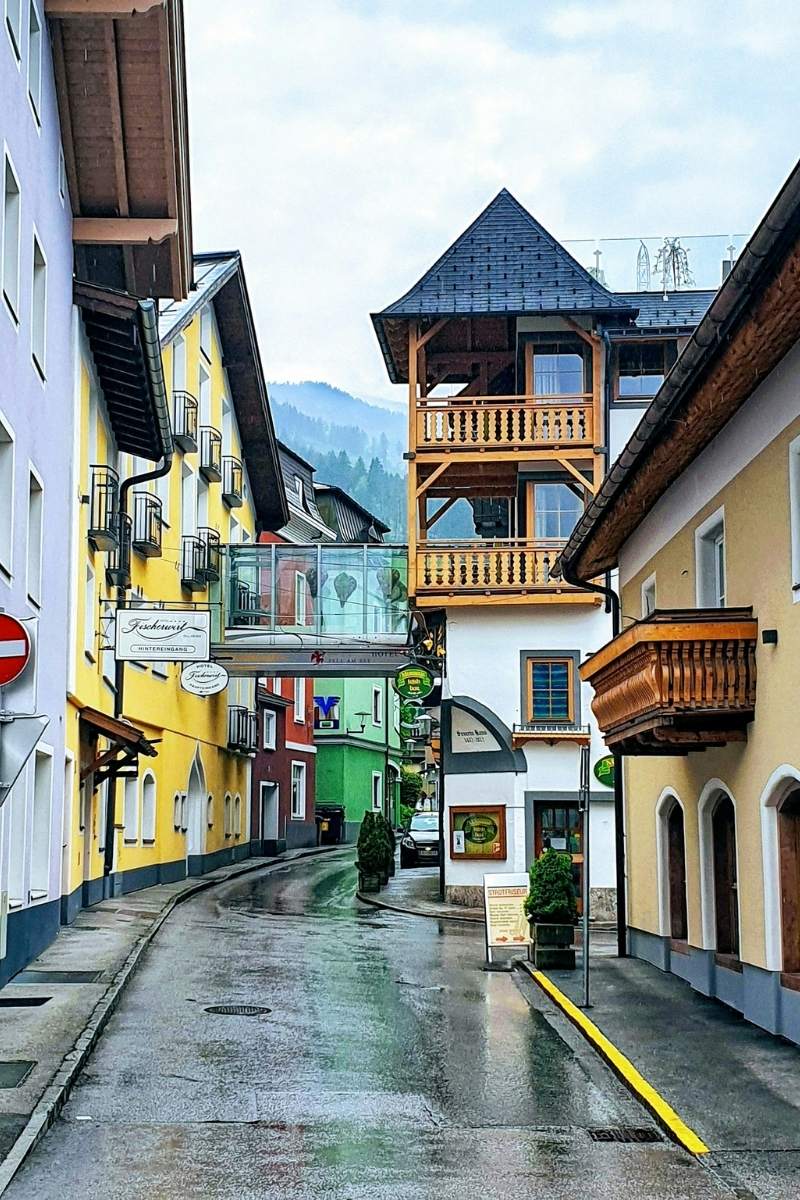
Hallstatt sits in the Salzkammergut region of Upper Austria, about 75 kilometres southeast of Salzburg. Getting there is half the experience.
By train and ferry: The most scenic route. Trains run from Salzburg to Hallstatt Bahnhof, a station that sits on the opposite shore of the lake — because there was never room to build it on the village side. From the platform, a small passenger ferry crosses the water to the village landing. The whole journey takes about two hours from Salzburg, and the ferry crossing, even at five minutes, feels ceremonial.
By car: Drive via Bad Ischl on the B145, then follow the lake road south. Be warned: the village has almost no parking. The main car park fills by 8am on summer weekends. Most visitors park at the Lahn area on the southern edge or at the Park & Ride in Salzberg and take the shuttle down.
By bus: Regular Postbus services connect Hallstatt to Bad Ischl and the wider region. Slower, cheaper, and gives you a window seat through some extraordinary alpine scenery.
When to Go
May and June are the sweet spot — warm enough to sit outside, light until nearly 9pm, and the worst of the summer crowds have not yet arrived. The lake reflects the mountains in that particular deep-blue way it only manages when the sky is clear and the season is just tilting into warmth.
September and October run it close. The crowds thin after mid-August, the light goes golden, and the surrounding forest starts its slow burn toward autumn colour. There is a specific afternoon in mid-October when the whole valley looks like it is on fire.
July and August are busy. Not unpleasant, but the village's single main street can feel uncomfortably full by 10am. If you visit in summer, arrive early — before 9am if you can manage it — and you will have the lakeside promenade largely to yourself.
Winter is underrated. Hallstatt is cold, sometimes snowbound, and the days are short, but the village empties almost completely and takes on a quality that is harder to name: austere, a little melancholy, genuinely beautiful in a way that does not require a camera.
What to Do
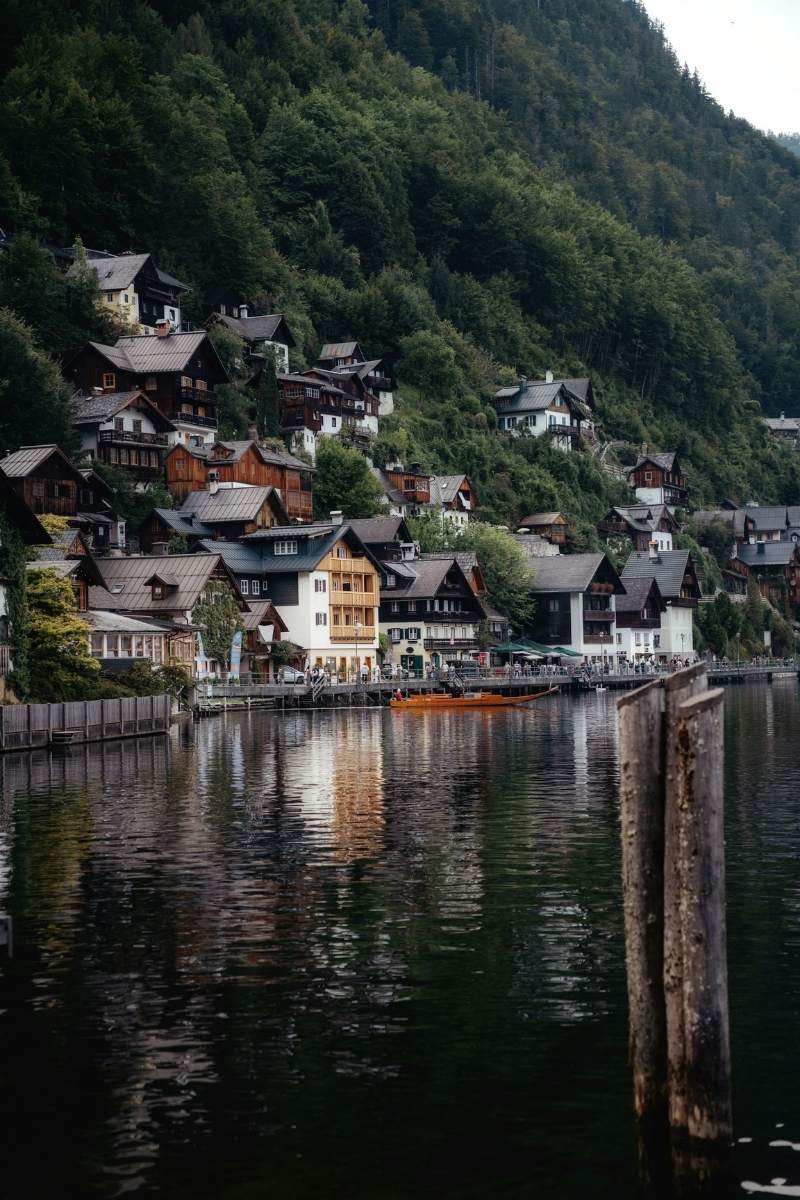
Walk the Lakeside Promenade
Start here, always. The wooden walkway that hugs the water's edge between the market square and the Catholic church is Hallstatt's central axis. Walk it slowly. The view across the lake to the Dachstein massif — glaciers visible on clear days — is the one that ends up in every photograph and still, somehow, surprises you in person.
The Salt Mine
Seven thousand years of continuous mining. The Hallstatt salt mine — Salzwelten — is one of the oldest in the world, and a tour through it is genuinely unlike any other underground experience. The highlight is the wooden slide, a miner's shortcut between levels that visitors still descend, which is more fun than it has any right to be. Book ahead in summer; it sells out.
Skywalk Hallstatt
A funicular runs from the village up to Salzberg, where the mine entrance sits. From there, a short walk leads to the Skywalk: a viewing platform cantilevered over the valley, 360 metres above the lake. The view is the kind that makes people go quiet. The funicular itself, clinging to the cliff above the village rooftops, is worth the ride.
The Charnel House
Behind the Catholic parish church, there is a small ossuary — the Beinhaus — containing over twelve hundred decorated skulls. Space in Hallstatt's tiny cemetery was always scarce; when graves needed reusing, bones were exhumed, bleached in the sun, and painted with the names, dates, and often floral patterns by surviving family members. The practice continued until 1995. It is sobering and quietly moving, and nothing like as grim as it sounds.
The Museum
Hallstatt gives its name to an entire era of European prehistory — the Hallstatt period, roughly 800 to 450 BC — because of what archaeologists found buried in the salt mine: thousands of objects preserved in salt for millennia, tools and textiles and food. The World Heritage Museum on the market square tells this story well, with original artefacts and thoughtful exhibitions. Allow ninety minutes.
Kayak or Stand-Up Paddle the Lake
Rental outfits operate along the southern shore. The Hallstätter See is cold — even in August it rarely climbs above 20°C — but paddling out to the middle and looking back at the village from the water is the perspective no photograph ever quite captures. The mountain above, the steeple below, the houses stacked impossibly between them.
Where to Stay
Staying overnight in Hallstatt is the single best decision you can make. The day-trippers leave by early evening, and by 7pm the village returns to something close to itself.
Seehotel Grüner Baum occupies a position on the market square that would be unfair if it were not also genuinely lovely — old-fashioned, lake-facing, and run with warmth. Book the water-view rooms.
Heritage Hotel Hallstatt is newer and sleeker, with rooms that lean into the lake views with large windows and clean lines. Good breakfast.
Gasthof Simony has been taking in travellers since 1860. The rooms are simple, the location on the lakefront is exceptional, and the feeling of continuity — this building, this family, this lake — is its own kind of comfort.
For budget travellers, the village has a handful of private rooms and apartments bookable through the usual platforms. Even a modest room in Hallstatt costs more than you expect, but staying the night costs less than you think when measured against what you get: the village after dark, the morning mist on the water, the mountains lit up at first light with the streets still empty.
Where to Eat
Hallstatt is not a culinary destination in the way that Vienna or Salzburg is, but it feeds you well.
Restaurant zum Salzbaron does the Austrian classics — Wiener Schnitzel, Tafelspitz, Apfelstrudel — in a dining room that feels old in the right ways. The pork dishes are particularly good.
Gasthof Mühle is a little south of the main tourist drag and slightly less expensive for it. The fish, pulled from the lake or nearby rivers, is what you should order.
Café am See is the right place for coffee and cake in the afternoon, with a terrace over the water and the kind of Sachertorte that makes you realise you have been eating inferior versions your whole life.
For a quick lunch, the bakeries and Würstelstand-style stands near the ferry landing do perfectly good work at reasonable prices.
Practical Notes
Crowds: Hallstatt receives around a million visitors a year into a village of fewer than eight hundred people. That tension is real. Go early, stay overnight, and give the village the respect it deserves — it is not a theme park.
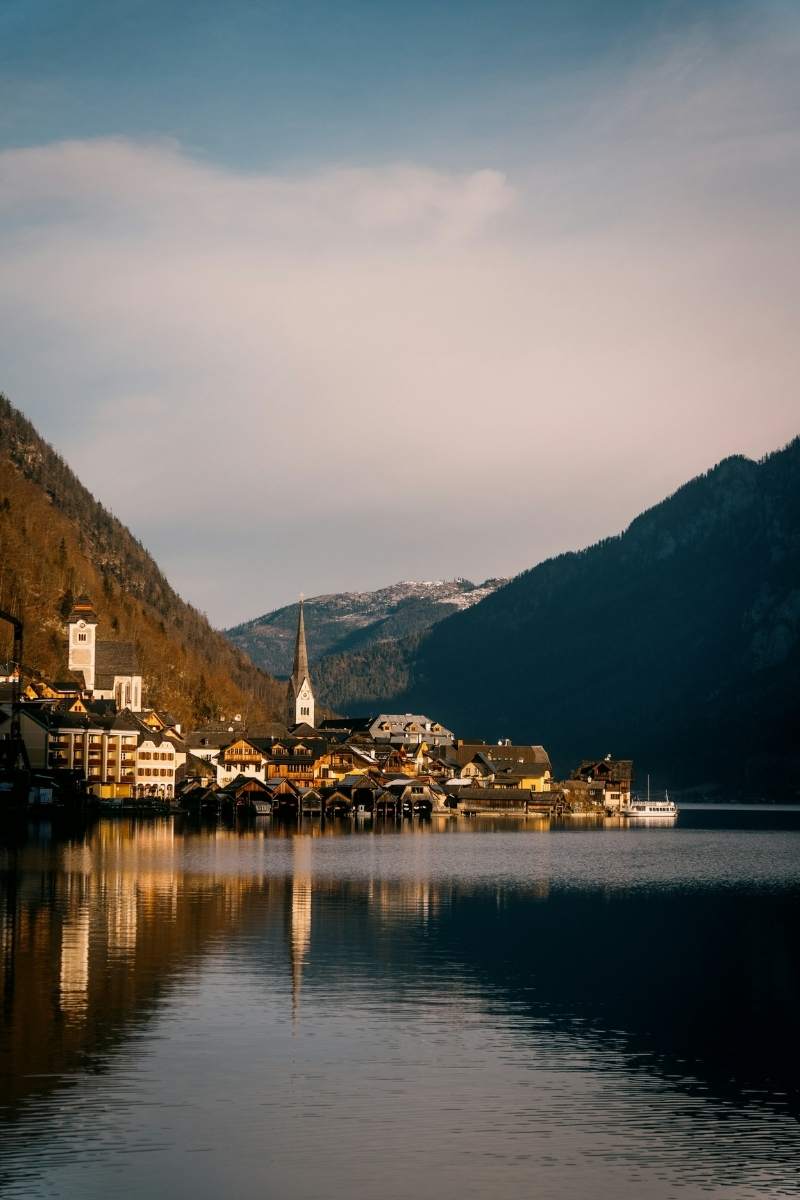
Photography: The most famous shot, the one reproduced ten million times, is taken from the north end of the lake, across the water, with the church spire centred above the village. You will recognise the spot immediately. It is worth taking, and it is worth putting the camera down afterward.
Language: German is the language of daily life. English is widely spoken in tourist-facing businesses. A few words of German — Bitte, Danke, Entschuldigung — are always appreciated.
Currency: Austria uses the euro. Cards are accepted almost everywhere; cash is useful for the ferry and smaller purchases.
UNESCO status: The entire Hallstatt-Dachstein Salzkammergut region has been a UNESCO World Heritage Site since 1997. This means something in practice: the buildings are maintained, the scale is controlled, and the landscape is actively protected. It is one reason the village looks today much as it looked a hundred years ago.
One Last Thing
The replica. In 2012, a Chinese developer built a full-scale copy of Hallstatt in Guangdong province — same proportions, same pastel facades, same church steeple. When Austrian media discovered it, the story ran everywhere. The residents of Hallstatt were initially bemused, then philosophical. The developer had visited, quietly photographed everything, and reconstructed it.
It is, in a way, the most extreme version of what every tourist does: tries to take Hallstatt home.
The copy exists. It is reportedly quite well done. But it sits in a different valley, beside a different body of water, without the seven thousand years, the salt in the mountain, the bones in the ossuary, or the particular quality of light on the Hallstätter See at six in the morning when the mist is still on the water and the village is beginning, slowly, to wake up.
Some things do not copy.


