Christmas Markets in Europe: The Complete Guide to the Continent's Most Magical Winter Tradition
June 13, 2026 · TripOnly

Christmas Markets in Europe: The Complete Guide to the Continent's Most Magical Winter Tradition
There are travel experiences that live up to the photographs. And then there are experiences that make the photographs irrelevant — that replace the image in your head with something warmer, louder, smaller, more specific, and permanently more real.
European Christmas markets are the latter.
The tradition runs deep. The oldest recorded Christmas market in the German-speaking world dates to Vienna in 1296. The famous Striezelmarkt in Dresden has been running since 1434. For centuries before the age of travel influencers and Instagram golden hours, people gathered in the squares of medieval and baroque cities in the weeks before Christmas to buy, eat, drink, and mark the darkest part of the year together. The stalls changed. The glühwein got better. The crowds grew. The tradition held.
Today, from the first weekend of Advent through Christmas Eve, the squares and riverbanks and cathedral forecourts of Europe transform. Wooden stalls appear overnight beneath strings of lights. The smell of mulled wine drifts across cobblestones. Carousels turn in the cold. Children eat gingerbread. Adults drink more than they planned in the most socially endorsed context the calendar provides.
This guide covers the best Christmas markets on the continent — from the originals in Germany and Austria to the overlooked gems in Belgium, France, and Eastern Europe — and everything you need to know to visit them properly.
Come cold. Stay warm. Plan more time than you think you need.
Why Christmas Markets?
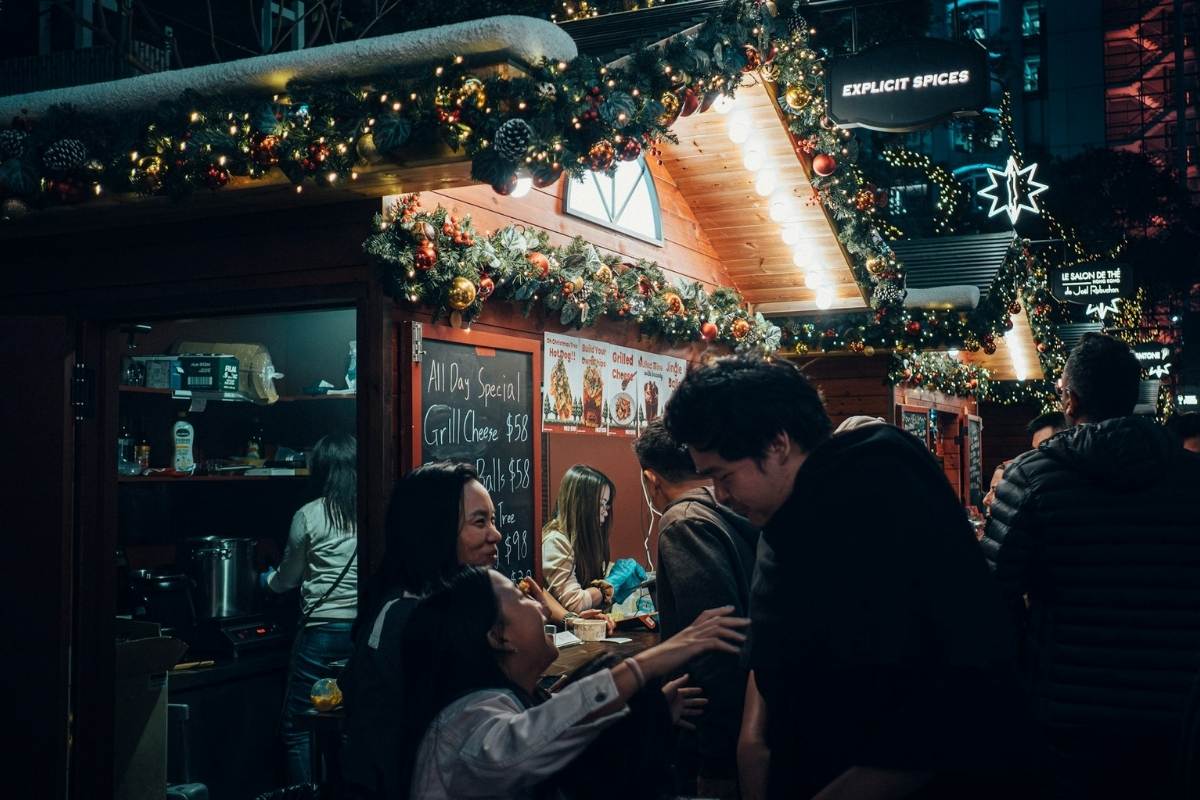 There's a reason Christmas markets have become one of the defining winter travel experiences in Europe, drawing more than 100 million visitors a year and growing.
The genius of the format is its combination of the universal and the specific. Every market has mulled wine and wooden stalls and lights. But the specific character — what you eat, what you drink, what's for sale, what the square looks like at 7pm on a December Tuesday — belongs entirely to the place. A Nuremberg Christkindlesmarkt is nothing like a Brussels Grand Place market is nothing like a Prague Old Town market, and all three are worth understanding on their own terms.
The markets also work across every mode of travel. Solo wanderers. Couples. Groups of friends. Families with children who need to be somewhere magical and vaguely edible. Almost no travel format suits all of these equally well, and Christmas markets somehow do.
The best time to go is, simply, Advent. The four weeks from the last Sunday of November through Christmas Eve. Markets typically open on the first weekend of Advent and close on December 24. The sweet spots within that window: the first week for novelty and fullness; the middle two weeks for the settled rhythm of a running market; the final days for a poignant rush that feels, in every city, exactly the same.
The Markets: Where to Go
Nuremberg, Germany — The Original
The Nuremberg Christkindlesmarkt is the most famous Christmas market in the world, and it has been earning that claim since 1628.
Set in the medieval Hauptmarkt — a red-stone square dominated by the Gothic Frauenkirche — the Nuremberg market is strict about its aesthetic in a way that borders on law: red-and-white striped canvas stalls only, traditional Franconian crafts and foods only, no competing modern stalls or commercial intrusions. The result is the most visually coherent market in Germany, a scene that looks essentially as it did a century ago.
The food is the point here. Nuremberg Lebkuchen — the finest gingerbread in Germany, baked in rounds and rectangles and packaged in painted tin boxes — are what you bring home. Nuremberg rostbratwürste — tiny finger-length sausages roasted over beechwood coals and served three-to-a-roll — are what you eat standing in the cold at the market itself. The Christkind — a golden-haired, crown-wearing young woman selected by public ceremony to open the market each Advent from the balcony of the Frauenkirche — is the market's mascot and a tradition so specifically Nuremberg that no other city has been able to replicate it.
Book accommodation months ahead. The market runs from late November through December 24.
Vienna, Austria — Imperial Scale
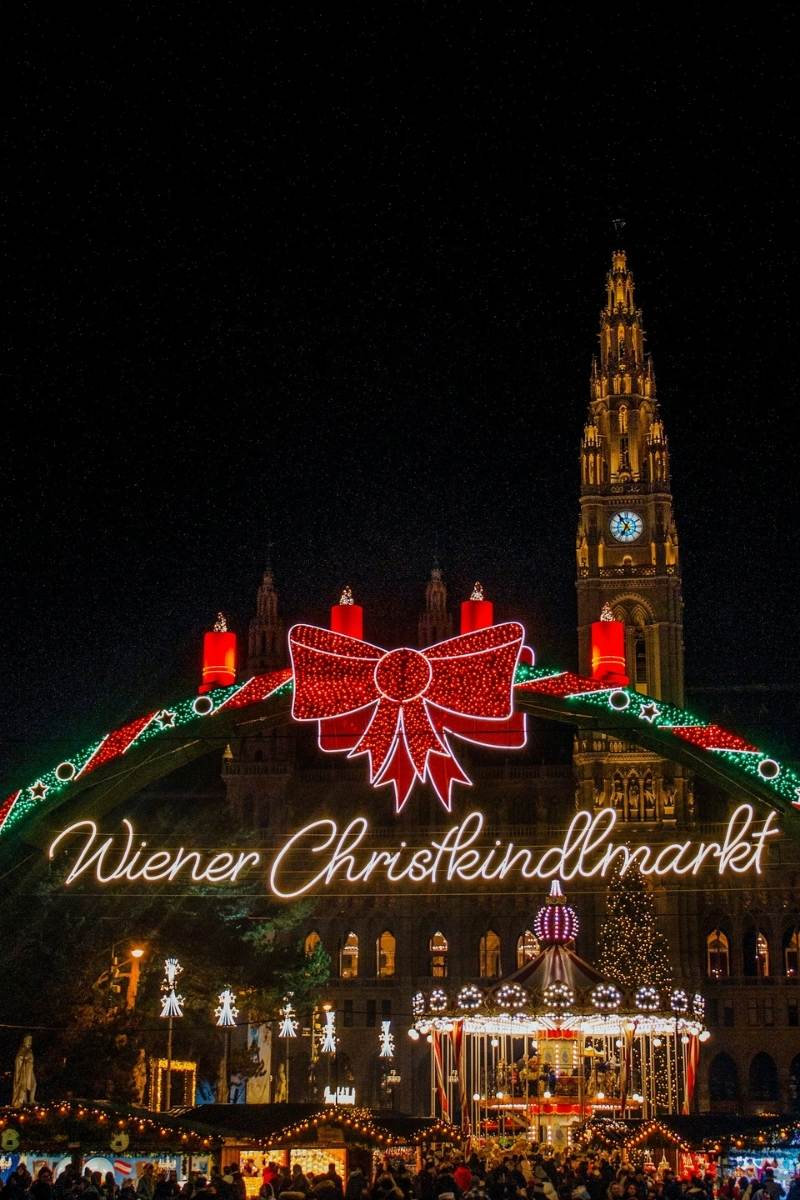 Vienna does not have one Christmas market. It has dozens — scattered across the city's baroque squares and imperial courtyards from late November through January, each with its own character.
The Rathausmarkt in front of the neo-Gothic City Hall is the largest and most theatrical: an enormous spread of stalls in a park of illuminated trees, with ice skating on the adjacent rink. The Schönbrunn Palace market has the most spectacular setting — stalls in the imperial courtyard with the yellow Baroque palace behind them and the Gloriette on the hill above lit against the December sky. The Belvedere Palace market is smaller and more local-feeling, while the Am Hof market in the old city centre is the most intimate.
Vienna also keeps its markets running through New Year and into early January — a civilised extension that makes it uniquely viable as a post-Christmas destination. The Punsch (hot punch, the Austrian mulled-wine equivalent, sharper and more complex than German glühwein) is the drink; the Kaiserschmarrn at the market food stalls is the dessert the city's restaurants charge three times as much for inside.
Strasbourg, France — Capital of Christmas
Strasbourg calls itself the Capitale de Noël, and while other cities dispute the title, none disputes the claim more persuasively than Strasbourg.
The Alsatian city's Christmas market — the Christkindelsmärik — is the oldest in France, running since 1570, and it spreads across the entire historic centre: Place Broglie, Place de la Cathédrale, Place Gutenberg, Place du Marché aux Cochons de Lait, and a dozen streets connecting them. The Gothic cathedral, one of the tallest in the world, stands at the centre of it all, its rose window lit from within while the stalls glow below.
Alsace gave the world the Christmas tree tradition (the first documented use of a decorated tree is from Strasbourg in 1605), and the market's décor reflects this with a kind of civic pride. Bredele — Alsatian Christmas biscuits in a hundred shapes — are the local food; vin chaud is the drink. The timbered houses along the Grande Île canals, strung with lights and reflected in the water, are what the postcards have been made from for a century and are, in person, better than all of them.
Prague, Czech Republic — Gothic Drama
The Old Town Square market in Prague is one of the most visually arresting Christmas markets in Europe, and one of the most visited — the Gothic twin towers of the Týn Church above, the astronomical clock on one wall, an enormous Christmas tree at the centre, and wooden stalls packed between them in a dense, energetic crowd that seems to be perpetually in good spirits.
The food: trdelník (the cylindrical pastry cooked on a rotating spit over coals, dusted with cinnamon sugar — a relative newcomer to Czech tradition but genuinely delicious when fresh off the heat), svařák (Czech mulled wine, slightly drier than the German version), and the roasted meats and sausages from open-fire grills that scent the whole square.
The Wenceslas Square market on the other side of the Old Town is a good complement — less dramatic but more lived-in, more local in character. Prague's combination of Gothic and Baroque architecture, fairy-tale price levels (significantly cheaper than Vienna or Strasbourg), and a genuinely atmospheric December light makes it one of the best value Christmas market destinations in Europe.
Brussels, Belgium — Grand Place Transformed
The Grand Place at Christmas is one of the great winter spectacles in Europe — the Baroque guildhalls and Gothic Town Hall that Victor Hugo called the most beautiful square in the world, strung with light and surrounded by stalls, with a sound-and-light show projected on the facades of the buildings every evening on the hour.
The Brussels market extends beyond the Grand Place along the Boulevard Anspach and the adjacent squares — one of the largest Christmas markets in the Benelux. Belgian Christmas market food is its own category: speculoos (spiced biscuits, crisp and caramelised), gaufres (waffles, hot from the iron), and the best hot chocolate on the continent, available at dozens of stalls in depths from pleasantly warm to aggressively indulgent. Belgian ale is served hot in winter in some forms, and the market stalls carry an excellent range of Trappist and specialty beers for cold-weather consumption.
Cologne, Germany — Cathedral and Riverbank
Cologne runs six separate Christmas markets simultaneously in the weeks before Christmas, which alone establishes a competitive seriousness of intent.
The Dom (Cathedral) market is the centrepiece: stalls in the shadow of one of the greatest Gothic cathedrals in the world, the twin spires rising 157 metres above the market square, lit at night in a way that makes stone look like lace. The Heinzels Wintermärchen market on the old harbour, with its medieval jousting and crafts, has a theatrical quality distinct from the cathedral square. The Neumarkt market is the largest and most commercial.
The Cologne Christmas season is also when Kölsch — the local blonde ale, served in small cylindrical glasses and refilled by roving waiters without being asked until you place your mat over your glass — is joined by Glühwein and Feuerzangenbowle (mulled wine with a rum-soaked sugarloaf set alight over the bowl, poured flaming into the wine as it melts). This last one is mesmerising to watch and entirely too easy to drink.
Rothenburg ob der Tauber, Germany — Medieval Perfection
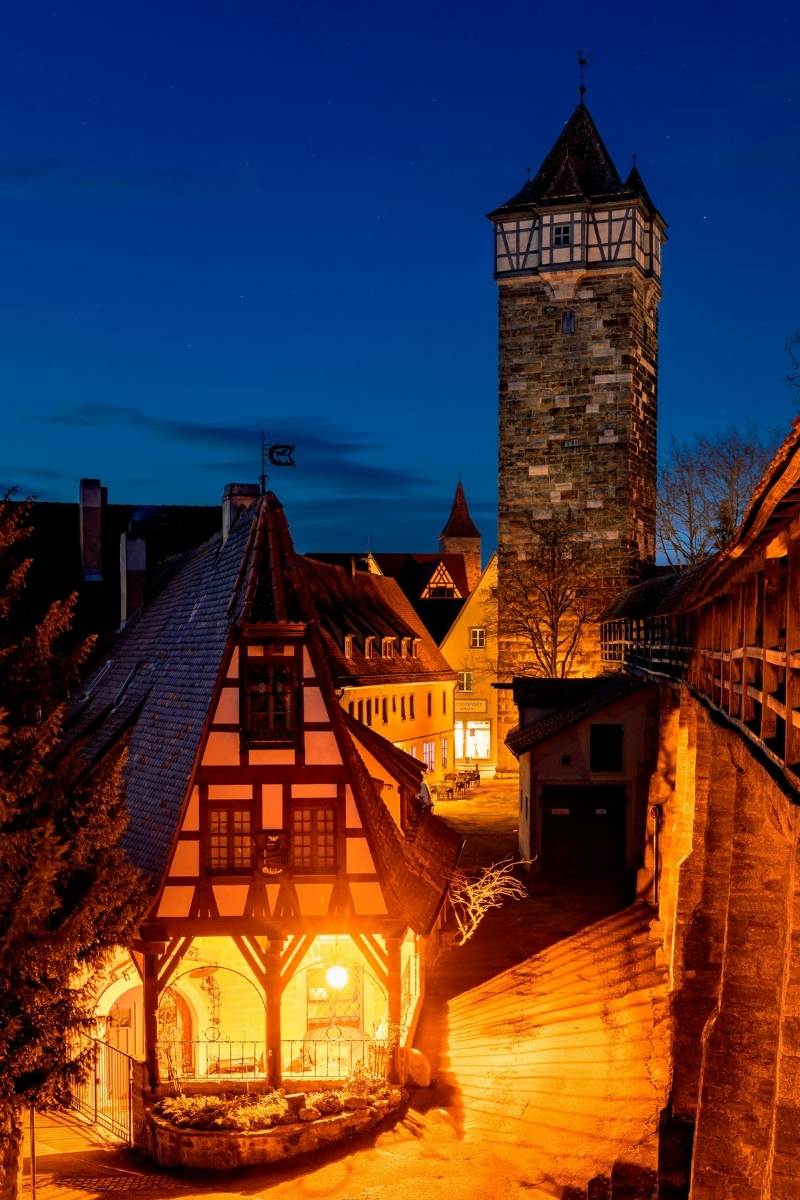 Rothenburg ob der Tauber is almost unfairly picturesque at any time of year — a completely intact medieval walled city on a spur of land above the Tauber river, its half-timbered houses and circular towers preserved as if sealed in amber in the 17th century. In December, with snow and Christmas lights and the smell of lebkuchen, it becomes something from another world entirely.
The Reiterlesmarkt in the medieval market square is smaller than the Nuremberg or Cologne equivalents but arguably the most atmospheric Christmas market in Germany — simply because the setting cannot be matched. The Käthe Wohlfahrt shop, the world's largest permanent Christmas shop, operates year-round in the city and goes to a different level entirely in Advent.
A warning: day-trip tour buses from across Bavaria and beyond arrive in force on weekends. Come on a weekday or, if possible, stay overnight for the evening and early morning atmosphere that the day-trippers miss.
Budapest, Hungary — Baroque and Underrated
Budapest has developed two Christmas markets worth the trip in their own right.
The Vörösmarty Square market in the heart of Pest is the main one — elegant, well-organised, and set in a handsome square near the Opera and the Danube, with excellent Hungarian craft stalls and food. Kürtőskalács (the same chimney cake sold in Prague as trdelník, but originated here) is everywhere and best consumed warm. Forralt bor (Hungarian mulled wine, often with local Tokaj or Eger grapes) is the drink.
The St. Stephen's Basilica market is newer, smaller, and arguably better — fewer stalls but higher quality craftwork, and the setting against the Neoclassical facade of the basilica, with a daily sound-and-light show at dusk, is spectacular. Budapest combines well with a Danube river city pairing — the journey from Vienna by train (about 2.5 hours) or by river cruise is one of the great Central European winter journeys.
Ghent, Belgium — Local and Lived-In
Ghent's Christmas market — spread across the Korenmarkt, Sint-Baafsplein, and along the Graslei and Korenlei canal banks — is what Brussels' market might be if you drained away the tourist volume and replaced it with the city's large, opinionated student population and a genuinely excellent street food scene.
The setting is magnificent: medieval guild houses and Gothic towers reflected in the Leie river, the Gravensteen castle lit above the canal at the northern edge. The atmosphere is noticeably younger and more local than the tourist-heavy equivalents. Glühwein and jenever (Dutch gin, served warm in winter as warme jenever) at the canal-bank stalls, with the architecture lit above you, is a combination that earns its own category.
Cologne to Aachen: The German Market Trail
For the committed Christmas market traveller, the stretch of western Germany from Cologne through Düsseldorf to Aachen functions as a single itinerary: three major cities within an hour of each other by train, each with multiple markets, each with a distinct Rhineland identity.
Düsseldorf's seven markets include the famous Alt-Stadtmarkt in the old town and the Schadowstraße display. Aachen sits on the Belgian and Dutch borders and has a market on the cathedral square — the Aachener Weihnachtsmarkt — that surrounds the UNESCO World Heritage Carolingian cathedral, founded by Charlemagne, with wooden stalls selling Aachener Printen (the local spiced gingerbread, darker and more complex than the Nuremberg version).
Beyond the Famous Names
Tallinn, Estonia
The Old Town Christmas market in Tallinn's medieval Town Hall Square is the best-kept secret on this list. The Estonian capital, compact and beautifully preserved, goes deep into Christmas mode in December — wooden stalls selling handicrafts, grilled sausages, gingerbread, and hõõgvein (Estonian mulled wine) in a cobbled square ringed by lime-washed Medieval buildings. Prices are very low by Western European standards, crowds are manageable, and the setting — especially after a snowfall — is as beautiful as anything in Germany or Austria. The city is a direct flight from most European hubs and deserves far more Christmas market attention than it receives.
Riga, Latvia
Riga claims to have hosted the first public Christmas tree in history, in 1510, and the Dome Square market marks this history with some seriousness. The Art Nouveau capital of the Baltic has a handsome, well-organised market in the old city that combines Latvian craft traditions with a Central European Christmas market format. Worth the detour for anyone building an Eastern European winter itinerary.
Edinburgh, Scotland
Not continental Europe, but close enough in spirit and winter darkness to earn its place here. Edinburgh's Christmas market on East Princes Street Gardens, with the floodlit Castle on the rock above and the Scott Monument rising from the adjacent gardens, is one of the most theatrically beautiful market settings anywhere. The German Market section brings the Central European format; the Scottish food and craft stalls add something specific and local. Cold, very probably wet, and completely worth it. The Hogmanay celebrations on December 31 extend the Edinburgh winter trip into its own distinct category.
How to Do Christmas Markets Properly
Build a Circuit
The most rewarding approach is to string two or three markets together into a short rail circuit rather than visiting one in isolation. Natural pairings and routes:
The Rhine Trail: Strasbourg → Cologne → Düsseldorf → Aachen (3–4 days, all connected by fast train).
The Central European Classic: Vienna → Salzburg → Prague (4–5 days; Vienna to Salzburg by train 2.5 hours, Salzburg to Prague by train 4 hours or fly).
The Belgian Circuit: Brussels Grand Place → Ghent → Bruges (a long weekend, all within 1 hour by train).
The Baltic Discovery: Tallinn → Riga (overnight ferry between them; 3 hours by bus or 4 by slow train through Estonia and Latvia).
Go on Weekdays
Every market on this list is better Tuesday through Thursday than Friday through Sunday. The volume difference is significant. If your schedule allows any flexibility at all, use it here — a Wednesday afternoon at the Nuremberg Christkindlesmarkt has a completely different character from a Saturday one.
Stay Overnight
Day-trippers dominate the afternoon hours. The evenings — after 6pm, when the stalls are fully lit and the crowd has thinned — belong to overnight guests. The mornings — before 10am, when the stalls are opening and the squares are half-empty — are the most peaceful the markets ever get. Both rewards require a bed in the city.
Eat Properly
Christmas market food is better than its reputation among food-serious travellers, provided you're eating the specifically local things and not the generic glühwein-and-bratwurst that every market carries.
What to seek out by country: in Germany, Lebkuchen, Stollen (fruit-and-marzipan bread, a Christmastime staple), Gebrannte Mandeln (caramelised almonds), Reibekuchen (potato fritters with apple sauce). In Austria, Kaiserschmarrn, Punsch, Vanillekipferl (crescent-shaped vanilla shortbread). In France, Bredele, Mannele (Alsatian brioche figures). In Belgium, Speculoos, Couques, hot chocolate that is more chocolate than hot. In Czech Republic, trdelník (from the fire, not packaged), svíčková (beef in cream sauce, best in a restaurant rather than market stall). In Hungary, kürtőskalács, lángos (deep-fried dough with sour cream and cheese).
The Mulled Wine Mug
Almost every Christmas market sells its mulled wine in a ceramic mug specific to that city and that year — a small, seasonal collectible you keep by paying a deposit. Most travellers, by their third market, have a growing mug collection and no system for transporting them home. This is a problem you should plan for in advance and one you will not, in practice, manage to solve.
Practical Tips
Book accommodation early — very early. December is peak season in every city on this list. Hotels in Nuremberg, Strasbourg, Vienna, and Prague book out for the main Advent weekends months ahead. If you're planning around a specific market, lock in accommodation the moment you decide to go.
Layer for standing still. Walking generates warmth; standing at a market stall in 2°C for an hour does not. The difference between a comfortable and a miserable Christmas market experience is almost entirely determined by whether you have a good base layer. Thermal underlayers, a warm midlayer, a windproof outer, warm socks, gloves, and a hat. This is not negotiable.
Cash is still king at market stalls. Cards are increasingly accepted at larger stalls, but many smaller vendors and food counters still run on cash. Have local currency before you arrive.
The mug deposit system works differently everywhere. Vienna charges €3–5 for a refundable deposit; Nuremberg charges €3; Prague generally doesn't charge a deposit at all. Keep small coins ready.
Arrive at opening or at closing. The hour a market opens (typically 10 or 11am on weekdays) and the last two hours before closing (usually 9 or 10pm) are the calmest. Midday Saturday in peak Advent is the opposite of calm.
Check opening dates precisely. Markets vary: some open on the last weekend of November, others on the first weekend of Advent, others only in December. Most close on December 24; a few (notably Vienna) run through January. Verify the specific market's calendar before you book transport.
Combine with the city's other offerings. Christmas markets are an excellent reason to visit a city, not the only reason to be there. The museums, the churches, the restaurants, the architecture that forms the backdrop to the market — all of these are at their least crowded in December and all of them reward the time around the market hours.
Photography: The golden hour is the true golden hour at Christmas markets — from about 4pm as the light fades and the stalls light up, through the first full darkness around 5:30–6pm. Shoot then. The midday market, lit by flat winter grey, is a different and less flattering subject.
How Long Do You Need?
A long weekend in one city: The classic approach. Arrive Friday evening, full Saturday and Sunday in the market, depart Monday. Enough for the main market, a museum, some excellent eating, and a mug or two of something warm. Works perfectly for Nuremberg, Strasbourg, Vienna, or Prague.
Five to seven days on a circuit: The ideal trip. Three cities on a rail circuit — pick one of the routes above — gives you depth without exhaustion. You'll start to understand the differences between the markets, which is when the trip gets interesting.
Two weeks across a wider region: Now you're building a real winter journey. Central Europe in December — Prague, Vienna, Budapest, Bratislava — by slow train over two weeks, with a market in every city and enough time in each to see more than the market alone. One of the great European winter journeys.
There is no such thing as too many Christmas markets.
Final Thoughts
Christmas markets work on a logic that resists analysis. They are, taken apart, just wooden stalls and mulled wine and Christmas lights. The components are simple. And yet the whole is something that millions of people plan their winters around, return to every year, and find, reliably, moves them in ways they weren't expecting.
Part of it is the cold, which makes warmth feel earned. Part of it is the darkness, which makes light feel generous. Part of it is the specific, bounded nature of the tradition — here for four weeks, gone on Christmas Eve, returning only with the next Advent — that gives it the particular quality of things that happen once and then wait a year to happen again.
Part of it is standing in a 600-year-old square with a ceramic mug of something spiced and warm, smelling chestnuts and pine and winter air, watching the light on old stone, and feeling, just for an evening, that the world is small and warm and good.
People who attend one Christmas market tend to add another the following year. People who do two start planning a circuit. People who build an annual circuit begin the planning in July and accept this about themselves without apology.
It will still manage to surprise you. Every single time.
Pack your warmest coat. Book early. Keep the mug.
The markets are waiting.


