Dinant, Belgium: The Complete Travel Guide to the Meuse Valley's Most Dramatic Small Town
June 3, 2026 · TripOnly

Dinant, Belgium: The Complete Travel Guide to the Meuse Valley's Most Dramatic Small Town
There are small towns that are quietly pleasant. And then there are small towns that are small only in size — that pack more drama, more history, more sheer visual impact into a single riverbank than most cities manage across an entire skyline.
Dinant is the latter. Emphatically.
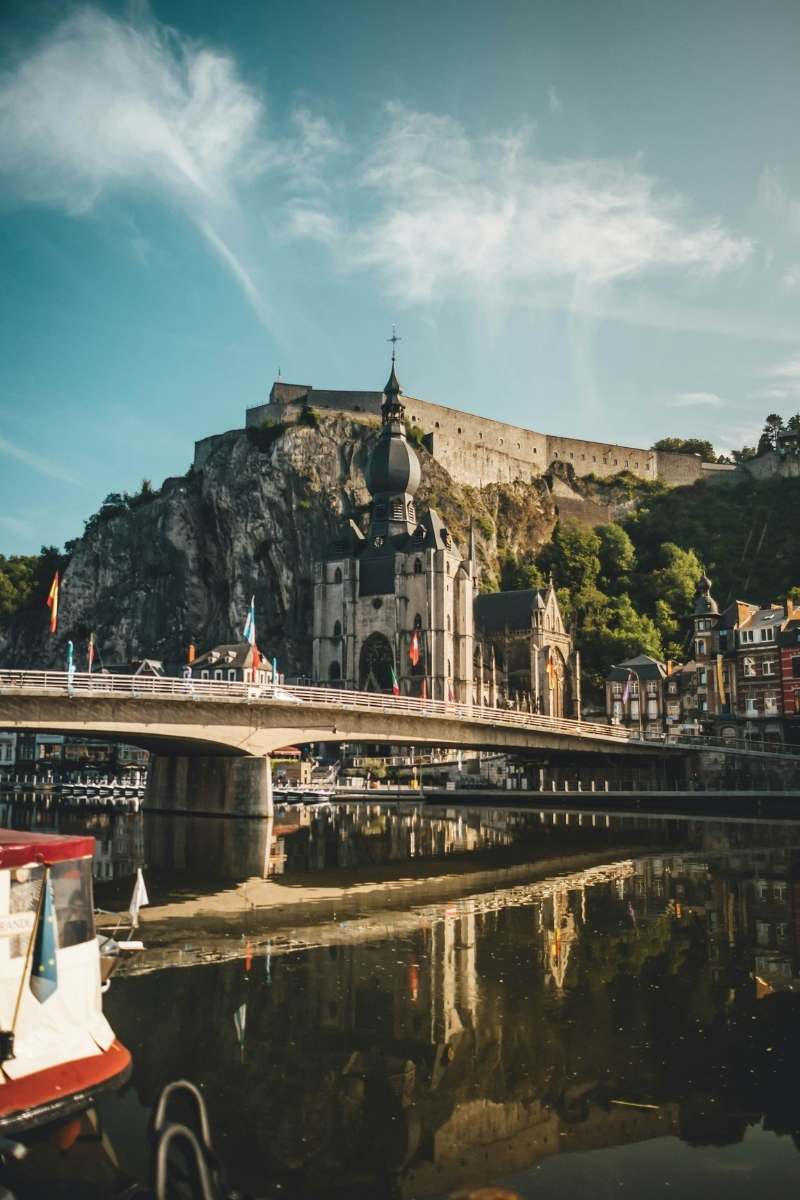
Squeezed between the River Meuse and a vertical wall of pale limestone cliffs in the heart of Belgian Wallonia, Dinant is a town of roughly 13,000 people that manages to be one of the most photographed places in a country of photogenic places. The Collegiate Church of Notre-Dame, with its distinctive onion-shaped grey dome jammed between rock face and river, has been painted, sketched, and photographed for centuries, and still surprises you when you see it in person. Above it, accessible by cable car or a lung-testing 408 steps, the medieval citadel clings to the cliff like something from a fairy tale. Below, the Charles de Gaulle Bridge crosses the Meuse lined with painted saxophones — because Dinant is the birthplace of Adolphe Sax, the Belgian instrument maker who gave the world the saxophone in 1846, and has not let anyone forget it since.
But Dinant is more than a postcard. The Meuse Valley here is magnificent — kayaking, castles, limestone gorges, and some of the prettiest cycling in Belgium stretching in both directions. The nearby Leffe Abbey has been brewing its famous beer within earshot of town since the 12th century. And tucked in the hills above: the vast underground caves of Han-sur-Lesse, one of the great natural wonders of the Belgian Ardennes.
Whether you're paddling the Meuse past rocky outcrops, nursing a Leffe in a riverside café, biting tentatively into a couque de Dinant (the town's famously rock-hard traditional biscuit), or watching the late afternoon light turn the church dome to bronze — Dinant is a place that leaves a mark entirely disproportionate to its size.
People come for a day trip from Brussels. They stay longer than they planned. They come back.
This is everything you need to know.
Why Dinant?
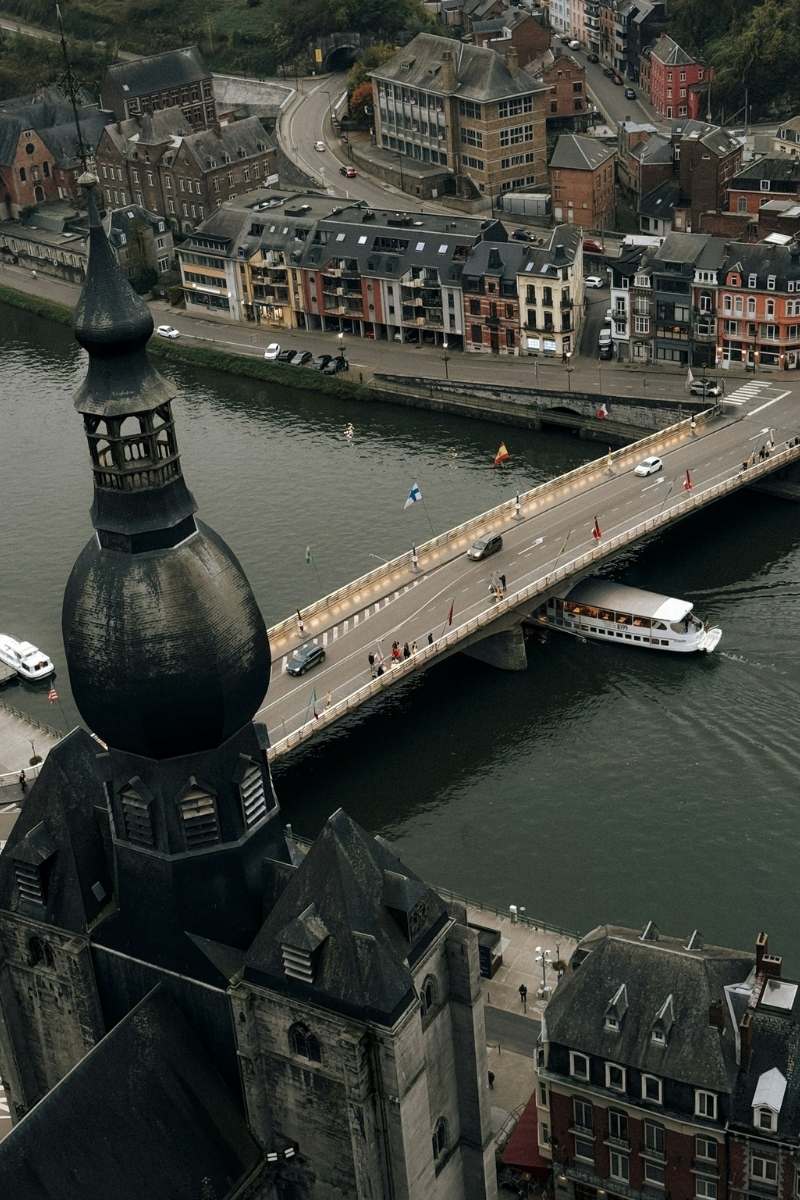
There's a reason Dinant appears on virtually every "hidden gems of Belgium" list, and still, when you arrive, feels like something you've discovered yourself.
The town occupies one of the most dramatic natural settings in the Belgian lowlands — an impossibly narrow strip of river valley where the Meuse has carved its way through sheer limestone bluffs. There is no room to sprawl. Dinant is literally a single main street wide in places, pressed between cliff and river, which gives it an intensity and a compactness that larger towns can't replicate. Everything you want to see is within walking distance of everything else, and the whole place is framed, at every angle, by either water or rock.
The surrounding Meuse and Lesse valleys amplify this. The river winds through gorges past medieval castles, old abbeys, and river beaches used by kayakers from across Belgium every summer weekend. South of Dinant, the landscape gets wilder — forested Ardennes hills, underground cave systems, and villages that feel genuinely remote from the modern world.
Spring brings wildflowers on the valley slopes and the first kayakers on the river. Summer is warm, busy, and full of festival energy. Autumn turns the forest hillsides rust and gold, and the light on the river goes soft and amber. Winter strips the leaves back and reveals the rock faces in their most dramatic form — a colder, quieter version of the town that rewards the visit just as richly.
When to Go
Spring (April–June) is Dinant at its loveliest. The hillside vegetation comes back green, river boat tours and kayak rentals reopen, and the main sights are accessible without summer's weekend crowds. May and June are the sweet spot — warm enough, uncrowded, and beautiful.
Summer (July–August) is peak season. Belgians and visitors from across Europe descend on the Meuse Valley for kayaking weekends and cycling holidays. The town and river are at their most lively, but accommodation fills fast and the bridge selfie queue gets impressively long by August. Book well ahead.
Autumn (September–October) is the quiet reward. Kayak season winds down, crowds thin, and the forested valley slopes around Dinant turn extraordinary shades of rust and copper. Cooler and moodier, and genuinely beautiful for photography.
Winter (November–March) is Dinant in its most intimate form. The Christmas market on the riverbank in December is small but genuinely charming. Weekdays in January or February you can sometimes have the bridge and the church almost entirely to yourself — a rare thing in a place this photogenic.
Getting There
By train from Brussels: The most pleasant way to arrive. Take a direct train from Brussels-Central or Brussels-Midi to Namur (50 minutes), then change for the scenic valley line to Dinant (another 45–50 minutes). The train tracks hug the Meuse for much of the final stretch — arrive on the left side for the views. Total journey: under two hours.
By car from Brussels: About 1.5 hours via the E411 motorway south through Namur, then along the river. Driving gives you freedom to explore the valley castles and surrounding villages at your own pace. Parking in Dinant is straightforward and free in several lots along the river.
From Namur: Namur, the capital of Wallonia, is just 30 kilometres north. Frequent trains and a lovely riverside cycling route (RAVeL) connect the two towns. Many visitors base in Namur and day-trip to Dinant.
From the Netherlands or Germany: Dinant sits on the Meuse (Maas) corridor that runs from the Netherlands through Belgium into France. Maastricht is roughly 90 minutes north by car. A scenic river drive south from Liège or Namur is genuinely one of the better drives in the Benelux.
Getting around: Dinant is small enough to walk entirely — end to end is around 20 minutes along the riverside promenade. Bikes are available for hire for exploring the valley trails north and south. A car is useful for day trips into the surrounding hills.
Where to Stay
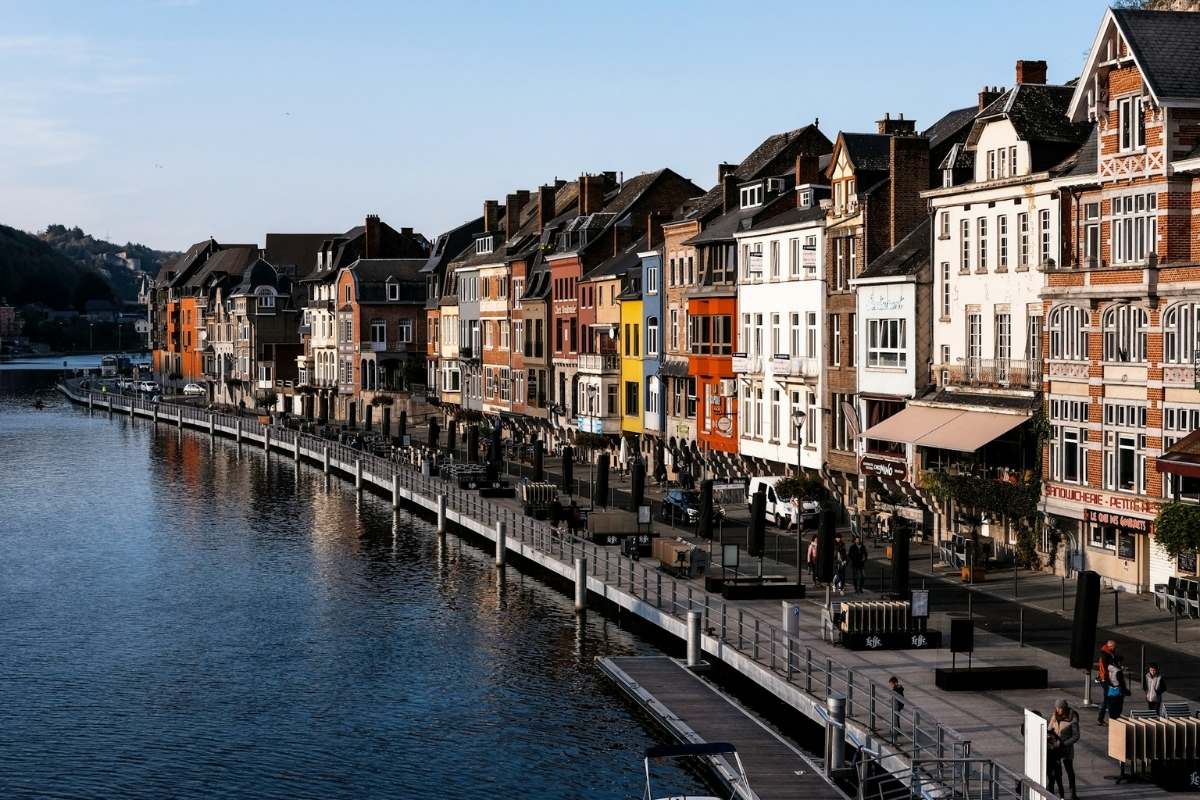
Dinant is compact and its accommodation reflects that — a handful of excellent options rather than an overwhelming selection. Book ahead in summer.
Ibis Styles Dinant on the Meuse promenade is the most reliably comfortable option right in town — good location, river views from some rooms, and well-priced.
Merveilleuse Hotel & Spa sits just above the town, with valley views and a more retreat-like atmosphere. Its restaurant is one of the better tables in the area.
Les Bajauds and other smaller chambres d'hôtes (B&Bs) tucked in the surrounding villages offer a quieter, more personal experience — and often the kind of breakfast involving local cheese, fresh bread, and Ardennes charcuterie that recalibrates your morning expectations permanently.
Namur as a base: The Walloon capital offers wider accommodation choice, excellent dining, and its own compact fortress city to explore. Staying in Namur and making Dinant a day trip is an efficient combination, especially for first-time Belgium visitors.
Camping: Several well-run sites sit in the valley south of Dinant, along the Lesse and Meuse rivers — popular with kayakers and cyclists in summer. The setting, tucked between cliff and forest, is genuinely excellent.
What to See and Do
The Collegiate Church of Notre-Dame
Start here. You should always start here.
The Church of Notre-Dame is the icon — the grey onion dome wedged between cliff face and river that appears in every photograph of Dinant taken in the last two centuries. Built in the 13th century in Gothic style, with its distinctive dome added later, it's beautiful both from across the river (the classic shot) and up close, where the drama of its compressed setting becomes clear. It is, somehow, even more striking in person than in photographs.
Inside: fine Gothic architecture, decent stained glass, and the quiet of a church that has absorbed 800 years of river-valley history. Free entry; a donation is appreciated.
Time your visit for early morning, when the light catches the dome from across the water and the tourist coaches haven't arrived yet.
The Citadel of Dinant
Hanging directly above the church on the cliff face, the Citadel of Dinant has guarded this bend of the Meuse since the 11th century. The current fortifications largely date to Dutch rule in the early 19th century, built atop much older medieval foundations.
Reach it by cable car (the easy way, and the views on the ascent are spectacular) or on foot via 408 steps cut into the rock face (the honest way, rewarding in direct proportion to the effort). Inside: a military history museum covering everything from medieval siege warfare to the brutal events of 1914, when German troops killed more than 670 Dinant civilians in one of the First World War's earliest atrocities. The museum doesn't flinch from this history.
The view from the ramparts — the river looping through the valley, the church dome directly below, the hills stretching south toward the Ardennes — is the best in the region.
The Bridge of Saxophones
The Charles de Gaulle Bridge crossing the Meuse is lined with 28 painted, larger-than-life saxophone sculptures, each one designed differently — and yes, they're exactly as delightful as they sound. The saxophone connection is genuine: Adolphe Sax, born in Dinant on November 6, 1814, invented the instrument in his twenties while working in Brussels, and his hometown has taken justified civic pride in the fact ever since. The bridge is a permanent, gentle celebration.
Photograph them in the morning light. Try to count how many different colour schemes you can find. Accept that you'll be here longer than you planned.
Maison de Monsieur Sax
The birthplace of Adolphe Sax on Rue Adolphe Sax is a modest but lovingly maintained museum inside the house where he was born. Musical instruments, historical context, and the story of how a Belgian tinkerer in a small valley town invented one of the defining sounds of the 20th century. Small, illuminating, and worth the visit for anyone with even a passing interest in music history.
Leffe Abbey
A short walk south of the town centre sits the Abbaye Notre-Dame de Leffe — a Premonstratensian abbey founded in 1152, which has been associated with brewing since the 13th century. The Leffe brand you've seen everywhere is brewed industrially elsewhere now, but the abbey itself remains an active religious community, beautifully restored after repeated wartime destruction.
Visits are available by guided tour; check the schedule as hours are limited. The abbey garden and riverside setting are peaceful and lovely even viewed from outside. Raise a glass of Leffe that evening in appropriate respect to the monks who started all this.
Rock Bayard
About two kilometres south of the town centre, the Rock Bayard is a free-standing needle of limestone rising from the river's edge — sheared from the cliff face, according to legend, by a single blow from the hooves of the mythical horse Bayard in a heroic escape. The legend is probably unreliable as geology, but the rock itself is dramatic, a natural sculpture rising from the narrow valley floor, and a pleasant walk or cycle south from town.
Kayaking the Meuse and Lesse
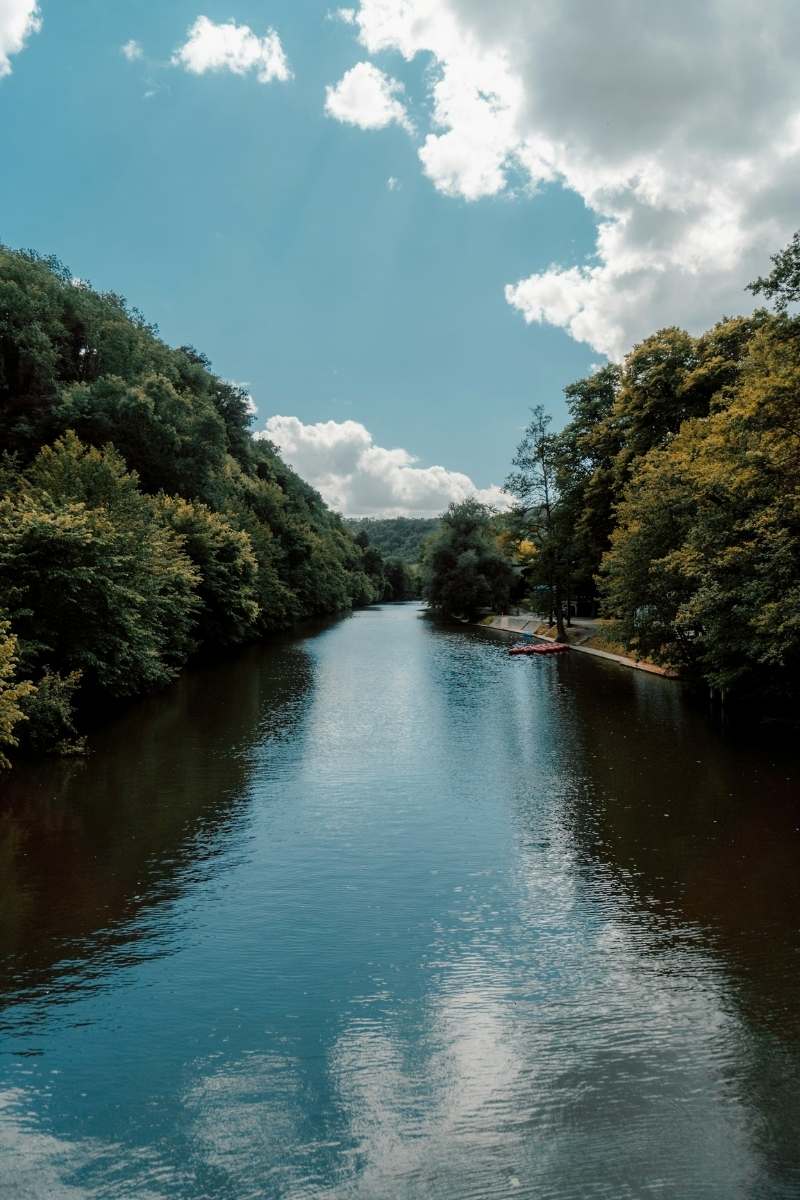
The Meuse and the smaller River Lesse threading through the valley to the south offer some of the finest recreational paddling in Belgium. Multiple operators run kayak and canoe rentals along the Lesse in particular — a gentle, scenic river winding through limestone gorges and past forested hillsides. The classic Lesse descent between Houyet and Anseremme takes 3–4 hours and needs no prior kayaking experience.
Anseremme, where the Lesse meets the Meuse just south of Dinant, is the kayaking hub: rental companies, snack bars, and sun-dried paddlers returning downstream since May.
Grottes de Han (Caves of Han-sur-Lesse)
About 25 kilometres south of Dinant, the village of Han-sur-Lesse sits above one of the most extraordinary cave systems in Europe. The Grottes de Han are a 3-kilometre underground journey through caverns of extraordinary scale — stalactites, stalagmites, underground lakes, and an exit by boat through a cathedral-scale final chamber. One of the most visited natural sites in Belgium, and justifiably so.
Allow a full afternoon, including the 30-minute tram ride to the cave entrance and the boat return. An adjacent safari park adds a family-friendly second act. Combine with a kayak day on the Lesse for a full Ardennes experience.
Château de Freyr
Downstream on the Meuse about 5 kilometres south of Dinant, the Château de Freyr is a Renaissance castle sitting directly on the riverbank — one of the finest in Wallonia, with beautiful 17th-century French gardens on the cliff side. Open for visits on summer weekends; the exterior and setting are magnificent year-round from the opposite bank.
Namur
The Walloon capital, 30 kilometres north, deserves at least a half-day alongside your Dinant visit. The Citadelle de Namur — the largest fortress in Belgium — crowns the rocky confluence of the Sambre and Meuse rivers with views as dramatic as Dinant's own. The old town below is compact, charming, and refreshingly unpolished. Namur works beautifully as a base, a day-trip destination, or a final evening stop on the drive back to Brussels.
Where to Eat and Drink
Dinant is small, but it eats well. Walloon cooking — heartier and earthier than Brussels' more refined offerings — suits the river valley perfectly.
Couques de Dinant first. These hard, honey-based biscuits baked in decorative moulds (saxophones, citadels, hearts, fish) have been made in Dinant since the 15th century. They are beautiful and they are genuinely, proudly, tooth-challengingly hard. Do not bite one without advance warning. Many local shops sell them packaged for gifts; they travel well and survive in luggage indefinitely, possibly forever.
Leffe on draft. Order it at any riverside café in town, in the shadow of the abbey that started it all. The blond is crisp and refreshing; the brune is deep and slightly sweet. Either is better here than anywhere else.
Le Prieuré de Merveilleuse for the most accomplished cooking in the immediate area — river fish, Ardennes game, and classic Walloon technique in a setting above the valley. Reserve ahead.
La Broche for reliable Walloon classics in town — trout from local rivers, carbonnades (Flemish-style beef stew crosses the regional border without shame), and good value lunch menus.
Les Jardins de Freyr near the château for a riverside lunch with perhaps the most scenically correct setting for a glass of Belgian white wine anywhere in the valley.
Village cafés in Han-sur-Lesse and Houyet after kayaking — the kind of unassuming Belgian estaminets that have been feeding hungry paddlers for a century. Steak-frites, cold Trappist beer, a terrace in the sun. Perfect.
Practical Tips
The early morning is yours. Dinant's iconic view — church, bridge, citadel, river — is at its most spectacular in the hour after sunrise, and before roughly 10am on weekdays you'll often have the riverside promenade almost entirely to yourself. The light on the dome in early morning is the best of the day. Set your alarm; the reward is immediate.
Respect the couques. Bite slowly, or break them in your hand first. Dental bills would put a dampener on an otherwise excellent trip.
Cable car or steps? Take the cable car up for the ascent views, and use the 408 steps to come down — the descent is much easier than the climb, and the steps give you closer views of the cliff face and church from above.
The RAVeL cycling network connects Dinant to Namur along the Meuse on a flat, car-free path — about 30 kilometres. A bike hire in either town and one-way cycling with a train return is a superb half-day.
Grottes de Han gets busy on summer weekends — try to arrive for the first morning tour (usually 10am or 11am) to avoid the longest queues.
French is the language of Wallonia. Basic French phrases are warmly received; English is widely understood in hotels and restaurants, though less so in small village establishments. A bonjour and merci goes a long way.
Bring cash for small vendors and village cafés. Cards are accepted in most restaurants and hotels but not universally in rural estaminets and farm shops.
Combine destinations. Dinant alone fills a generous day or a very full two days. Combine with Namur, the Grottes de Han, Château de Freyr, and some time on the river for a proper Meuse Valley weekend that shows you several of the region's best faces.
How Long Do You Need?
A day trip: Absolutely viable from Brussels or Namur — church, citadel, bridge, a Leffe, a couque, back on the train. You'll see the highlights and leave understanding the fuss. You'll also almost certainly want to come back for longer.
A weekend (2–3 days): The right amount. Day one for Dinant itself in depth — citadel, church, saxophone museum, Leffe Abbey, evening on the riverside. Day two for a Lesse kayak and the Grottes de Han, or a cycling day to Namur. Day three for Château de Freyr and a slow morning before the drive home.
Four to five days: Base in Namur or the surrounding villages and explore the full Meuse Valley properly — Dinant, Namur's citadel, Han-sur-Lesse, Rochefort's caves and Trappist brewery, Château de Vêves, and the cycling and kayaking routes that connect them.
There is no such thing as too long in a valley this beautiful.
Final Thoughts
Dinant is a lesson in what smallness can hold. Compressed between cliff and river into something barely wider than a main street, it has packed itself with 800 years of history, one world-changing invention, a beer brewed since the 12th century, and a view of a domed church on a river that painters have been returning to for centuries.
It has also held its ground through more than its share of hardship — occupied, bombarded, and rebuilt more times than any town should have to be — and carries that resilience in its stone and its stubborn, modest pride. Dinant does not try to be bigger than it is. It doesn't need to.
People who visit once tend to come back. People who come back bring someone with them for the look on their face when they turn that first bend in the road. People who keep returning eventually find themselves ordering a Leffe at a riverside table in October, with the mist on the water and the citadel above them going grey in the dusk, thinking — not for the first time — that this is exactly where they want to be.
It will still manage to surprise you. Every single time.
Pack comfortable shoes. Learn to say bonjour. Save room for the strudel — no, the couque. Both.
The river is waiting.


