Rome Travel Guide: The Eternal City, Earned
April 10, 2026 · TripOnly

Why Rome Is Unlike Anywhere Else
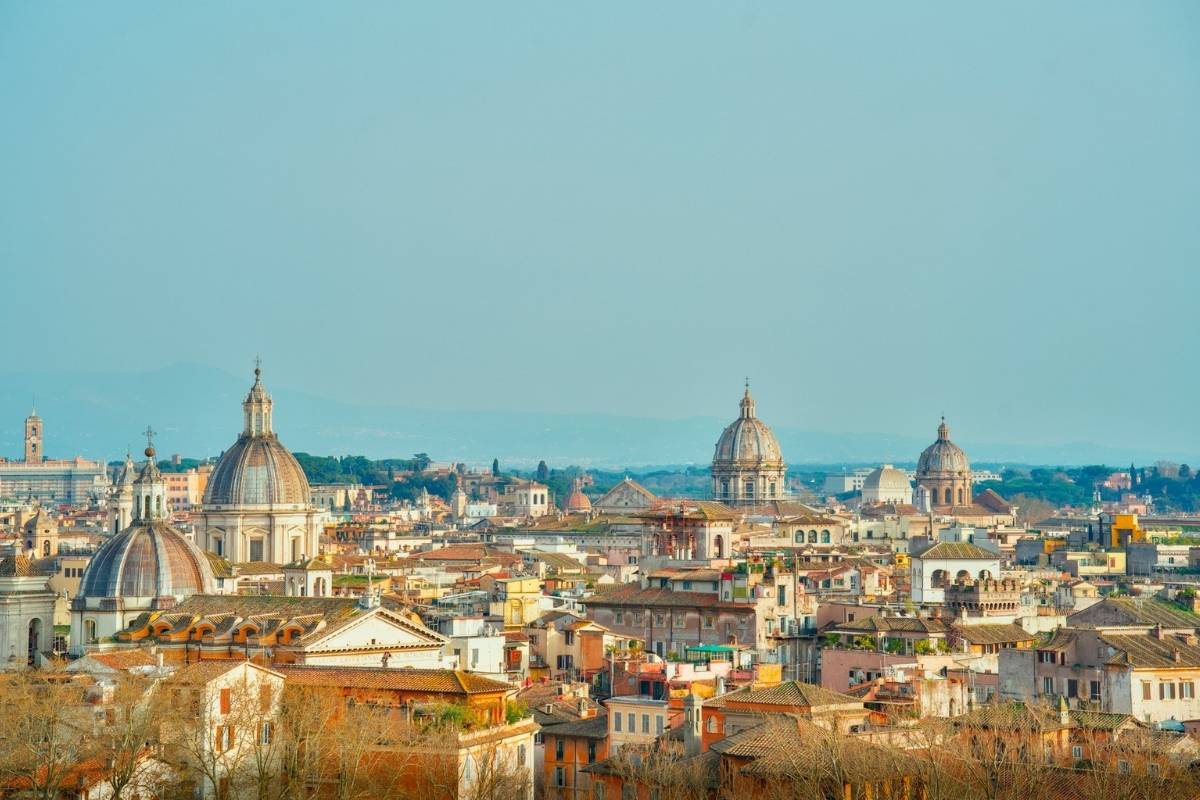
There is a Latin phrase — Roma aeterna — the Eternal City. Every capital calls itself eternal eventually; Rome earned the title by outlasting everyone who tried to claim it. The Visigoths sacked it. The Normans sacked it. Popes, emperors, and Napoleon all left their marks. The city kept going. Today it has seven million residents, the worst traffic in Italy, and more UNESCO World Heritage Sites within a single urban area than any city on earth.
What this means in practice is that Rome is dense in a way that has no comparison. You turn a corner and find a triumphal arch from the second century used as the facade of a medieval church. You eat lunch next to a fragment of Augustus's forum. The bar where you drink your morning espresso has foundations older than Christianity. The weight of this is not oppressive — it is, once you settle into it, genuinely exhilarating. Nowhere else on earth do you feel so continuously, insistently connected to the breadth of human history.
It also means that Rome can overwhelm the unprepared. The tourist infrastructure is enormous and often adversarial: the wrong restaurant will charge you four times the going rate for pasta that has been sitting since morning; the wrong ticket platform will add surcharges that exceed the original price. The city rewards planning, patience, and a willingness to walk away from the obvious.
Done right, Rome is one of the great experiences of a travelling life. This guide is about doing it right.
When to Go
April–June is the finest window — warm, dry, the light on the stone extraordinary in the late afternoon. The Spanish Steps are still manageable in April; by June the cruise ships have arrived in force. If you're going in spring, aim for late April or early May.
September–October is the second-best option and the one locals will recommend. The summer heat has broken, the families have gone home, and the city returns to itself. October in particular is magnificent — clear skies, golden light, fewer queues, and the markets full of autumn produce.
July–August is hot (35–40°C), crowded, and expensive. Many of the best restaurants close in August as owners take their own holidays. The Vatican Museums in July without air conditioning is a particular form of suffering. Avoid if you can. If you can't, start every day before 8am and retreat inside between noon and four.
November–March is Rome at its most honest — emptier, cooler (5–15°C), occasionally rainy, but perfectly liveable. The major churches and museums are at their least crowded. Christmas in Rome, if you can bear the additional tourism, is spectacular in its own right: nativity scenes in every piazza, midnight mass at the Basilicas, the city lit up along the Tiber.
Getting There & Around
By Air: Rome has two airports. Leonardo da Vinci (FCO), usually called Fiumicino, is the main international hub, 30km southwest of the city. The Leonardo Express train connects it to Termini station in 32 minutes (€14); cheaper regional trains take slightly longer. Ciampino (CIA) handles budget carriers — shuttles and taxis connect it to the centre.
Getting Around:
- Walking: The historic centre — Centro Storico, Trastevere, Vatican, Campo de' Fiori, Pantheon, Spanish Steps — is eminently walkable once you're in it. Most sights are closer to each other than they appear on a map. Good shoes are essential; Roman cobblestones are unforgiving.
- Metro: Two useful lines. Line A (orange) serves the Spanish Steps, Vatican area (Ottaviano), and Termini. Line B (blue) serves the Colosseum (Colosseo stop). Buy a 48-hour or 72-hour pass if you're using it regularly (€7/€12.50). The metro is clean, punctual, and avoids the traffic.
- Trams and buses: More atmospheric but slower, particularly useful for reaching Trastevere, Testaccio, and the Appian Way. ATAC runs the network; same tickets as the metro.
- Taxis: Use licensed white taxis with the TAXI light and a meter. The official Itaxi app works like Uber and removes the negotiation. Uber also operates in Rome. Fixed fares from the airports are posted inside cabs — ask to confirm before departure.
- On foot, seriously: If the weather permits, walk. Rome reveals itself at walking pace. The version of the city you see through a bus window is not the one you need to see.
Neighbourhoods to Know
Centro Storico — The Historic Heart
The dense medieval and Renaissance quarter bounded roughly by the Tiber to the west, the Pantheon at its centre, and the Campo de' Fiori to the south. This is where most first-time visitors spend most of their time — for good reason. The narrow streets open suddenly onto magnificent piazzas: Navona, Farnese, della Rotonda. The architecture shifts century by century as you walk. Tourist pressure is intense, but step one street off the main routes and it drops immediately.
Trastevere — The Roman Village
Across the Tiber, the neighbourhood that Romans will tell you is the most authentically Roman — with the caveat that it became a tourist district some years ago and now contains more cocktail bars than the nonni who defined it would recognise. It remains beautiful: ivy-covered medieval buildings, the ancient Basilica di Santa Maria in Trastevere, and narrow lanes that feel removed from the 21st century. Come in the evening. Eat well. The aperitivo culture here is alive and unpretentious in the right places.
Prati — Near the Vatican
The neighbourhood immediately northeast of the Vatican is where most Vatican-area hotels sit, and for good reason: wide streets, excellent cafés, good food at reasonable prices, and five minutes from St. Peter's Square on foot. Not glamorous, but highly functional. The market on Via Andrea Doria on weekday mornings is worth the detour.
Testaccio — The Working District
South of the Aventine, Testaccio is where Roman food is truest to itself — the Mercato di Testaccio is one of the best covered markets in the city, and the neighbourhood built its identity around the now-closed slaughterhouse that gave rise to cucina romana in its most uncompromising form. Coda alla vaccinara (oxtail), rigatoni con pajata, supplì. Come here for lunch on a weekday and eat what the Romans eat.
Pigneto and Prati di Castello — The New Rome
East of the centre, Pigneto has become the city's most interesting neighbourhood for bars, independent restaurants, and a genuinely local atmosphere entirely absent from the tourist trail. Not convenient for the classical sites but essential for understanding what Rome looks like when it isn't performing for visitors.
The Jewish Ghetto
One of Europe's oldest surviving Jewish communities, the Ghetto is a few minutes' walk from Campo de' Fiori — a remarkably intact historic quarter with its own food culture (Roman-Jewish cuisine is distinct and exceptional), the Teatro di Marcello ruins rising improbably next to a car park, and the Portico d'Ottavia framing a view unchanged since the first century.
The Essential Sights
The Colosseum, Roman Forum & Palatine Hill
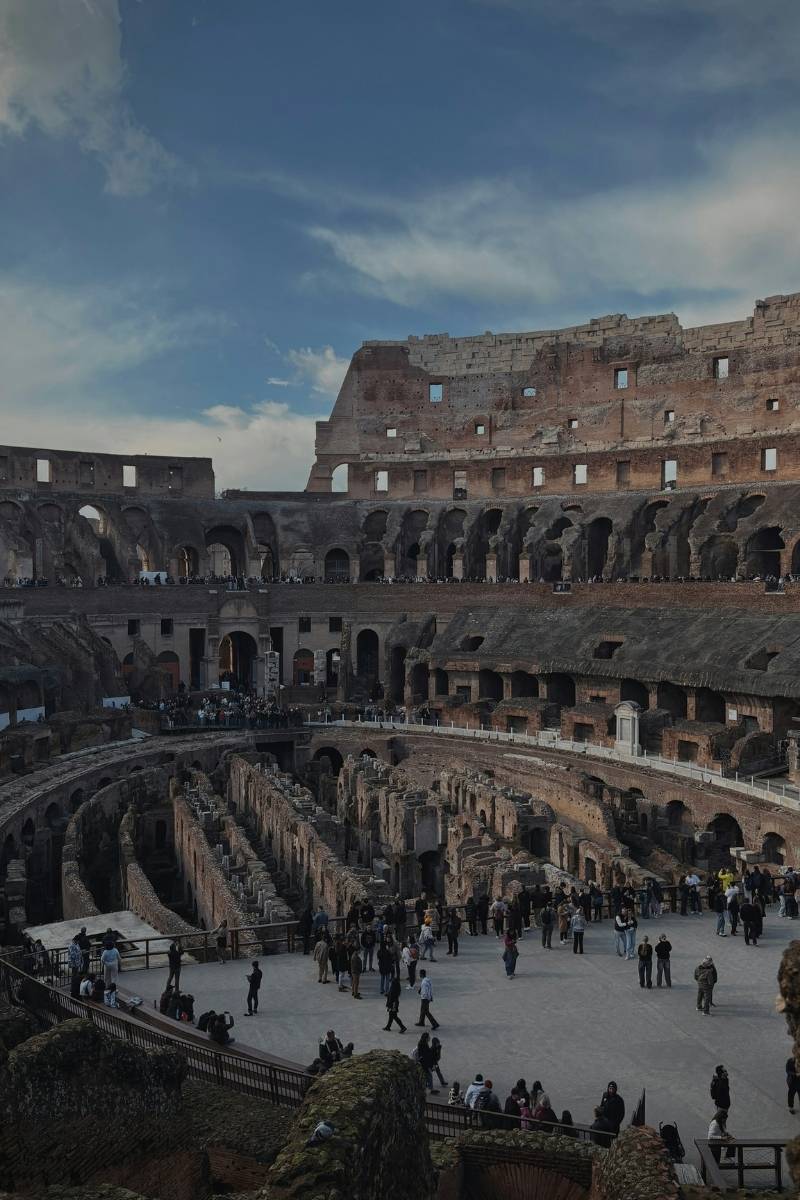
The Flavian Amphitheatre, completed in AD 80, held 50,000 to 80,000 spectators for gladiatorial combat, animal hunts, and public executions. The engineering — the vomitoria that could empty the crowd in minutes, the underground hypogeum where animals and gladiators waited, the retractable awning system — was not surpassed for a millennium. Standing on the arena floor, if you book the Arena access ticket, produces something close to vertigo.
The standard ticket (€18 for adults, free under 18) includes the Colosseum, the Roman Forum, and Palatine Hill — the ruins of the civic and political centre of the ancient world and the imperial palaces above it. This trio deserves most of a day. Tickets go on sale 30 days in advance on the official site (ticketing.colosseo.it); during high season (June–August) they sell out within hours of release. Book the moment your travel date is set.
For the Underground and Arena Floor, which require guided small-group tours, availability is even tighter — these often sell out within seconds of release. Check the official site and GetYourGuide daily if you're set on them.
First Sundays of each month: free entry for everyone, no ticket required. Extremely crowded; restricted areas unavailable. Worth knowing but probably not worth planning around.
The Vatican: Museums, Sistine Chapel & St. Peter's Basilica
The Vatican is technically not part of Italy — it is an independent state, the world's smallest by area and population, established in its current form in 1929. This distinction matters less than the practical reality: entry is subject to its own rules, prices, and dress code.
The Vatican Museums (open Mon–Sat, 8am–8pm, last entry 6pm) hold one of the most significant art collections in human history — not just Michelangelo's Sistine Chapel ceiling (painted 1508–1512) and the Last Judgement on the altar wall (1536–1541), but also the Raphael Rooms, the Gallery of Maps, Egyptian mummies, ancient Greek and Roman sculptures, and the Pinacoteca with works by Leonardo, Titian, and Caravaggio. Budget a minimum of three hours; four to five is more honest.
Standard tickets: €20 at the door, €25 online (the €5 covers the booking fee and is strongly recommended to avoid queues that regularly run two to three hours). Book via the official site only: tickets.museivaticani.va. During high season, slots sell out weeks in advance. The last Sunday of each month is free but catastrophically crowded — the queue for the free day often means not getting in by the 12:30pm last entry.
The dress code is strict and enforced: shoulders and knees must be covered for all genders. Security is airport-style. Arrive 15 minutes before your time slot. Photography is permitted throughout the museums, but absolutely prohibited in the Sistine Chapel — guards enforce this without mercy.
St. Peter's Basilica is free to enter and does not require an advance ticket. The queue for security can be long in peak season but moves steadily. Michelangelo's Pietà is to the right as you enter. Climbing the dome (stairs or lift, €6/8) gives the best elevated view of Rome. Mass is held daily — attend for religious reasons if you wish, but do not disrupt services for photos.
The Pantheon
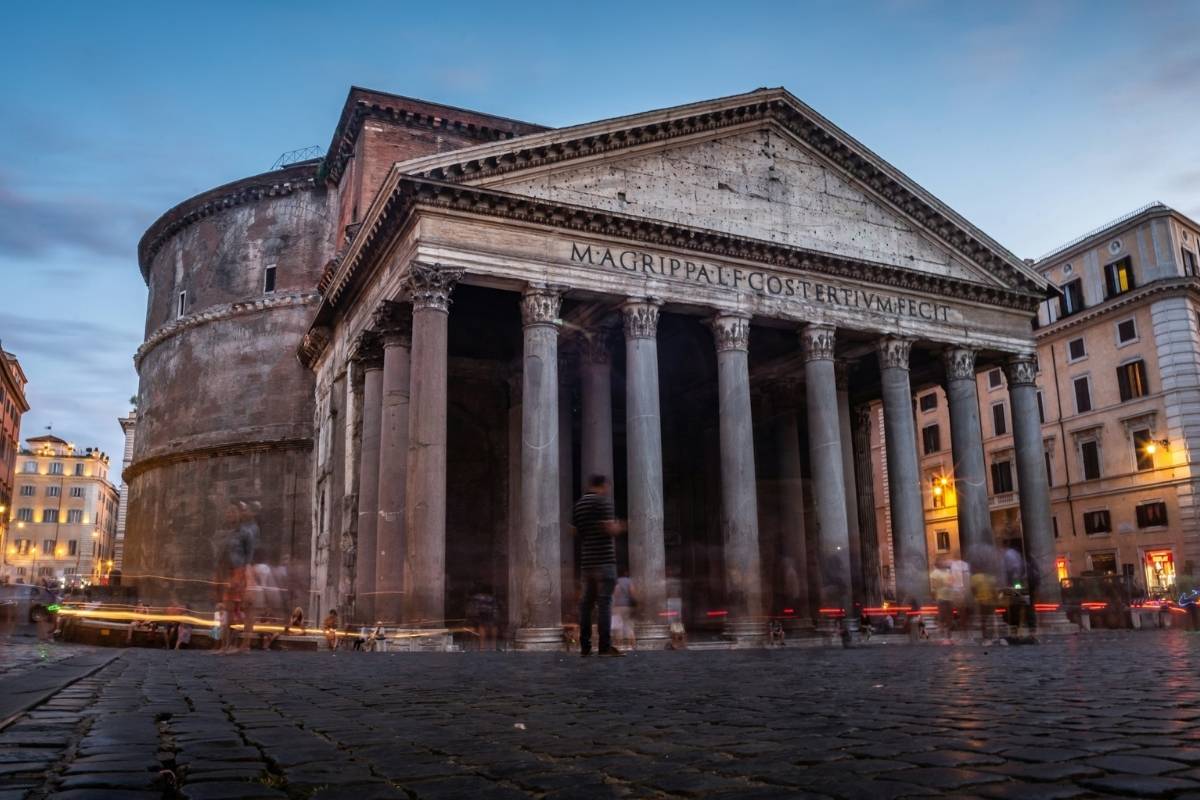
Built in its current form around AD 125, the Pantheon is the best-preserved ancient building in the world. The concrete dome, 43.3 metres in diameter, was the largest in the world until 1436 and remained the model for domed architecture for the next fifteen centuries — the dome of St. Peter's is a direct descendant. The oculus at the top, nine metres across, is the only light source. Rain falls straight through and drains through holes in the marble floor.
Entry costs €5 (book online to avoid the queue at pantheonroma.com). It is still a functioning church — Masses are held on Sunday morning. Go early on a weekday if you want the interior to yourself; by mid-morning the tour groups have arrived.
The Borghese Gallery
The finest small museum in Rome, arguably one of the finest in the world, and one of the best-kept secrets among first-time visitors. The Villa Borghese, built for Cardinal Scipione Borghese in the early 17th century, contains Bernini's most extraordinary sculptures — Apollo and Daphne, The Rape of Proserpina, David — alongside Caravaggio's Boy with a Basket of Fruit, his David with the Head of Goliath, and several other Caravaggios, plus Raphael's Deposition and Titian's Sacred and Profane Love.
The catch: the gallery operates on a strict two-hour visit limit with capped entry of 360 visitors per session. Tickets must be booked in advance at borghese.gallery; they sell out weeks ahead during high season. This is the one Rome booking that is genuinely non-negotiable — walk-ups are not admitted. The two-hour limit, which initially sounds punishing, turns out to be the right amount of time with the right number of people: the gallery never feels crowded, every room is properly visible, and the pressure to move through quickly actually sharpens attention.
Ticket price: €15, plus €2 booking fee.
Campo de' Fiori & the Capitoline Museums
Campo de' Fiori hosts a morning market (Mon–Sat, 7am–2pm) that is one of the most photogenic food markets in Europe and perfectly functional — flowers, vegetables, herbs, cheese, fish. The statue at the centre is Giordano Bruno, burned at the stake here by the Inquisition in 1600, which gives the market a particular historical charge.
The Capitoline Museums (Musei Capitolini), on the hill above the Forum, are the world's oldest public museums — opened to the public in 1734. The original bronze of Marcus Aurelius on horseback, the Capitoline Wolf, and the Dying Gaul are among the holdings. The view from the terrace over the Forum at sunset is one of the best free experiences in Rome. Ticket: €15, book at museicapitolini.org.
The Churches
Rome has over 900 churches. Most are free to enter. The following earn a specific visit:
San Luigi dei Francesi (near Piazza Navona): three Caravaggio paintings in the Contarelli Chapel, including The Calling of Saint Matthew. Free entry; coins required for the illumination machine. Go early.
Santa Maria del Popolo (Piazza del Popolo): two more Caravaggios, and Bernini's Chigi Chapel. Free.
Santa Maria Maggiore: one of Rome's four major basilicas, with extraordinary 5th-century mosaics in the nave — among the oldest intact Christian mosaics in existence. Free.
Sant'Ignazio: the trompe l'oeil ceiling by Andrea Pozzo, painted to simulate an architectural dome that does not exist. Stand on the disc in the floor to see the illusion properly. Free.
The Appian Way: not a church but a road — the 312 BC Via Appia Antica, the Roman world's most important highway. Walking the old stones on a quiet Sunday morning, past ancient tombs and umbrella pines, with the Alban Hills in the distance, is one of the quintessential Rome experiences. Rent a bike at the park entrance.
Food & Drink
Roman cuisine is one of the most distinct regional food cultures in Italy. It is not Tuscan, it is not Milanese. It is its own thing: simple, direct, flavoured by five herbs (rosemary, sage, mint, basil, parsley), made from ingredients that were historically inexpensive.
The four canonical pastas of Rome are cacio e pepe (pasta with sheep's cheese and black pepper, no cream), carbonara (egg yolk, guanciale, pecorino, black pepper — no cream), amatriciana (guanciale, tomato, pecorino), and gricia (guanciale and pecorino, without tomato — the oldest). All four are made with rigatoni or tonnarelli. If the menu uses spaghetti for carbonara, manage your expectations accordingly.
Supplì are the Roman answer to arancini — deep-fried risotto balls with a mozzarella centre, eaten standing up from a paper cone. The best are at Supplì Roma in Trastevere or Da Remo in Testaccio.
Carciofi alla romana (braised artichokes with mint and garlic) and carciofi alla giudea (deep-fried Jewish-style artichokes) are seasonal specialities at their best from March to May. If you're in Rome in spring and don't eat artichokes, you have wasted an opportunity.
Gelato: The city is comprehensively stacked with gelaterie ranging from excellent to actively fraudulent. Real artisan gelato (look for artigianale) is stored in covered containers in a bain-marie; fake industrial gelato is mounded up high in unnaturally bright colours in open display. Giolitti, Fatamorgana, Fior di Luna in Trastevere, and il Gelato di San Crispino (near the Trevi Fountain) are all trustworthy.
Coffee: Stand at the bar like a Roman. Espresso in the morning, occasionally a cornetto alongside. Cappuccino before 11am only — after that, just espresso. Never ask for a cappuccino after a meal. No one will refuse you; it will simply confirm what they already suspected about you.
Where to eat: The simple rule: walk at least one street away from any major monument before sitting down. The restaurant with the photo menu and the man standing outside waving you in is not for you. Look for places without English menus, where the handwritten daily specials board is in Italian only, where the lunchtime crowd is office workers rather than tourists. Trattoria da Cesare al Casaletto (Gianicolense), Salumeria Roscioli (near Campo de' Fiori), Tonnarello (Trastevere), Flavio al Velavevodetto (Testaccio) are all worth the effort to find.
What Nobody Tells You
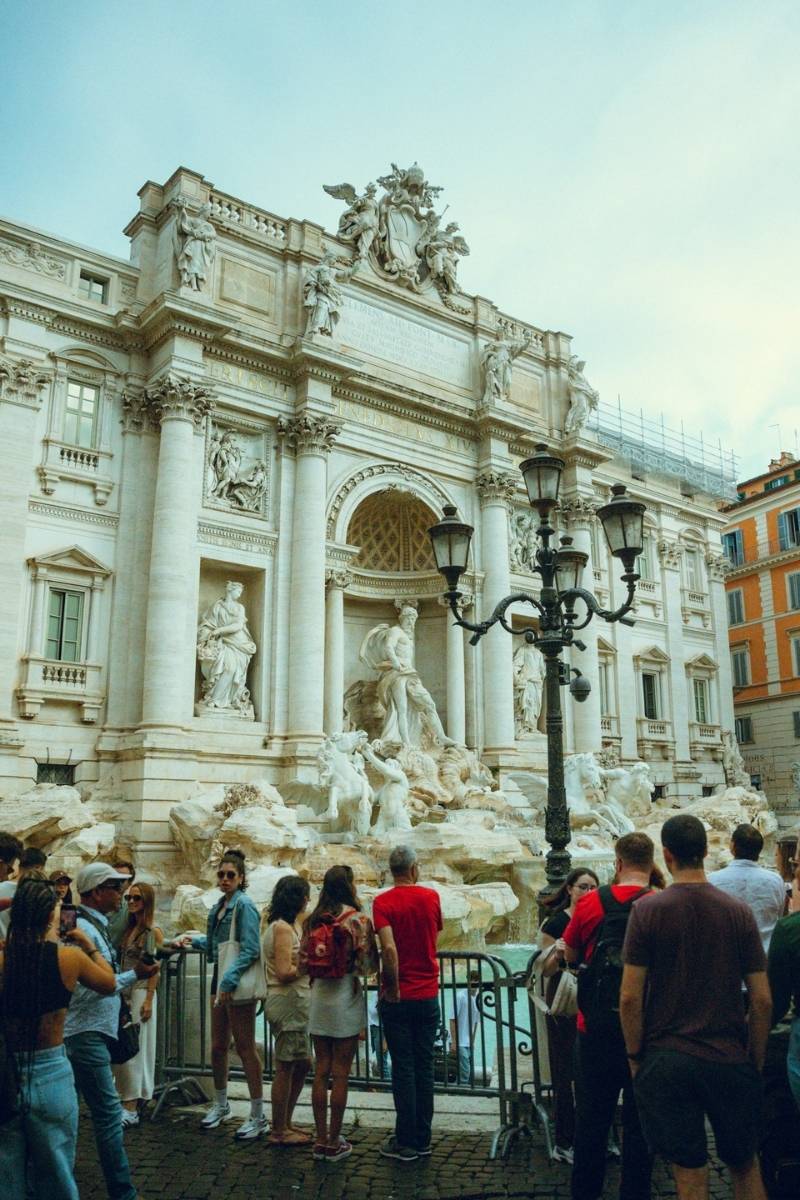
The Trevi Fountain at 6am. The fountain is always busy. It is one of the most visited tourist sites on earth, and the surrounding streets are lined with souvenir stalls. But at dawn, before the city has woken, it is almost empty. The water in the basin is turquoise, the morning light is extraordinary, and for twenty minutes you can have what feels like a private audience with one of the most beautiful objects humans have ever made.
The Protestant Cemetery (Cimitero Acattolico). Behind the Pyramid of Cestius in Testaccio, this is where Keats and Shelley are buried — Keats's headstone reading Here lies one whose name was writ in water. The cemetery is shaded, peaceful, and almost entirely unknown to tourists. One of the most moving small spaces in Rome. Open daily except Tuesdays.
The Aventine Keyhole. On the Aventine Hill, in the garden of the Knights of Malta priory, a bronze keyhole in an ornate doorway frames a perfectly composed view through a tunnel of cypress trees directly onto the dome of St. Peter's Basilica. The alignment is exact and intentional. It is free to look. The queue is rarely more than a few people long.
Ostia Antica. Twenty-five minutes by train from Ostiense station, the ancient port city of Ostia is Rome's secret second archaeological site. Unlike Pompeii, it was abandoned slowly rather than destroyed suddenly — which means the layers of Roman life are intact and accessible without scaffolding, queues, or crowds. Multi-storey apartment blocks, warehouses, thermopolia (fast-food counters), a theatre, a synagogue, baths with mosaics still underfoot. Admission is around €12. Go on a weekday morning.
Getting Tickets Right: The Summary
Rome's major sites require advance booking without exception in high season. Here is what needs to be booked, and when:
Colosseum / Roman Forum / Palatine Hill: Book 30 days in advance on the official site (ticketing.colosseo.it) the moment your travel dates are confirmed. €18 standard. Underground and Arena floor tours sell out within seconds of release; check daily if you want them.
Vatican Museums: Book as early as possible via tickets.museivaticani.va. €25 online (€20 at the door, but the queue is 2–3 hours). During summer, slots sell out weeks ahead. Dress code strictly enforced.
Borghese Gallery: Non-negotiable advance booking at borghese.gallery. €15 plus €2 fee. Two-hour timed entry. Sells out weeks ahead in season. Worth every bit of effort.
Pantheon: €5, book at pantheonroma.com. Minimal queue if pre-booked.
Capitoline Museums: €15, book at museicapitolini.org. Rarely sells out but booking saves queuing.
The most common rookie mistake in Rome is arriving without booked tickets and spending the first two days in queues. The second most common is booking through third-party scalper sites charging 40% premiums. Use only official sites or well-established resellers (GetYourGuide, Tiqets) for anything you can't book directly.
Safety
Rome is a safe city by European standards. The practical risks are:
Pickpockets: Concentrated on the metro (especially Line A between Termini and Spagna), at the Colosseum entrance, and around the Trevi Fountain. Bags worn across the body, phones in front pockets, and constant awareness at the metro doors are sufficient precautions.
Scams: The friendship bracelet scam (someone ties a bracelet on your wrist and demands payment), the petition clipboard scam (signing the paper means giving money), and the gladiator/centurion outside the Colosseum who wants €15 for a photo. All avoidable by a polite refusal to engage.
Tourist restaurants: Not a crime, but a tax on the incurious. The restaurants immediately surrounding the Trevi Fountain, the Colosseum, and the Vatican are priced 40–60% above equivalent establishments three streets away and significantly worse. Walk.
Practical Tips
- Currency: Euro. Contactless payment accepted almost everywhere now. Small cafés and market stalls may be cash only.
- Language: Italian. Romans respond very warmly to even minimal attempts: buongiorno, grazie, per favore, il conto per favore (the bill, please). Google Translate camera mode handles menus.
- Dress code for churches: Shoulders and knees covered. Carry a scarf. This applies everywhere from the Vatican to the smallest neighbourhood church.
- Drinking water: Free and excellent. The nasoni — the small iron fountains on almost every corner of the historic centre — run cold, clean drinking water continuously. Rome's aqueduct system has been delivering water since 312 BC. Drink from it.
- Sun: The Roman sun is serious from May onwards. Hat, sunscreen, and shade between noon and three.
- Shoes: Cobblestones are beautiful and merciless. Do not make the mistake of arriving with new shoes. Break them in first or bring something comfortable.
- Tipping: Not obligatory but welcome. Round up at cafés, leave €1–2 per person at restaurants where you've sat and been served. The coperto (cover charge, usually €1–3 per person) is standard and legitimate — it is not a tip.
- Time zone: CET (UTC+1) in winter, CEST (UTC+2) in summer.
Where to Stay
Centro Storico: The most atmospheric option, central to everything, walkable to the major sights. The best hotels here are either expensive or boutique; budget options sacrifice either location or quality.
Trastevere: Beautiful neighbourhood, ideal for food and evening life, slightly inconvenient for the Vatican and Colosseum but well-connected by tram and bus.
Prati: Practical, well-priced relative to the centre, and genuinely pleasant — five minutes from the Vatican on foot, easy metro access for the Colosseum. Good value for what you get.
Termini area: The transport hub is convenient for day trips and airport connections. The neighbourhood immediately around the station is gritty; a few blocks out it improves considerably. Fine for short stays where logistics matter.
The Aventine: A residential hilltop neighbourhood overlooking Testaccio, quiet, leafy, and almost tourist-free. A longer walk to the major sights but connected by metro and bus. For a longer stay, exceptional.
Day Trips Worth Taking
Tivoli (45 minutes by bus from Ponte Mammolo metro): Hadrian's Villa, the largest Roman villa ever built, and the Villa d'Este with its extraordinary 16th-century water gardens. A full day, not half.
Orvieto (1 hour by train): A medieval hill town above a volcanic plateau — the striped Gothic cathedral is one of the most extraordinary facades in Italy, and the town's white wine (Orvieto Classico) is excellent. Manageable in a day.
Naples (70 minutes by high-speed train): Not a day trip for the faint-hearted — Naples deserves its own days — but if your schedule allows only one, the Archaelogical Museum alone (Pompeii treasures, the Farnese collection) justifies the journey.
Final Thoughts
Rome requires surrender. Not of your standards or your money — keep both — but of your plan. The best things that happen to you in this city will not be on your itinerary: the Caravaggio you found by accident in a church you ducked into to escape the rain, the conversation with a barista who has lived on the same street for sixty years, the moment the Forum revealed itself through a gap in the stonework at exactly the right hour.
The city has been here for two and a half thousand years. It is not in a hurry, and it does not need to impress you. It simply is.
Stand in the Pantheon at noon with the oculus above you, the light falling through in a perfect column. Stand at the Trevi Fountain at dawn with the water running cold and turquoise. Walk the Appian Way on a Sunday morning when the stones are the same ones Caesar walked.
Then go somewhere and eat something extraordinary.
That is Rome. That is enough.


