Plitvice Lakes, Croatia: Sixteen Lakes and a Forest That Feels Primeval
April 3, 2026 · TripOnly

Plitvice Lakes, Croatia: Sixteen Lakes and a Forest That Feels Primeval
There is a specific shade of blue-green that exists in only a handful of places in the world — the colour of glacial melt, of mineral-rich limestone water, of the Plitvice Lakes on a clear morning in May. It is the kind of colour that makes people stop walking and just stand there for a moment, recalibrating what they thought they knew about what water could look like.
Plitvice is Croatia's oldest and largest national park, designated UNESCO World Heritage in 1979. Sixteen lakes, connected by waterfalls and cascades, drop 133 metres through a forested limestone gorge over roughly 8 kilometres. The water chemistry — calcium carbonate precipitating as travertine over thousands of years — creates the barriers between lakes and is still actively building new ones. The landscape is literally still forming.
It is also, in high summer, extremely crowded. How to navigate both realities is most of what there is to say about visiting it well.
Getting There
Plitvice is in the Croatian interior, roughly equidistant between Zagreb (2 hours by bus) and Zadar (1.5 hours by bus). Both connections are direct and run regularly.
From Split, the journey is about 3.5–4 hours. From Dubrovnik, around 6 hours — doable but a long day each way, making an overnight stay strongly advisable.
There is no train station near the park. Buses drop at the park entrances directly; the main Zagreb–Split road runs right past the gates.
Car access is possible but parking fills early in summer — arriving by bus avoids the congestion.
Where to Stay
There are four hotels inside the park, all operated by the national park authority: Hotels Jezero, Plitvice, Bellevue, and Grabovac. Staying inside means early morning access before the crowds arrive and evening light in the park after day-trippers leave — this alone transforms the experience. Book months ahead for summer; the hotels sell out.
Villages outside the park — Mukinje, Rastovača, and Selište Drežničko — offer private guesthouses and apartments at lower prices, with easy walking or driving access to the entrances. The atmosphere is more rustic and genuinely local.
Grabovac and Rakovica, further out, are larger villages with more accommodation options and the feel of places that exist independently of the park economy.
How the Park Works
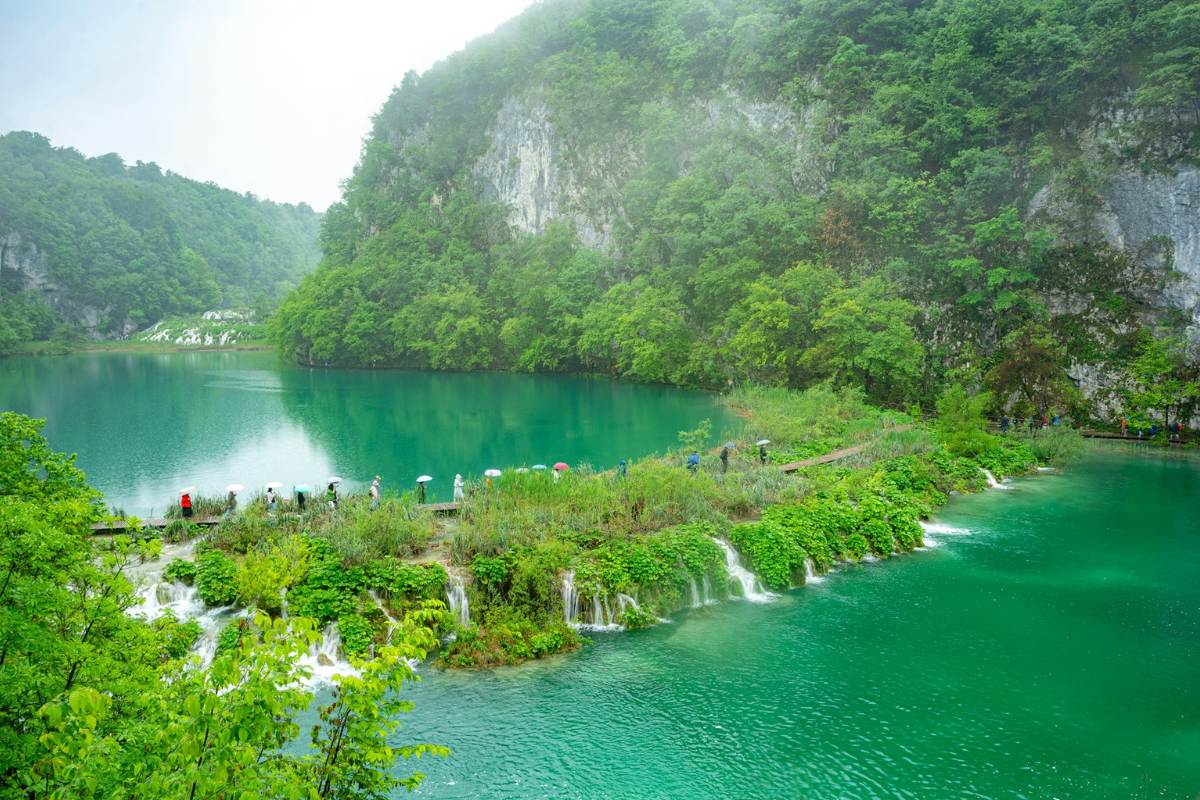
Two entrances: Entrance 1 (upper lakes) and Entrance 2 (lower lakes and the main waterfall). Tickets include the park shuttle buses and the flat-bottomed electric boats that cross the largest lake, Jezero Kozjak.
The park has marked hiking routes of varying lengths — Route A (2–3 hours, lower lakes) through Route K (6–8 hours, full circuit). Most day visitors do Route H or K for the complete experience; 3–4 hours is realistic for seeing the main sections without rushing.
The electric boats and shuttle buses get busy. At peak times in July and August, waits for both can be 30–45 minutes. Factor this in.
The Upper Lakes
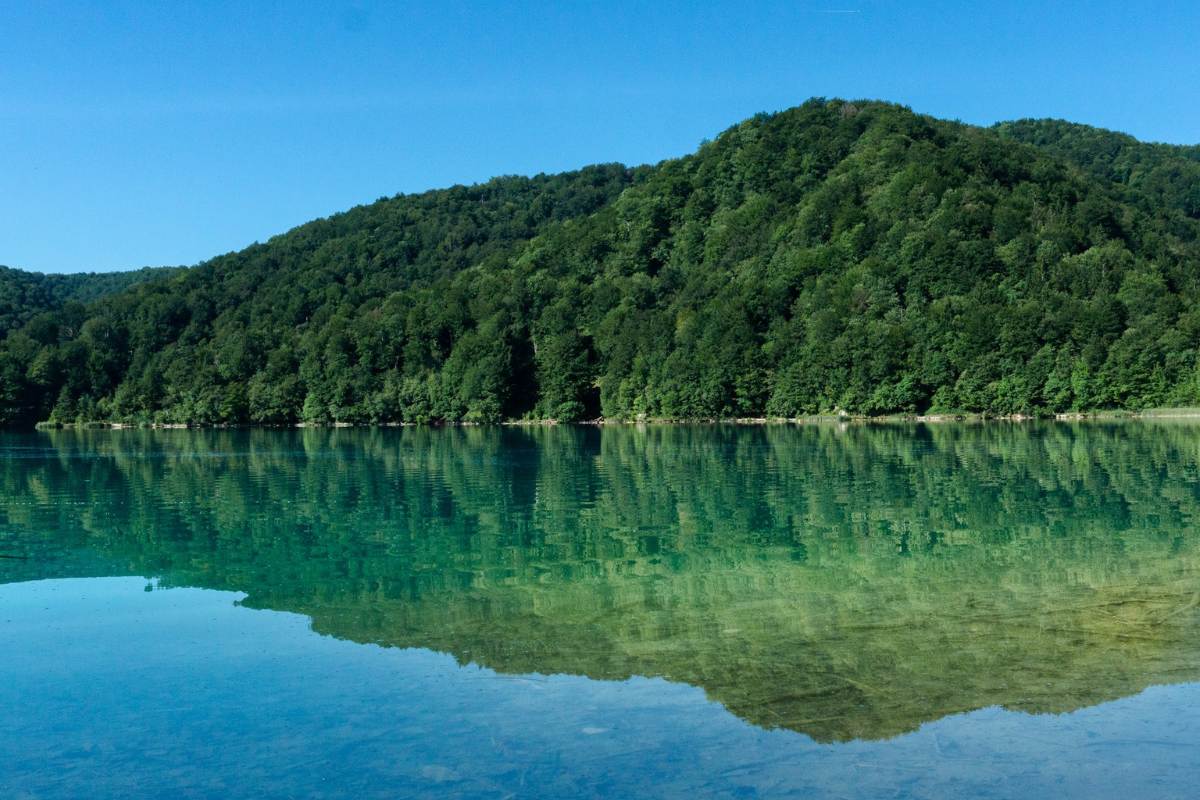
Larger, wider, with a different character — forested banks, longer stretches of calm turquoise water, fewer dramatic cascades. The boat crossing of Kozjak is the longest stretch and one of the most peaceful moments in the park. The colour of the water from the middle of the lake is extraordinary.
The Lower Lakes
More dramatic, more vertical — a series of cascades and falls dropping through a narrow gorge, with boardwalks running at water level through the spray. The Veliki Slap (Great Waterfall), at 78 metres, is Croatia's tallest waterfall and is visible from the lower paths and from across the valley. The lower section is where most photographs are taken and where crowds concentrate most heavily.
Early Morning Strategy
The park opens at 7 AM. In summer, arriving at opening means having the boardwalks nearly to yourself for the first hour. By 9 AM the first buses are arriving; by 10 AM the main paths are dense. There is no bad time of year to visit Plitvice, but there is a very clear better time of day.
Food & Drink
Eating options inside the park are limited to the hotel restaurants and a few basic snack points near the entrances. The food is functional, not remarkable.
Better to eat in the surrounding villages — the guesthouses around Mukinje and Rakovica serve home-cooked regional food: lamb dishes, hearty soups, local cheese, the earthy red wines of the continental interior rather than the Dalmatian coast varieties.
Pack a lunch if you're day-tripping and want to stay in the park without interruption.
Best Times to Visit
April–May: The waterfalls are at their fullest from spring snowmelt, the beech forests are coming into leaf, and crowds are manageable. Some paths may be partially closed from winter damage — check the park website.
June: The crowds begin but the water colour is at its best. The best balance of conditions and accessibility.
July–August: Beautiful and absolutely packed. Possible, but requires early arrival and patience.
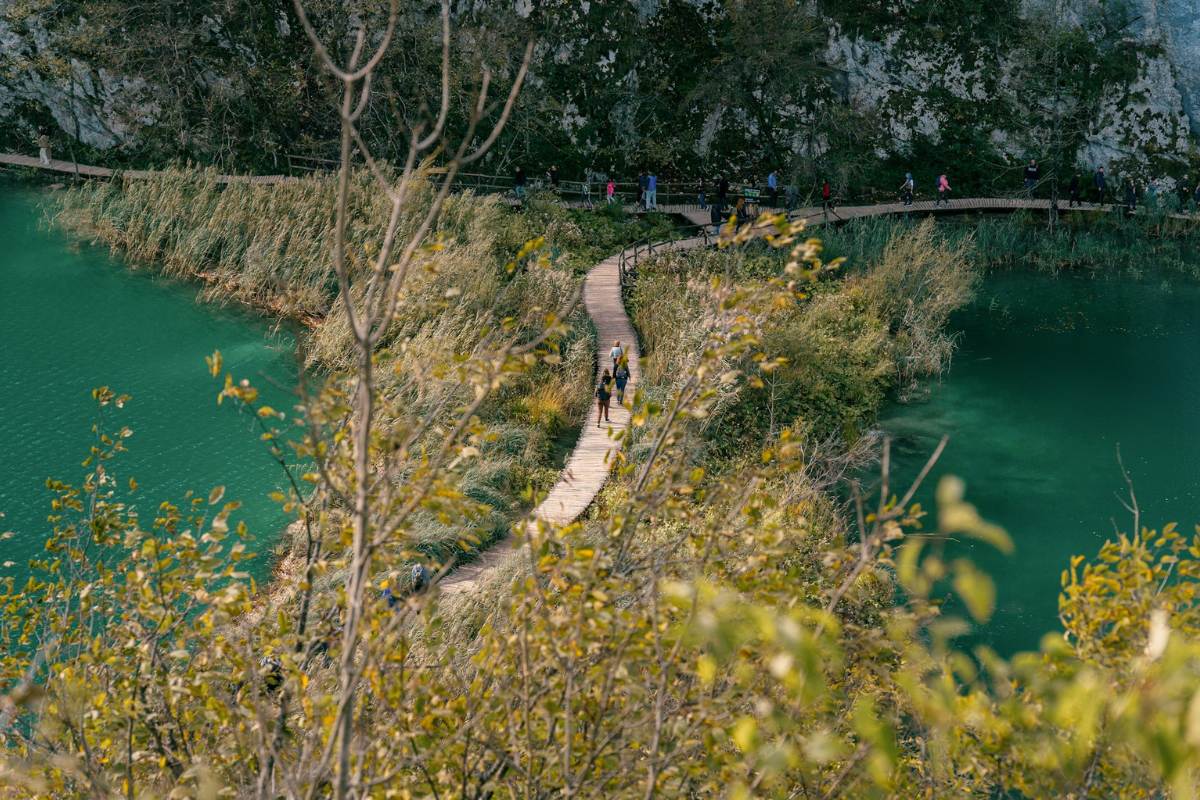
October: The beech forests turn gold and amber, the crowds thin dramatically, and the light is extraordinary. Many people's favourite month. The water colour is slightly less vivid but the atmosphere more than compensates.
Winter: The park partially closes due to ice on the boardwalks, but some sections remain open. Frozen waterfalls and snow-covered travertine barriers are genuinely remarkable if you encounter them.
Practical Notes
- Tickets: Buy online in advance for summer visits — the park now uses timed entry slots and sells out. Walk-up tickets are sometimes available but not reliable.
- Footwear: The boardwalks are wooden and can be slippery when wet. Proper walking shoes or trainers. Not sandals.
- Photography: The light is best in the early morning (entering from Entrance 2 for the lower lakes) and late afternoon for the upper lakes. Midday light flattens the water colour.
- Swimming: Strictly prohibited throughout the park. The water chemistry that creates the colours is fragile and sunscreen, insect repellent, and human contact all damage it.
- Crowds management: The park limits daily visitors but the limit is high. Weekdays are noticeably less busy than weekends even in peak season.
A Few Honest Words
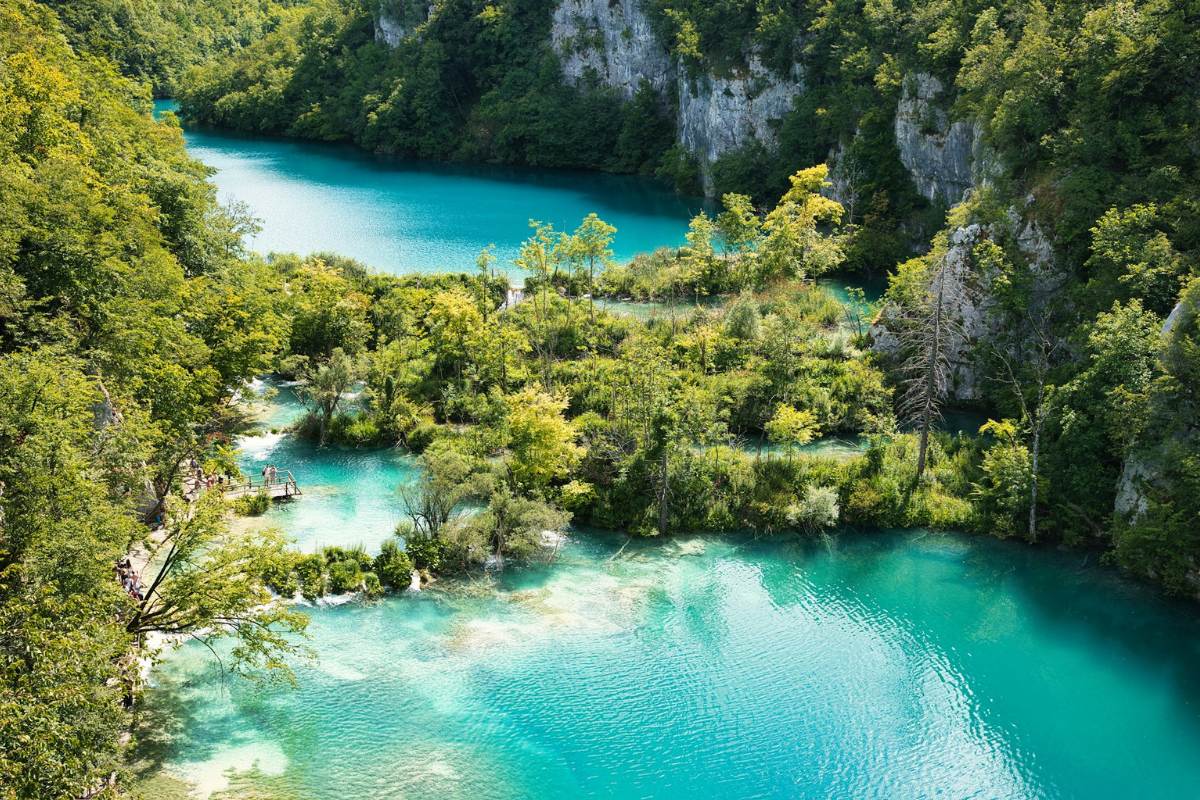
Plitvice is one of those places where the photographs don't lie — it genuinely looks like that. The water is genuinely that colour. The falls genuinely cascade like that through the forest. After years of seeing images, the real thing still surprises.
What the photographs don't show is the 400 people on the boardwalk behind you.
The solution is simple and worth the effort: stay inside the park or arrive at opening, walk the lower lakes before 9 AM when the mist is still on the water and you can hear the falls over the sound of your own footsteps, then take the boat across Kozjak in the late morning when the crowds have moved on from the upper section.
Do that and you'll understand why people keep coming back.


