Los Angeles: The Complete Travel Guide to the City That Contains Every City
July 10, 2026 · TripOnly

Los Angeles: The Complete Travel Guide to the City That Contains Every City
There is a moment that happens to almost everyone who arrives in Los Angeles expecting one thing and finds forty. You picture the sign in the hills, or the Walk of Fame, or a single sweeping image assembled from decades of movies — and then you land, and you drive, and you realize the city refuses to resolve into anything that simple. Fifteen minutes from the ocean you are in a desert canyon. Fifteen minutes from a taco truck you are in a museum holding a Vermeer. Fifteen minutes from a strip mall you are on a beach that looks unedited from a surf film.
Los Angeles is the second-largest city in the United States by population, and by land area it is closer to a small country than a city — nearly 500 square miles of city proper, and a metropolitan sprawl that runs for another sixty miles beyond that in every direction except the Pacific. It was built for cars, then reshaped by immigration from every part of the world, then reshaped again by the entertainment industry that made it famous, and the result is a place with no single downtown in the way New York or Chicago have one. Instead it has two dozen downtowns, each with its own weather, its own architecture, its own version of what Los Angeles means.
The light is the one thing that unites all of it. The same clear, low, gold-toned Southern California light that drew the film studios here in the first place still falls on the city every evening, and it is very difficult to stay unmoved by it, no matter how many times you have already seen it in a photograph.
This is everything you need to know.
Why Los Angeles?
Ask ten people why they came to LA and you will get ten different answers, and all ten will be right, because the city is built to hold contradictory truths at once. It is the entertainment capital of the world and also home to the busiest port in the Western Hemisphere. It has some of the most expensive real estate in America and some of the best, cheapest, most extraordinary immigrant food anywhere on the continent. It has more art museums than most European capitals and more freeway lanes than seems physically reasonable.
Geographically, it sits in a basin ringed by mountains — the Santa Monica Mountains cutting directly through the middle of the city, the San Gabriels rising sharply to the north, snow-capped well into spring — with 75 miles of coastline running from Malibu down through Santa Monica, Venice, and the South Bay. You can surf in the morning, hike a genuine mountain trail by early afternoon, and eat Sichuan hot pot, Ethiopian injera, or Oaxacan mole for dinner, all without leaving the county.
It also has the best year-round climate of any major American city, a film and television industry that still shapes global culture, some of the finest contemporary art institutions in the country, and a food scene that has quietly become one of the most interesting in the world, built almost entirely by the people who moved here from somewhere else.
Los Angeles does not sell itself as elegant the way Paris or Rome does. It sells itself as possible — the idea that reinvention is always one freeway exit away. That has made it a punchline for exactly as long as it has made it a magnet, and both reactions are, in their way, correct.
When to Go
Spring (March–May) brings the hills green and the wildflowers out in the canyons, jacaranda trees blooming purple across entire neighborhoods by late April and May, and daytime temperatures that sit comfortably in the low-to-mid 70s°F. This is one of the two best windows to visit — before the June gloom sets in and before the summer crowds arrive at the beaches and theme parks.
Summer (June–August) is high season, and it comes with a quirk locals know well: June Gloom, a marine layer of grey coastal cloud that often burns off by early afternoon, giving way to reliably warm, dry weather inland. July and August are the hottest months, particularly in the San Fernando Valley and inland neighborhoods, while coastal areas stay noticeably cooler. Beaches, hiking trails, and outdoor attractions are at their busiest; book ahead for theme parks and popular restaurants.
Fall (September–November) is the connoisseur's season and arguably the best time of year — the marine layer is gone, the light turns even more golden, ocean temperatures peak in September, and the summer crowds have thinned considerably. October and November regularly deliver the clearest, warmest days of the entire year, occasionally interrupted by hot, dry Santa Ana winds blowing in from the desert.
Winter (December–February) is Los Angeles's other secret season. Daytime temperatures typically sit in the mid-60s°F, rain is infrequent but real when it comes, and the San Gabriel Mountains north of the city are often genuinely snow-capped — a striking sight against palm trees and 65-degree beach weather on the same day. Hotel rates drop outside the holiday weeks, and the crowds at major attractions thin out considerably.
Getting There
By air: Los Angeles International Airport (LAX) is the primary gateway, one of the busiest airports in the world, with direct flights from nearly every major global hub. LAX sits on the west side of the city, close to Santa Monica and Venice but a considerable drive from Downtown or Hollywood — plan on 30 to 60 minutes depending on traffic and destination. The LAX FlyAway bus runs to Downtown Union Station and other hubs for a flat fare and is generally faster and cheaper than a rideshare during peak traffic. Rideshares and taxis pick up from a dedicated LAX-it lot reached by a short shuttle from the terminals.
Secondary airports worth knowing: Hollywood Burbank Airport (BUR), smaller and often faster for reaching the Valley, Hollywood, or Pasadena, and Long Beach Airport (LGB), useful for the South Bay and Orange County.
By car: Los Angeles is, more than almost any other major city, a driving city. Interstate 5, US 101, and Interstate 10 converge here from every direction, and a rental car remains the single most flexible way to experience the sprawl — Malibu, Pasadena, and the mountains are all difficult without one. Traffic is the well-known cost of this convenience; avoid the freeways during the 7–9am and 4–7pm rush windows wherever possible.
Metro and public transit: LA's public transit is more capable than its reputation suggests. Metro Rail has expanded significantly, with lines connecting Downtown to Hollywood, Pasadena, Santa Monica, and Long Beach. The E Line (Expo) runs all the way from Downtown to the beach in Santa Monica, and the B Line (Red) connects Downtown to Hollywood and North Hollywood. A single ride is a flat, inexpensive fare, and the TAP card works across the whole system. It will not replace a car for the full sprawl, but for Downtown, Hollywood, and the Westside corridor it is genuinely useful and often faster than driving at rush hour.
Where to Stay
Los Angeles divides into distinct worlds, and choosing a base shapes the entire trip more than in almost any other city.
Santa Monica / Venice: The classic choice for a first visit and the easiest base for anyone without a rental car mindset — walkable, beach-adjacent, connected to Downtown by the Metro E Line, with a concentration of good restaurants and an easy rhythm. Venice brings more bohemian energy and the famous boardwalk and canals; Santa Monica is calmer and more polished, with its pier and Third Street Promenade.
Hollywood: Central for reaching both the Westside and Downtown, and unavoidable if the entertainment-industry history is part of the draw — the Walk of Fame, the TCL Chinese Theatre, the Hollywood Bowl. Increasingly walkable in pockets, though the tourist-strip sections around the Walk of Fame itself are more about atmosphere than charm.
Downtown LA (DTLA): The most transit-connected base, home to Union Station, the Arts District's warehouse-turned-gallery scene, Grand Central Market, and the Walt Disney Concert Hall. A genuinely urban, increasingly dense neighborhood that surprises visitors who still picture Downtown as a business district that empties at night.
Silver Lake / Los Feliz: The neighborhood-feel option — hillside streets, independent coffee shops and bookstores, proximity to Griffith Park and the Observatory, and a slower, more residential version of LA cool. A strong choice for a longer stay or a return visit.
What to budget: LA is not cheap, particularly on the Westside and in West Hollywood. Expect $180–300 per night for a solid mid-range hotel; boutique and beachfront properties in Santa Monica or West Hollywood run considerably higher. Downtown and the Eastside neighborhoods generally offer better value for comparable quality.
What to See and Do
Griffith Observatory and Griffith Park
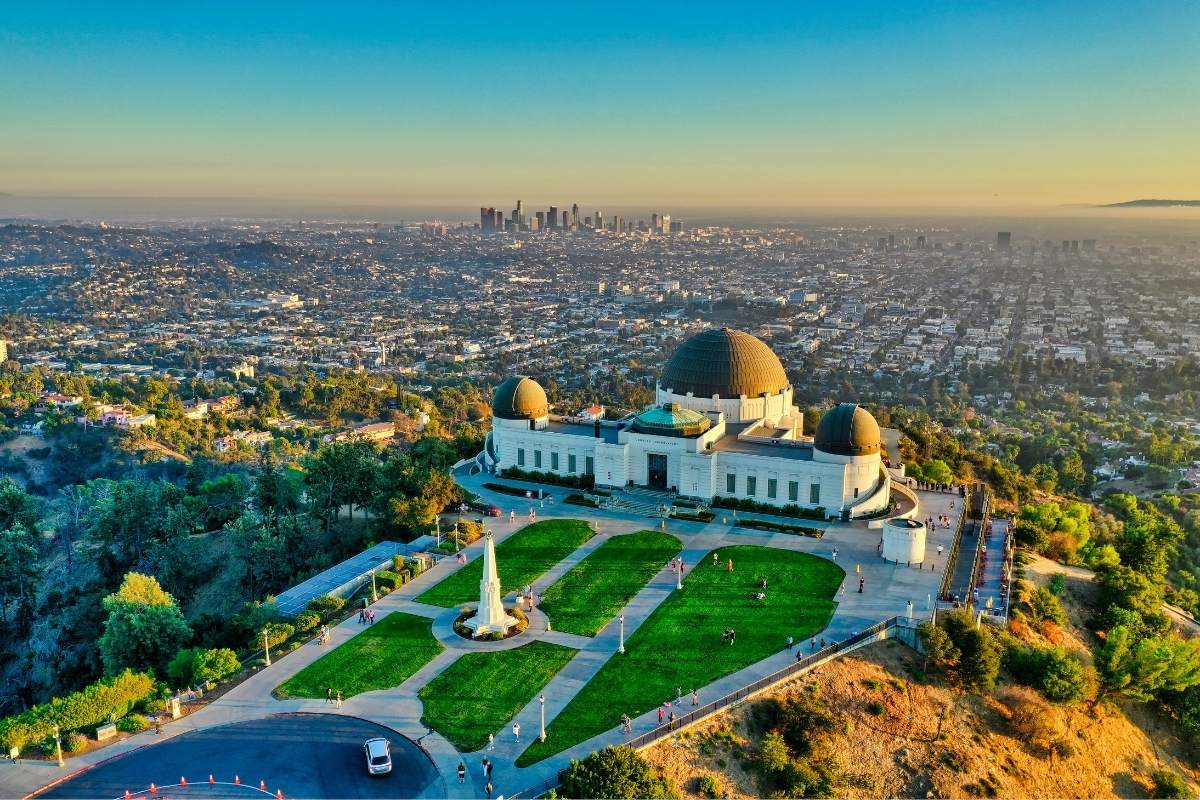
Perched on the southern slope of Mount Hollywood, the Observatory offers the single best free view in the city — the Hollywood Sign visible to the north, Downtown's skyline to the southeast, the ocean on a clear day to the west. The Art Deco building itself, free to enter, houses a planetarium and genuinely good exhibits on astronomy. Griffith Park around it is one of the largest urban parks in North America, with hiking trails, the LA Zoo, and the Greek Theatre tucked into its canyons.
The Getty Center
A hilltop museum campus reached by a free tram from the parking garage below, designed by Richard Meier in travertine stone, with a collection running from European Old Masters to contemporary photography and a garden designed by Robert Irwin that is worth the visit on its own. Free admission (parking is paid), extraordinary views over the Westside and the Pacific, and consistently underrated by visitors who assume LA has no serious museums.
The Getty Villa
The Getty's second site, in Malibu, is built as a recreation of a first-century Roman country house and holds the collection's Greek, Roman, and Etruscan antiquities. Timed, free tickets are required in advance. Pair it with an afternoon on the Malibu coastline.
LACMA and Museum Row
The Los Angeles County Museum of Art anchors a stretch of Wilshire Boulevard that also includes the La Brea Tar Pits — an active Ice Age fossil excavation site in the middle of the city, still pulling mammoth and saber-toothed cat bones from the ground. LACMA's collection spans nearly every culture and era; Chris Burden's Urban Light installation of vintage streetlamps out front has become one of the most photographed spots in the city.
The Getty aside, the beaches
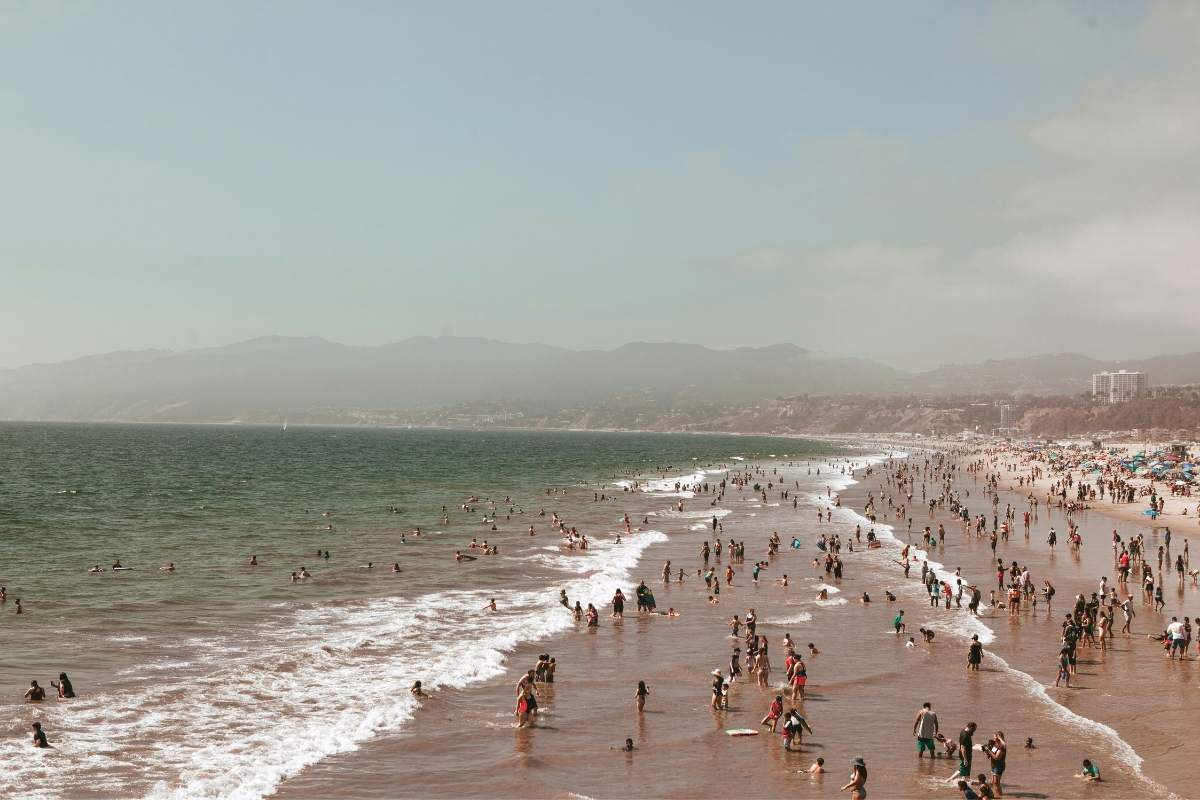
Santa Monica for the pier, the Ferris wheel, and the widest, most accessible beach. Venice for the boardwalk, Muscle Beach, and the canals a few blocks inland. Malibu for a quieter, more dramatic coastline and surf culture at its most authentic. Manhattan Beach and the South Bay for a calmer, more residential beach-town feel with excellent volleyball courts and a strong local surf scene.
Downtown LA and the Arts District
Grand Central Market has been operating since 1917 and remains the best single stop for a cross-section of the city's food culture under one roof. The Walt Disney Concert Hall, Frank Gehry's stainless-steel landmark, is the home of the LA Philharmonic. The Arts District nearby has converted its warehouses into breweries, galleries, and some of the city's best contemporary restaurants.
Day Trips
Pasadena (20–30 minutes) for the Rose Bowl, the Norton Simon Museum, and Old Town's historic core. Malibu and the Santa Monica Mountains for canyon hikes and coastline. Joshua Tree (2.5 hours) for a desert landscape unlike anywhere else in the country. Santa Barbara (1.5–2 hours up the coast) for a smaller, more Mediterranean version of California. Disneyland and Anaheim (45 minutes to an hour, traffic dependent) remain the obvious choice for anyone traveling with kids.
Where to Eat and Drink
Los Angeles has quietly become one of the most interesting food cities in the world, built almost entirely on the back of the immigrant communities that make up most of the metro area. There is no single "LA cuisine" — there are dozens of authentic regional cuisines from around the world, often executed better here than almost anywhere outside their country of origin.
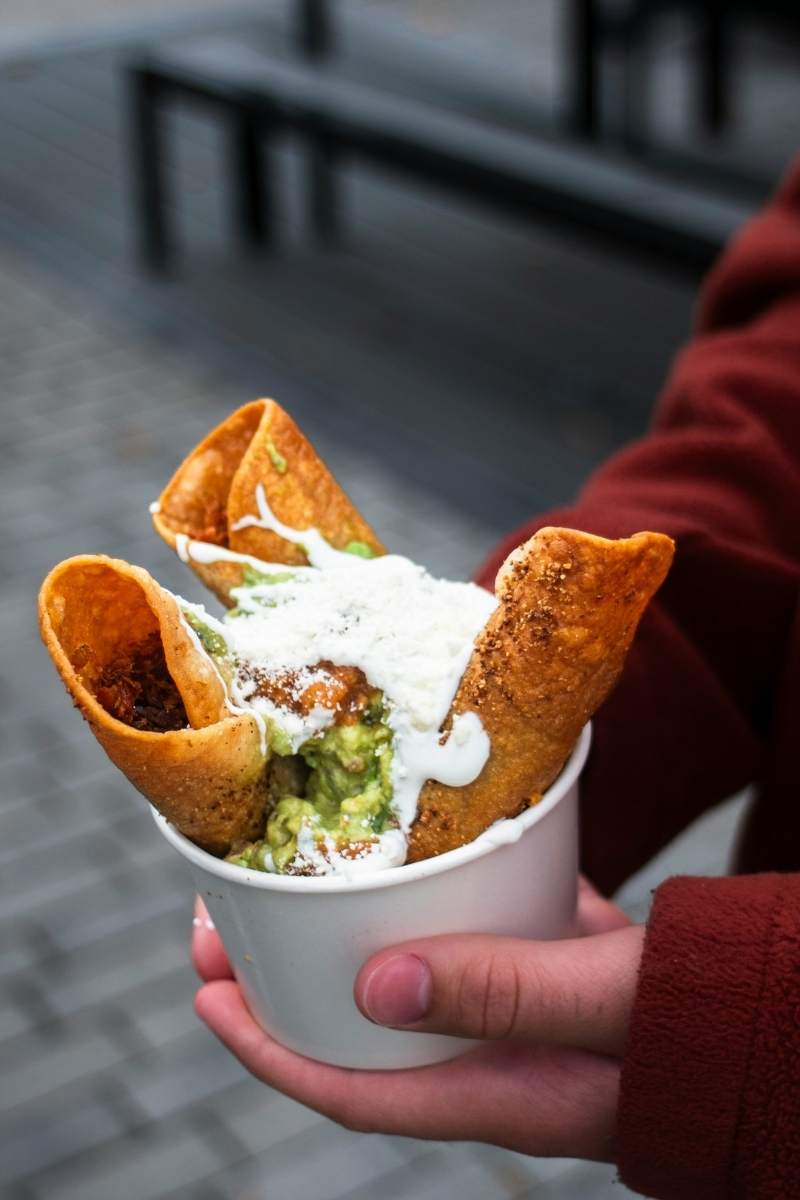
Tacos: The baseline, and the city takes it seriously. Look for al pastor carved straight off the trompo, or the Sonoran-style carne asada found at the taco trucks and stands throughout East LA and Boyle Heights. This is street food at its most confident — cheap, fast, and frequently extraordinary.
Koreatown: One of the largest Korean communities outside Korea, packed into a dense grid of strip malls that hold some of the best Korean barbecue, tofu soup, and late-night food in the country. Come hungry and come late; Koreatown runs on its own clock.
San Gabriel Valley: East of Downtown, cities like Monterey Park, Alhambra, and Rowland Heights hold one of the most significant concentrations of authentic regional Chinese cooking anywhere outside China — Sichuan, Cantonese, Taiwanese, and Shanghainese kitchens that draw serious food travelers from around the world.
Farmers markets: The original Original Farmers Market at Third and Fairfax has operated since 1934 and remains a genuine gathering point, alongside the adjacent open-air Grove shopping complex. The Santa Monica Farmers Market on Wednesdays and Saturdays draws the city's top chefs shopping for produce.
Restaurants: Guelaguetza for Oaxacan mole and mezcal in the Koreatown area. Republique in a converted bakery on La Brea for a refined, all-day French-Californian menu. Sqirl in Silver Lake for a breakfast and lunch spot that has come to define a certain LA cooking style — rice bowls, seasonal preserves, sourdough. For fine dining, n/naka and Providence consistently rank among the country's best tasting menus.
Coffee: LA's third-wave coffee culture is genuinely serious. Intelligentsia, Verve, and a wave of independent roasters across Silver Lake, Highland Park, and the Eastside have made coffee a competitive category in its own right.
Practical Tips
Rent a car unless your trip is tightly geographic. Los Angeles rewards drivers and can be genuinely frustrating without one, particularly if the plan includes Malibu, Pasadena, or the mountains. If staying entirely on the Westside or using Downtown and the Metro E Line, a car is optional.
Avoid rush hour on the freeways. The 405, the 10, and the 101 are infamous for a reason. Plan freeway travel outside 7–9am and 4–7pm where possible, and build extra time into any airport transfer.
Distances deceive. Google Maps time estimates in LA can shift dramatically with traffic; a trip that takes 20 minutes at 11am can take 50 at 5pm. Build slack into any day with more than two stops.
Sunscreen, always. The clear Southern California light that makes the city photogenic also means real sun exposure, even on cool or overcast-looking days.
Tipping is expected. As throughout the US, 18–20% at restaurants, and small tips for rideshare drivers, hotel staff, and baristas.
The beach and the hills have different weather. June Gloom can leave the coast under grey cloud while Downtown or the Valley sits in full sun a few miles inland. Check both if the plan spans neighborhoods.
Griffith Observatory parking fills fast. Arrive early, particularly at sunset, or take the seasonal shuttle from the Greek Theatre parking area.
How Long Do You Need?
A long weekend (3–4 days): Griffith Observatory at sunset, a morning at the Getty Center, a walk down the Venice boardwalk and canals, Grand Central Market for lunch, and one serious taco crawl. Enough to understand the shape of the city, not enough to understand its depth.
One week: Add Malibu and the Getty Villa, a day in Pasadena, an evening in Koreatown, a proper meal in the San Gabriel Valley, and a full beach day in Santa Monica or the South Bay. This is the right length for a first serious visit, with enough time to let the sprawl start making sense.
Two weeks: Now Southern California opens fully. Joshua Tree and the high desert. Santa Barbara up the coast. Disneyland and Orange County. San Diego, two hours south. Ojai, inland and quiet, for a different pace entirely. And the daily return to LA, to the tacos, to the observatory deck at dusk, to the light.
The distances are real here. Budget accordingly, and budget for traffic.
Final Thoughts
Los Angeles has spent decades being underestimated by people who visited once, saw the freeways and the sprawl, and left having never found the city underneath. That city is there, in the taco stand in Boyle Heights that has been run by the same family for thirty years, in the Getty's travertine terraces at golden hour, in the fog burning off Venice Beach by ten in the morning, in the mole recipe carried from Oaxaca and perfected in a Koreatown strip mall.
It is not a city that reveals itself from a single vantage point, the way Paris does from the Eiffel Tower or Nice does from the castle hill. Los Angeles has to be driven, block by block and neighborhood by neighborhood, before it starts to make sense — and even then, it never fully resolves into one thing, because it was never meant to be one thing.
The light is real, the food is better than the stereotypes suggest, and the sprawl that looks chaotic from a plane window is, on the ground, just a very large number of very specific places, each with its own weather and its own reason for being there.
Rent the car. Get lost in Koreatown at 11pm. Watch the sun go down from Griffith Park. Eat the taco off the truck, not the one with the line for tourists.
Los Angeles is ready when you are.


