Colorado Springs: The Complete Travel Guide to the Front Range's Best-Kept Secret
June 18, 2026 · TripOnly

Colorado Springs: The Complete Travel Guide to the Front Range's Best-Kept Secret
There are cities you visit because everyone tells you to. And then there are cities that nobody quite gets around to mentioning — that sit an hour south of the famous one, quietly holding some of the best scenery in the entire Rocky Mountain region, waiting for someone to actually show up.
Colorado Springs is the second kind.
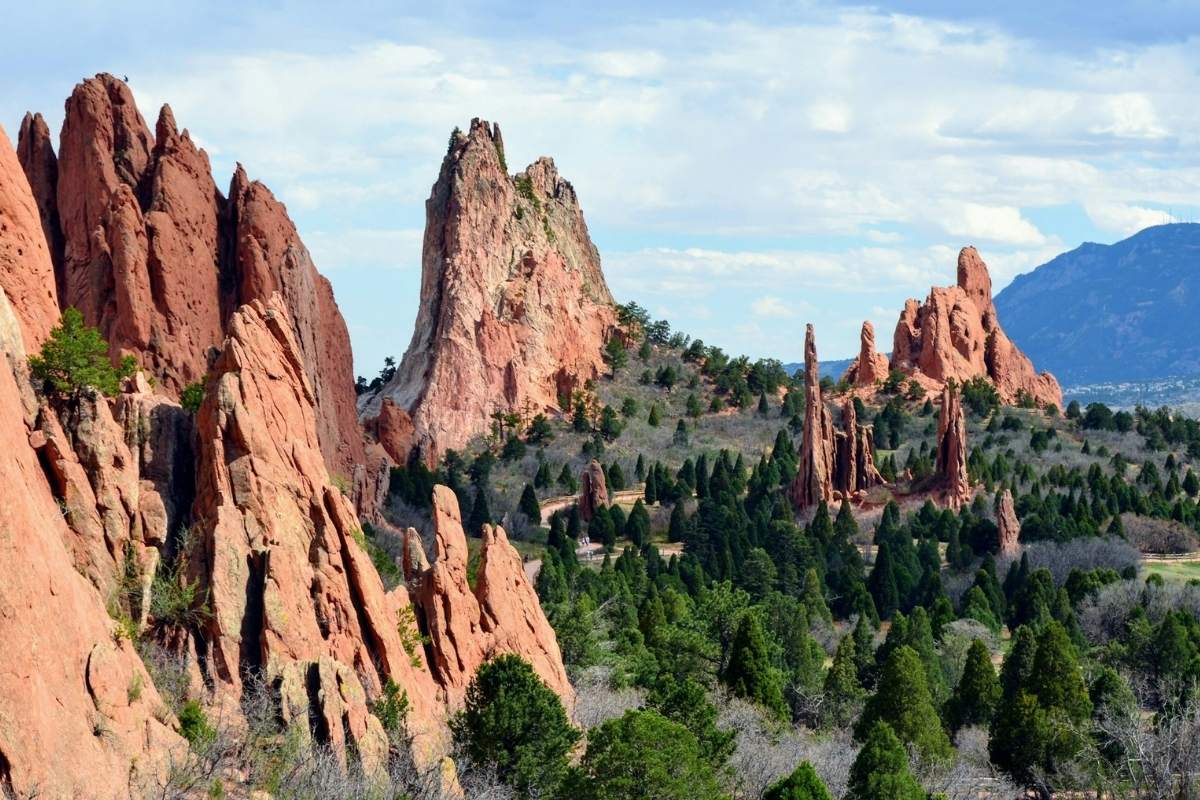
Tucked against the eastern wall of the Front Range in central Colorado, the city sits in the shadow of Pikes Peak — the 14,115-foot summit so striking that Katharine Lee Bates stood at its top in 1893 and wrote the words to "America the Beautiful" on the spot. That view, the "purple mountain majesties" she described, hasn't gone anywhere. Neither has the city's other defining feature: the Garden of the Gods, a free public park of towering red sandstone formations that looks more like Utah than Colorado and somehow costs nothing to visit.
Colorado Springs has spent decades being treated as Denver's quieter, more conservative, military-adjacent neighbor — home to the U.S. Air Force Academy, NORAD, and a sprawl of evangelical headquarters that earned it the nickname "the Vatican of evangelical Christianity." All of that is true and none of it captures what actually makes the city worth a trip: extraordinary, accessible, often-free natural scenery, a genuinely good food and brewery scene, and a base for some of the best high-altitude hiking and driving in the American West.
Whether you're driving the highest paved road in North America, hiking through a canyon of skyscraper-sized red rock, soaking in century-old hot springs, or just watching the sun set over the Garden of the Gods with a local beer in hand — Colorado Springs delivers more than its quiet reputation suggests. People come expecting a stopover. They leave wondering why they almost skipped it.
This is everything you need to know.
Why Colorado Springs?
 There's a reason Colorado Springs keeps showing up on "most livable" and "best outdoor cities" lists, and still flies well under the radar for most travelers planning a Colorado trip.
The city sits at 6,035 feet — high enough to feel the altitude, low enough that it doesn't dominate daily life the way it does in mountain towns like Breckenridge or Aspen. From downtown, Pikes Peak rises directly to the west, visible from nearly every street that runs in the right direction. The Garden of the Gods sits just northwest of downtown, a fifteen-minute drive from most hotels. Cheyenne Cañon, Seven Falls, and the Manitou Incline crowd the foothills just southwest. The result is a city where genuinely spectacular nature is a short drive — often a short walk — from wherever you're staying.
Summer brings warm, dry days and the cool relief of altitude in the evenings — locals call it one of the best summer climates in the country, and they're not wrong. Autumn turns the foothill scrub oak and the aspens higher up into gold and crimson, with crisp air and the year's best hiking conditions. Winter dusts the red rocks with snow and keeps Pikes Peak gleaming white above the city, while nearby ski resorts (Breckenridge, Monarch) are within striking distance for a day trip. Spring is unpredictable — it can snow in May — but the shoulder-season trails and lower crowds reward the flexible traveler.
When to Go
Summer (June–August) is peak season, and for good reason — warm days in the low 80s°F, cool nights, dry air, and every trail and attraction fully open. The Pikes Peak Highway and cog railway run their full schedules. Afternoon thunderstorms are common and can be sudden at altitude; plan high-elevation hikes for the morning.
Autumn (September–October) is arguably the best season to visit. The crowds thin after Labor Day, the foothill scrub oak turns deep red, and the cottonwoods along the creeks go gold. Pikes Peak Highway often sees its first snow by mid-October, adding real drama to the drive without yet closing the road.
Winter (November–March) is colder but far from closed. Garden of the Gods dusted in snow against a blue Colorado sky is one of the most striking sights in the state, and the relative absence of crowds makes winter visits to the major sights surprisingly peaceful. Pikes Peak Highway typically remains accessible partway up even when the summit road closes for weather. Several major ski resorts are within 1.5–2.5 hours for a day trip.
Spring (April–May) is the wildcard season — wildflowers and green foothills one week, a surprise snowstorm the next. Lower-elevation trails and city attractions are excellent; high-altitude hikes may still be snowbound into June.
Getting There
By air: Colorado Springs Airport (COS) has direct flights to a growing number of major U.S. hubs and sits just 15 minutes from downtown — genuinely one of the easiest small-city airport experiences in the country. Denver International Airport (DEN), about 1.5–2 hours north by car, offers far more flight options and is the more common gateway for international visitors, with rental cars or shuttle services covering the drive south.
By car: Colorado Springs sits directly on Interstate 25, the main north-south corridor through the Front Range, making it an easy add-on to a Denver trip or a stop on a longer Rocky Mountain road trip. The drive from Denver takes about 70–90 minutes depending on traffic, and the views of the Front Range improve the entire way.
By train: Amtrak does not serve Colorado Springs directly; the nearest station is in Denver, with bus or rental car connections south.
Within the city: A car is strongly recommended. Colorado Springs sprawls across a wide area, public transit (Mountain Metro) covers the basics but not the outlying natural sights, and the best experiences — Pikes Peak Highway, Garden of the Gods, Cheyenne Cañon — all require driving or at minimum a rideshare. Downtown itself is walkable once you're parked.
Where to Stay
Colorado Springs offers a wide range from historic grand hotels to outdoor-focused boutique stays, and where you base yourself shapes how close you are to the natural sights.
The Broadmoor is the iconic choice — a sprawling, pink-stuccoed Italian Renaissance–style resort that has hosted presidents and royalty since 1918, with its own lake, golf courses, and access to Cheyenne Mountain trails right outside the property. A genuine splurge, and one of the great historic resorts of the American West.
Garden of the Gods area (west side): Staying near the park itself — at properties like Garden of the Gods Resort and Club or one of the chain hotels along 30th Street — puts you minutes from the red rocks and a short drive from Manitou Springs and the Pikes Peak Highway entrance.
Downtown Colorado Springs offers walkable access to restaurants, breweries, and the arts district, with The Mining Exchange, a Wyndham Grand Hotel (in a beautifully restored 1902 building) as a standout, plus a growing cluster of boutique and chain options.
Manitou Springs, a small artsy spa town tucked against the mountains just west of the city, is the most charming and atmospheric base — walkable streets, mineral springs, the Manitou Incline trailhead, and easy access to the Pikes Peak Cog Railway. Cliff House at Pikes Peak, a historic Victorian-era hotel, anchors the town.
Camping: Colorado Springs is ringed by excellent camping in the surrounding national forest land and at Cheyenne Mountain State Park, popular from late spring through early fall.
What to See and Do
Garden of the Gods
Start here. You have to start here.
Garden of the Gods is a 1,300-acre public park of towering red, pink, and white sandstone formations rising abruptly from the foothill scrubland, with Pikes Peak as a snow-capped backdrop. It's free, it's open year-round, and it remains one of the most underrated natural attractions in the American West — formations with names like Balanced Rock, Cathedral Spires, and the Kissing Camels, threaded with miles of easy, well-maintained trails.
The Perkins Central Garden Trail (1.5 miles, paved, mostly flat) is the essential loop and accessible to nearly everyone. For a longer outing, link it with the Siamese Twins Trail for a framed view of Pikes Peak through a rock arch — one of the most photographed compositions in Colorado.
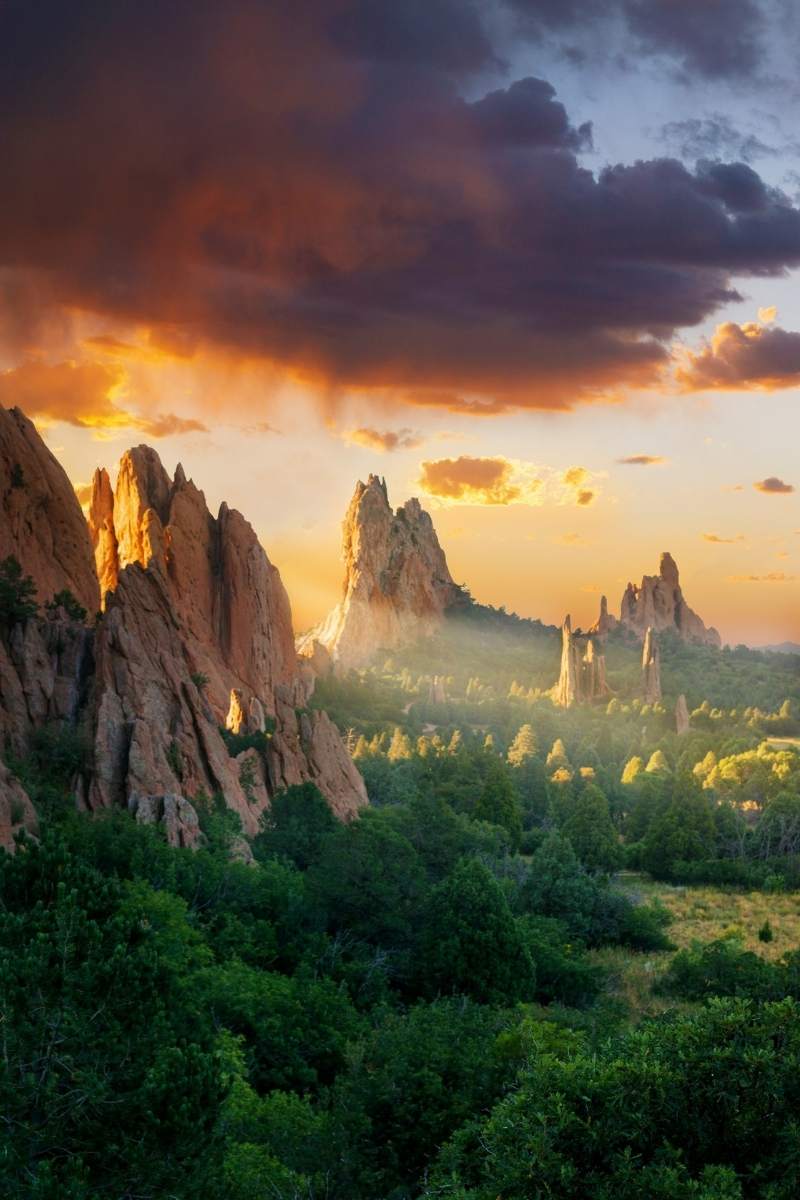
Visit at sunrise or sunset, when the rock formations turn deep red-orange in the low light, and the crowds — which build steadily through midday in summer — are at their thinnest. The free visitor center has excellent context on the park's geology and Native American history.
Pikes Peak Highway and the Cog Railway
The mountain that gave America "America the Beautiful" is climbable two ways, and both are extraordinary.
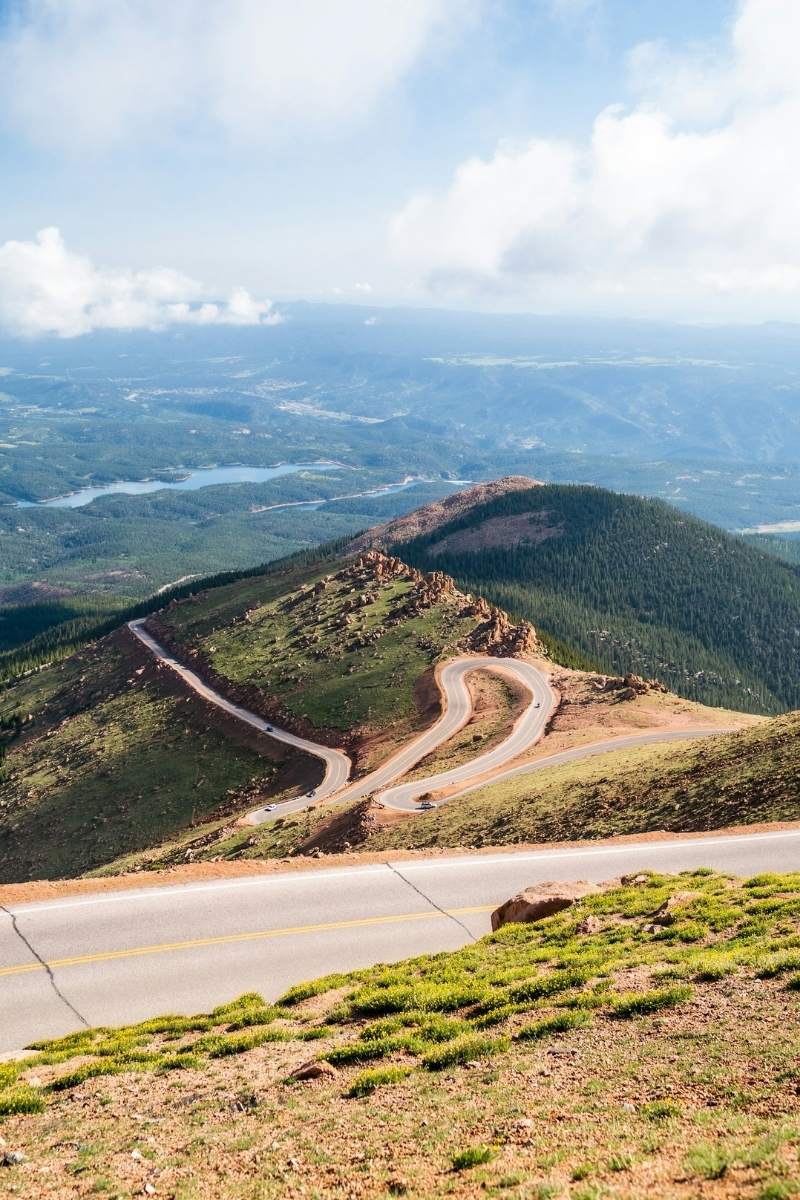
The Pikes Peak Highway is a paved toll road, 19 miles and over 100 turns, climbing from 7,400 feet to the 14,115-foot summit through forest, above treeline, and onto a stark alpine landscape with views stretching across the Great Plains to the east and the Collegiate Peaks to the west. Drive it yourself (allow at least 3 hours round trip, more with stops) or join a guided tour. Altitude sickness is a real possibility at the summit — take it slow, and don't push through a headache.
The Pikes Peak Cog Railway, the highest in the world, climbs the same mountain by rail from Manitou Springs — a more relaxed, scenic alternative that doesn't require anyone to drive a car at 14,000 feet. Book well ahead in summer; both trips sell out.
At the summit: a visitor center, the famous high-altitude doughnuts (a longstanding tradition — the altitude apparently changes the cooking chemistry enough that the recipe genuinely can't be replicated lower down), and, on a clear day, a view that makes the whole trip worthwhile on its own.
The Manitou Incline
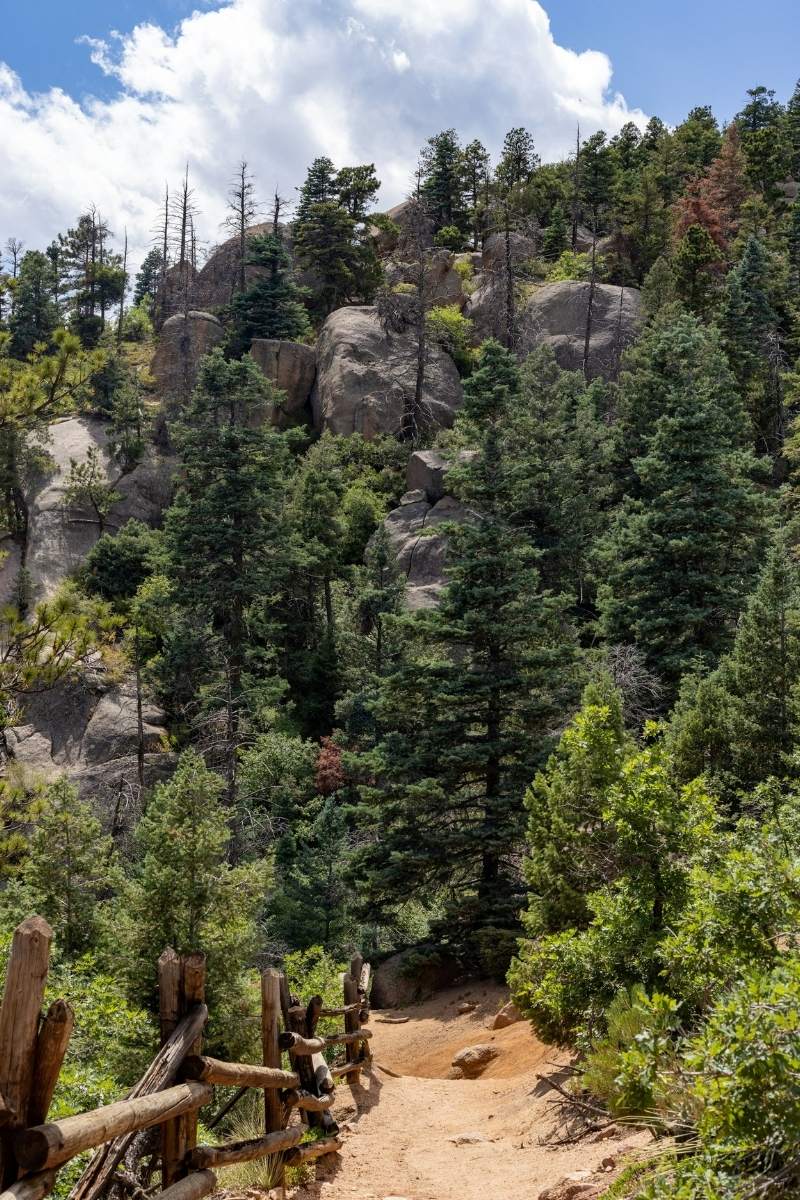 Originally built as a cable car track for a hydroelectric plant in 1907, the Manitou Incline is now one of the most punishing — and popular — fitness hikes in the country: nearly 2,000 vertical feet of wooden-tie stairs in less than a mile, with an average grade over 40%. Locals use it as a training ground; visitors use it as a genuine bucket-list challenge.
It is not for everyone, and it is not optional preparation — bring water, expect to stop, and don't be embarrassed about the pace. The reward at the top is a sweeping view over Manitou Springs and the city beyond, plus the Barr Trail descent option, a more gradual three-mile route back down through forest.
Cave of the Winds and Cheyenne Cañon
Cave of the Winds, in the foothills above Manitou Springs, offers guided tours through a series of limestone caverns discovered in the 1880s, with formations developed over millions of years and a genuinely good visitor experience (plus a cliffside zip line and swing course for the adrenaline-inclined above the cave entrance).
North Cheyenne Cañon Park, on the city's southwest edge, holds two of the area's best waterfalls — Helen Hunt Falls and, with a steep half-mile hike beyond it, Silver Cascade Falls — along with miles of forested trails that feel remarkably remote for being minutes from downtown.
Seven Falls, a privately operated park nearby, offers a dramatic staircase-side view of a seven-step waterfall cascading 181 feet through a narrow granite canyon, illuminated at night in summer.
Garden of the Gods Trading Post and Manitou Springs
The small, artsy town of Manitou Springs, tucked into the canyon at the base of Pikes Peak, has been a wellness destination since the late 19th century, when visitors came to drink from its naturally carbonated mineral springs. Many of the original spring fountains are still publicly accessible and free to sample around town — each one tastes distinctly different, mineral-heavy, and an experience worth having at least once.
The town itself is walkable, full of galleries, eccentric shops, and good casual restaurants, and serves as the base for both the Cog Railway and the Manitou Incline.
The U.S. Air Force Academy
North of the city, the U.S. Air Force Academy is both a working military institution and a striking architectural and scenic destination open to the public. The modernist Cadet Chapel, with its 17 spires of aluminum, glass, and steel rising in a dramatic zigzag against the mountains, is one of the most photographed religious buildings in America and free to visit. The visitor center and overlook offer context on the academy and views across the campus to the Rampart Range.
The Broadmoor and Cheyenne Mountain Zoo
Even non-guests can wander parts of The Broadmoor's grounds — the lake, gardens, and historic main building are worth a look for the architecture alone.
Adjacent, the Cheyenne Mountain Zoo is the only mountainside zoo in the United States, built into a steep hillside above the city with views stretching across the plains. It's known for one of the largest giraffe herds in any American zoo and a genuinely well-designed, scenic layout that makes a zoo visit feel like a hike.
Olympic and Paralympic Museum
Colorado Springs is the official home of the U.S. Olympic and Paralympic Committee, and the downtown U.S. Olympic and Paralympic Museum is a genuinely excellent, interactive tribute to American Olympic and Paralympic history — built with accessibility as a core design principle throughout, not an afterthought. A strong rainy-day or hot-afternoon option, and one of the best modern museums in the city.
Where to Eat and Drink
Colorado Springs has quietly built one of Colorado's better food and craft beer scenes, helped along by a young, outdoorsy population and an influx of military and tech professionals.
Breweries: Colorado Springs is a serious beer town. Bristol Brewing Co., housed in a converted 1920s schoolhouse, is a local institution. Phantom Canyon Brewing Co. downtown does solid pub fare alongside its own beers in a historic 1901 building. Goat Patch Brewing Company has become a local favorite for its approachable, well-made lineup. Cerberus Brewing Company rounds out a strong scene worth a dedicated afternoon.
Breakfast and brunch: The Rabbit Hole for an inventive, Alice in Wonderland–themed brunch experience that's as good as its concept suggests. Birdie's Burritos for a quick, excellent green chile breakfast burrito — a Colorado essential.
New American and fine dining: The Famous downtown for an elevated, locally sourced menu in a converted historic building. Four by Brother Luck, helmed by a Top Chef alum, is the city's most ambitious table.
Casual local favorites: Bonny & Read for excellent oysters and a lively atmosphere downtown. Shuga's for a buzzy, art-filled space with a strong breakfast and lunch menu. The Skirted Heifer BBQ for serious Colorado-style barbecue.
Green chile, everywhere: Colorado Springs sits close enough to the New Mexico border culturally and culinarily that excellent green chile shows up on menus across the city — burritos, smothered burgers, and stews all benefit. Ask locals for their favorite; opinions are strong and specific.
Coffee: Loyal Coffee and Mountain Mama Coffee Co. are reliable local roasters with multiple locations.
Practical Tips
Take the altitude seriously. At 6,035 feet downtown and over 14,000 at the Pikes Peak summit, altitude affects most visitors to some degree. Drink more water than usual, pace yourself on the first day, and limit alcohol until you've acclimated. Headache, fatigue, and shortness of breath at the summit are common and usually resolve with descent.
Book Pikes Peak attractions ahead. Both the Highway timed-entry reservations (required in peak season) and the Cog Railway sell out, especially on summer weekends. Reserve as far in advance as your schedule allows.
Mountain weather changes fast. Even on a clear morning, afternoon thunderstorms are common in summer, especially at higher elevations. Plan high-altitude activities for the morning and carry a layer regardless of the forecast.
Sun and altitude combine intensely. UV exposure is significantly higher at elevation. Sunscreen, sunglasses, and a hat are essential even on cool or overcast days.
The Manitou Incline requires a permit-free but limited approach. No reservation is needed, but parking at the base is extremely limited — arrive early or use the shuttle from downtown Manitou Springs on weekends.
Combine with Denver. Many visitors pair Colorado Springs with Denver as a single Front Range trip — the 70-minute drive between them is easy, and the two cities offer genuinely different experiences (Denver more urban and brewery-dense, Colorado Springs more nature-immediate).
Garden of the Gods is free, but parking and the visitor center fill up. Arrive early, especially on summer weekends, for the best parking and the calmest trail experience.
Wildlife is real here. Mule deer, bighorn sheep, and the occasional black bear are present in the foothill parks. Keep a respectful distance and store food properly if camping.
How Long Do You Need?
A long weekend (2–3 days): Time for Garden of the Gods, the Pikes Peak Highway or Cog Railway, a walk through Manitou Springs, and a couple of great meals and breweries downtown. Enough to understand why the city is worth the trip.
Four to five days: Add the Manitou Incline (or a gentler Cheyenne Cañon hike if stairs aren't your thing), Cave of the Winds, the Olympic Museum, and a full day exploring downtown's food and brewery scene. Comfortable pacing for a proper first visit.
A week or more: Combine with Denver and the broader Front Range — Rocky Mountain National Park is about 2.5 hours north, Breckenridge and the I-70 ski corridor about 2 hours, and the high plains and Royal Gorge (one of the highest suspension bridges in the U.S., about an hour southwest) round out a complete Colorado road trip.
There is no such thing as enough time at the foot of Pikes Peak.
Final Thoughts
Colorado Springs is a city that's been hiding in plain sight, mostly because it's never needed to compete for attention. Denver gets the breweries-and-mountains reputation; the ski towns get the postcards; Colorado Springs just sits quietly at the base of one of the most storied peaks in America, holding free access to some of the best rock formations and high-altitude drives in the country, and waiting for people to notice.
The city earns its keep honestly. A free park with rock formations that rival any national park's marquee attraction. A mountain you can drive, ride, or walk to the top of, all the way up to 14,115 feet. A spa town with mineral springs you can drink for free. A history that gave the country its unofficial second anthem. None of it requires an entrance fee or an Instagram strategy to be worth experiencing — it's just there, at the edge of the plains, doing exactly what it's done for over a century.
People who visit once tend to come back. People who come back start adding a Colorado Springs leg to every Denver trip they take. People who keep coming back eventually stop telling people about it, quietly grateful it's stayed this uncrowded.
It will still manage to surprise you. Every single time.
Pack sunscreen and water. Bring the good camera. Watch the altitude.
The mountain is waiting.


