Florida: The Best Places to Visit in the State That Contains Multitudes
July 7, 2026 · TripOnly

Florida: The Best Places to Visit in the State That Contains Multitudes
Florida is 800 kilometres long. It stretches from the Georgia border in the north, where the Spanish moss hangs off the live oaks and the accents are Deep South, to the coral reefs of the Florida Keys in the south, where the water turns turquoise and the distance to Cuba is shorter than the drive back to Miami. Between those two points lies everything: white-sand Gulf beaches and Atlantic surf, swamp wilderness and citrus groves, art deco architecture and space launch pads, the world's most visited theme park and some of the most biodiverse wetlands outside the tropics.
People get Florida wrong. They arrive expecting a flat, sun-bleached slab of tourist infrastructure and find — if they look past the strip malls and the airport billboards — a place of genuine strangeness and genuine beauty. A state with a Baroque Spanish colonial city founded in 1565. A barrier island city whose whole downtown is a UNESCO World Heritage Site. A freshwater spring that produces 230 million litres of water per day, clear as glass. A national park where the road goes underwater at high tide.
The clichés are real and the clichés are only the surface. This is what lies underneath.
Why Florida?
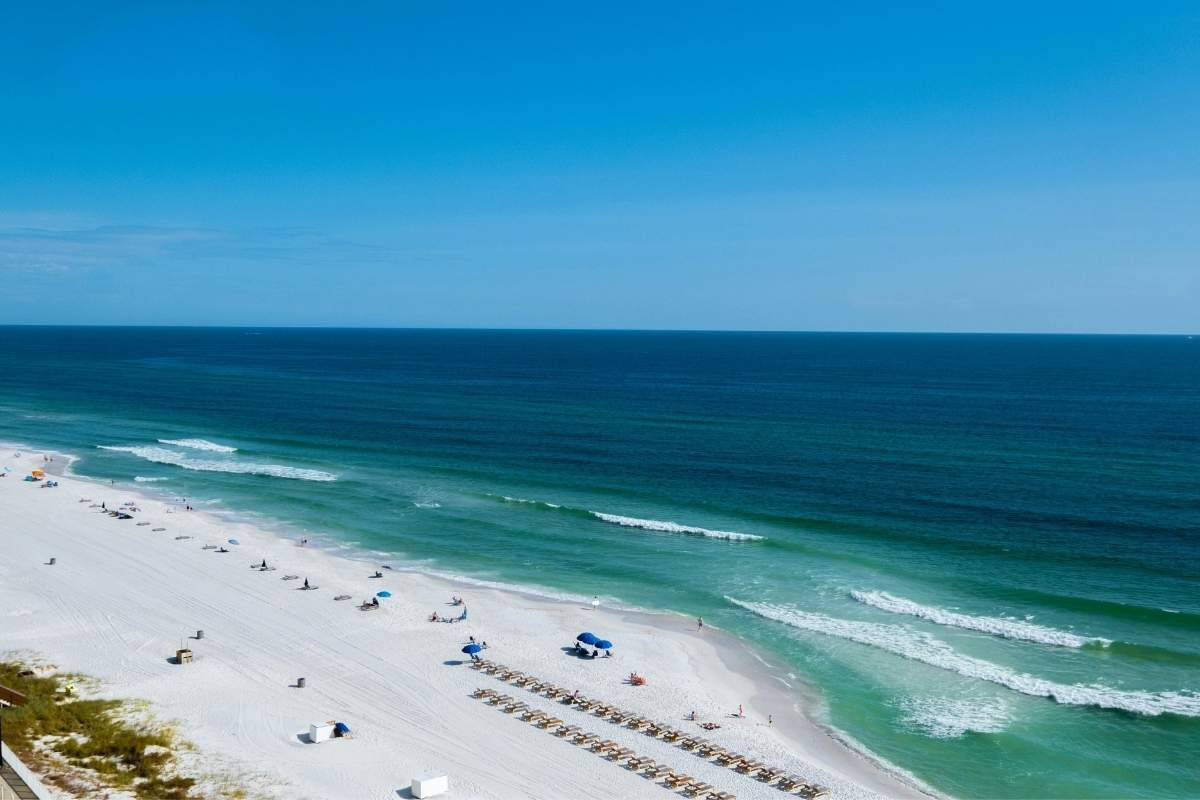
The obvious answers first. Florida has 1,900 kilometres of coastline. It has more than 300 days of sunshine annually. It has the warmest waters of any US state except Hawaii. It has no state income tax, which explains the population more than the beach does. And it has Walt Disney World, which receives more visitors per year than any other theme park destination on earth — a fact that either attracts or repels, depending on who you are, and which says surprisingly little about the rest of the state.
The less obvious answers are more interesting. Florida has Everglades National Park — 6,000 square kilometres of slow-moving water, sawgrass prairie, mangrove forest, and wildlife that you do not find together anywhere else on the continent. It has the historic district of St. Augustine, founded by Spanish settlers in 1565, fifty-five years before the Mayflower landed anywhere. It has the Florida Keys, a 200-kilometre chain of islands strung together by a single highway that ends 145 kilometres from Cuba. It has the Gulf Coast barrier islands — Sanibel, Captiva, Anna Maria — where the shells are extraordinary and the pace drops to something close to zero.
Florida rewards the traveller who goes beyond the headline attractions. Not instead of them — some of those headlines are genuine — but beyond them. The state's best moments are rarely the most marketed ones.
When to Go
Winter (December–March) is peak season and for excellent reason. Temperatures run 18–26°C across most of the state, humidity is low, and the mosquito population is manageable. South Florida (Miami, the Keys, the Everglades) is at its absolute best in these months — the dry season means lower water levels and extraordinary wildlife concentrations in the Everglades, and the Miami winter social season is the most energetic of the year. This is also when prices peak and accommodation books out; plan ahead.
Spring (March–May) offers a transitional window before the heat arrives. Spring break (mid-March) brings significant crowds to the beach towns; avoid or embrace depending on your disposition. April and May are underrated months, particularly on the Gulf Coast, where water temperatures are rising and the summer crowds haven't yet materialised.
Summer (June–September) is hot, humid, and prone to afternoon thunderstorms — Florida receives more lightning strikes than any other US state, and the afternoon build-up is reliable from June onwards. That said, summer is when Floridians actually use their beaches (it's too hot for much else), when theme park crowds stratify by day of the week rather than season, and when prices on the Gulf Coast drop significantly. With air conditioning and respect for the midday heat, summer is workable. Hurricane season runs June through November; September and October carry the most statistical risk.
Autumn (October–November) is the Florida secret. The storms recede, the humidity drops, the prices fall, and North Florida — the Panhandle, Tallahassee, the springs — reaches a brief, golden peak before winter. The Keys and South Florida are entering their best season. October in particular is an excellent time to see the state.
The Best Places to Visit
Miami
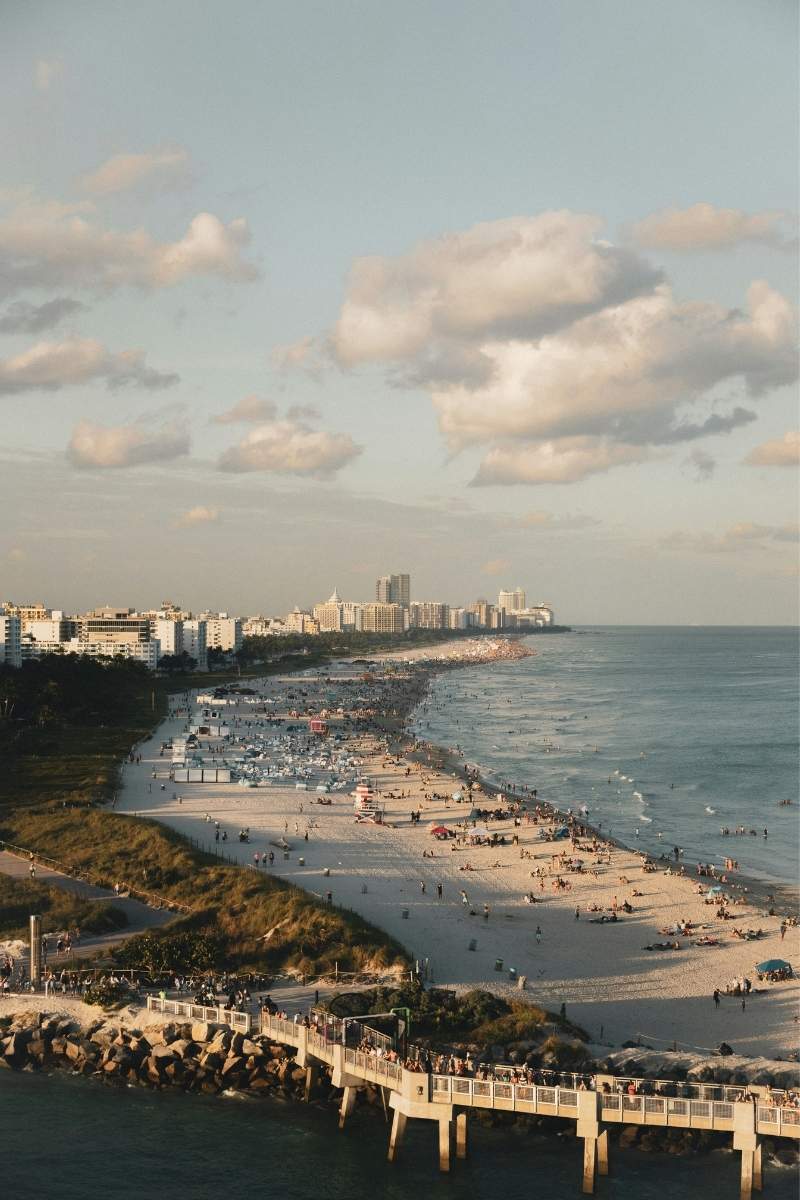
Miami is not the rest of Florida. It is its own thing — a subtropical coastal metropolis with a majority Spanish-speaking population, a global art scene, an architecture district that is genuinely unlike anywhere else in the United States, and a nightlife culture that runs on Cuban coffee and lateness.
South Beach is the famous part: the art deco district along Ocean Drive and Collins Avenue, pastel buildings from the 1930s now restored and backlit and full of rooftop bars. Walk it in the morning before the heat builds, when the light is good and the streets are quiet. Then again at night, when it becomes what it was always designed to be.
Beyond South Beach, Miami divides into neighbourhoods worth serious attention. Wynwood is the street art district — formerly a warehouse neighbourhood, now a concentration of murals, galleries, and coffee shops that has influenced street art culture globally. Little Havana on Calle Ocho is Cuban Miami at its most concentrated, with domino parks, cigar rollers, and cafeterías serving café cubano and croquetas at a window to the street. Brickell and Downtown are the financial city, glass towers over the bay, with a restaurant scene that has matured significantly. Coral Gables is Mediterranean Revival architecture, banyan-lined streets, and the Venetian Pool — a public swimming pool carved from a coral rock quarry in 1923, fed by underground springs, and more beautiful than any pool has a right to be.
The Pérez Art Museum Miami (PAMM) on Biscayne Bay and the Institute of Contemporary Art in the Design District anchor a contemporary art ecosystem that is among the most serious in the country. Art Basel Miami Beach in December is the largest international art fair in the Western Hemisphere.
The Florida Keys
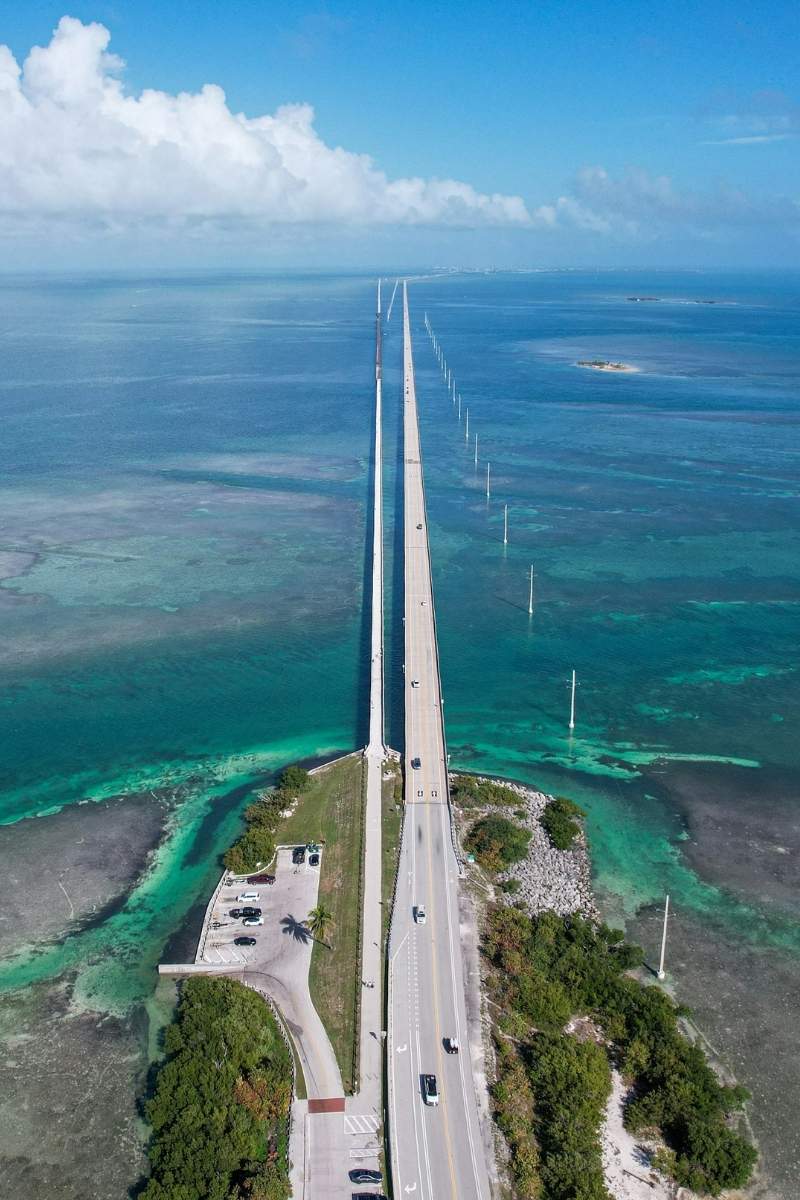
The Keys are an act of improbability sustained by a single road. US-1 runs from Key Largo in the north to Key West at the southern tip, crossing 42 bridges over open water, passing through a hundred miles of mangrove, reef, and fishing village that gradually shed the mainland's urgency as you go further south.
Key Largo is the diving capital of the continental United States — the only living coral barrier reef in North America runs along the Atlantic side, and the John Pennekamp Coral Reef State Park offers some of the best accessible reef diving in the world. The water colours here — jade, aquamarine, a green-blue that has no single name — are not enhanced by any camera filter.
Islamorada is the sport fishing capital of the world, by its own repeated insistence and also by most objective measures. The offshore fishing — mahi-mahi, sailfish, tuna — is extraordinary. So is the snorkelling at the Islamorada Fish Company's free dock, where tarpon the length of your leg surface to be fed.
Marathon sits at the midpoint, with the Seven Mile Bridge — one of the longest bridges in the world, running over open Atlantic — as its visual centrepiece. Pigeon Key, a tiny historical island at the old bridge's end, is worth the walk.
Key West at the end of the road is a 7-kilometre-square island that has spent two centuries refusing to be categorised. It was the wealthiest city per capita in the United States in the 19th century (salvage rights from the reef made fortunes). Ernest Hemingway lived here. Tennessee Williams lived here. It has the largest LGBTQ+ residential community in the South. It has Mallory Square at sunset, where the whole island gathers to watch the sun drop into the Gulf, and then applauds. This is either wonderful or absurd, and it is both.
St. Augustine
Founded in 1565 by Spanish explorer Pedro Menéndez de Avilés, St. Augustine is the oldest continuously inhabited European settlement in the continental United States, and it carries that history with enough confidence to be genuinely impressive rather than merely theme-parked.
The Castillo de San Marcos — a star-shaped stone fortress completed in 1695, still intact, still dominating the waterfront — is one of the finest examples of Spanish colonial military architecture in the Americas. Walk its walls at dawn before the tour groups arrive. The historic district around St. George Street is dense with Spanish colonial buildings, some genuinely old, some restored, many excellent. The Flagler College campus, housed in what was Henry Flagler's 1888 Ponce de León Hotel, is a Gilded Age masterpiece of Moorish Revival architecture that you can walk through on a tour.
St. Augustine is best approached slowly — two nights minimum, more if the pace suits you. The Anastasia Island beaches just across the Bridge of Lions are uncrowded by Florida standards. The old city at night, after the day visitors have gone, has a weight and quiet that the daytime obscures.
The Gulf Coast: Sarasota, Sanibel, and the Barrier Islands
The Gulf of Mexico side of Florida delivers the beaches that deliver on the postcard: white quartz sand that squeaks underfoot, shallow warm water in every shade of green and blue, sunsets that the Atlantic Coast cannot match. The Gulf barrier islands are the finest expression of this.
Sarasota is the cultural capital of Florida's Gulf Coast — winter home of the Ringling circus empire, which left the city the John and Mable Ringling Museum of Art (a genuinely world-class collection of Baroque painting in a Venetian Gothic palazzo on Sarasota Bay) and the Ringling Circus Museum. The downtown is sophisticated, the restaurant scene is mature, and the beaches on Siesta Key — consistently ranked among the finest in the United States — are a 20-minute drive from the city centre.
Sanibel and Captiva are connected by causeway to the mainland and to each other, two barrier islands where the Sanibel Stoop — the particular bent posture of shell collectors scanning the waterline — was invented. Sanibel's east-facing beach catches shells from across the Gulf; the variety and quantity are extraordinary. The J.N. "Ding" Darling National Wildlife Refuge covers a third of the island: 6,000 acres of mangrove and freshwater wetland where roseate spoonbills, wood storks, alligators, and manatees coexist in visible abundance.
Anna Maria Island, further north, is quieter still — a small barrier island where the speed limit is 35mph by collective preference, the restaurants are run by the same families that ran them thirty years ago, and the beach at Bean Point, at the island's northern tip, is one of those places that makes you understand what the Gulf Coast is actually about.
The Everglades
The Everglades is not a swamp. It is a river — 80 kilometres wide, 160 kilometres long, moving at roughly a kilometre and a half per day, a shallow sheet of slow water flowing from Lake Okeechobee south to Florida Bay. The Calusa called it Pa-hay-okee: grassy water. It is the largest subtropical wilderness in the United States and the only ecosystem of its kind on earth.
Everglades National Park is accessed from the south (from Homestead) or the northwest (from Naples, via the Ten Thousand Islands). The main park road runs 60 kilometres from the entrance to Flamingo on Florida Bay, passing through sawgrass prairie, hardwood hammock, and coastal mangrove, with wildlife — great blue herons, anhingas, roseate spoonbills, American crocodiles, manatees — visible from the road and from the short boardwalk trails.
The best Everglades experience requires a kayak or canoe. The Wilderness Waterway, a 160-kilometre backcountry route through mangrove channels, is the full immersion; guided day paddles into the mangrove tunnels near Everglades City are accessible for all levels and genuinely extraordinary. The Anhinga Trail at the Royal Palm area — a short paved boardwalk through a freshwater slough — offers more wildlife per metre than almost anywhere in the country.
Go in winter. The wildlife concentrations during the dry season are the reason the park exists.
The Springs of North and Central Florida
The Florida springs are the state's best-kept secret from out-of-state visitors and the most beloved destination of Floridians who know them. There are more than 700 freshwater springs across the state, all pumping crystalline water at a constant 22°C year-round, all achingly clear, many surrounded by old-growth forest, swimming holes, and the particular stillness of a place that has been nourishing people for ten thousand years.
Ichetucknee Springs State Park near Fort White feeds a river that you tube or kayak through 6 kilometres of spring-fed water surrounded by forest, arriving at the take-out having done almost no paddling and seen almost no development. It is available for less than $10 entry and it is one of the finest natural experiences in Florida.
Ginnie Springs, a privately operated park on the Santa Fe River, is a network of seven springs producing 230 million litres daily and beloved by cave divers for its underwater systems. For snorkellers and swimmers, the visibility — 30 metres in places — is like swimming in air.
Rainbow Springs State Park produces a 4th-magnitude spring run of extraordinary clarity. Silver Springs, the oldest tourist attraction in Florida (glass-bottom boat tours since the 1870s), remains magnificent. Wakulla Springs, near Tallahassee, is one of the deepest freshwater springs on earth — the boat tour over the clear water, looking down at the bottom 30 metres below, is quietly one of Florida's best experiences.
Orlando: Beyond the Theme Parks
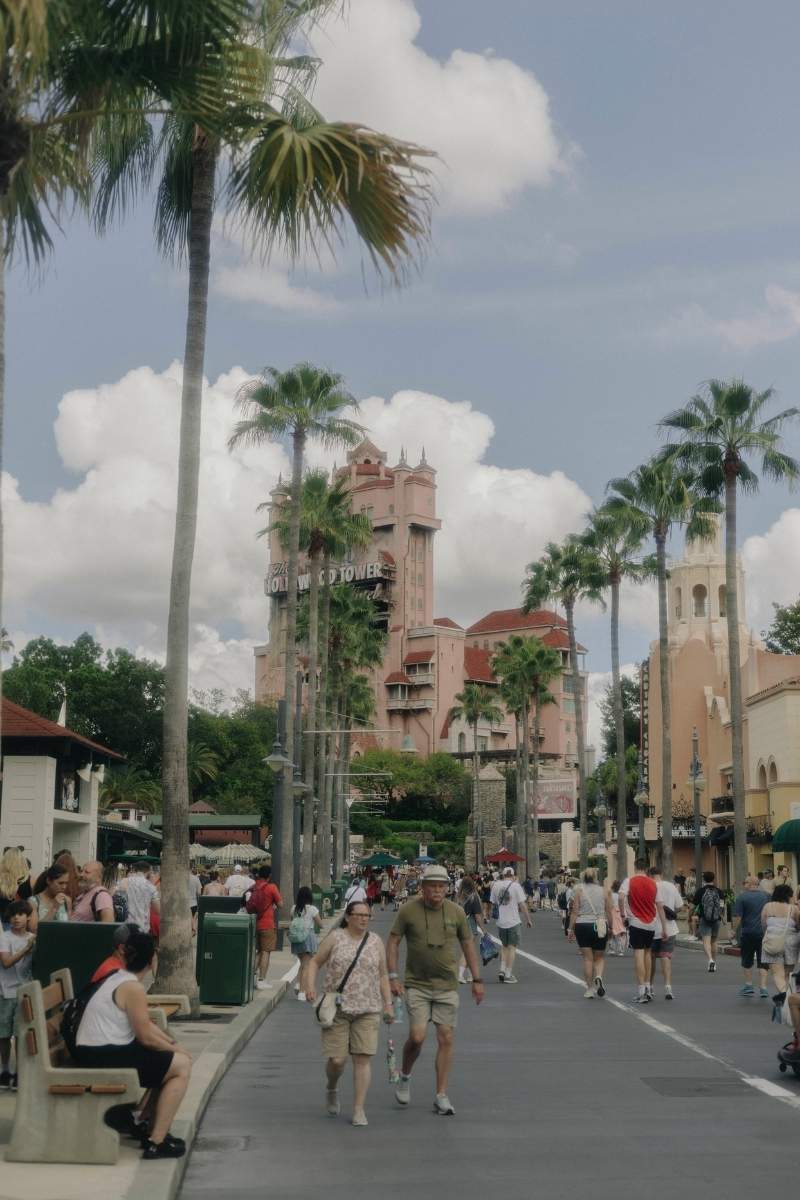
Orlando is an honest transaction: if you want theme parks, it delivers the finest concentration of theme park engineering in the world, and there is no point pretending otherwise. Walt Disney World across its four parks is a genuine feat of experiential design. Universal Orlando — particularly the Wizarding World of Harry Potter — does things with immersive storytelling that the industry has been trying to replicate ever since. EPCOT, maligned and misunderstood, remains the most interesting idea in theme park history.
What Orlando also has, less discussed, is a genuinely liveable city emerging from behind the resort district. Winter Park, immediately northeast, is a lovely old Florida town of brick-lined streets, independent restaurants, and the Morse Museum — the finest collection of Louis Comfort Tiffany glass in existence, housed in a modest building in a quiet town, almost absurdly accessible. Audubon Park and the Mills 50 district have the independent coffee shops, bookstores, and restaurants of a real neighbourhood. The Orlando Museum of Art and the Orlando Science Center are legitimate cultural institutions.
Orlando without the parks is a different city than the one you assumed. The parks themselves, entered with realistic expectations and appropriate footwear, remain among the most technically accomplished visitor experiences on earth.
Practical Tips
Rent a car. Florida is not walkable at the macro level. The distances between destinations are significant, public transport outside Miami is minimal, and the state is built around the car in a way that no amount of wishing will change. Rent one. Embrace the highway.
Respect the heat. Florida in summer is genuinely hot — 35°C with humidity that makes the temperature feel higher. Plan outdoor activities for early morning and late afternoon. Carry water obsessively. Air conditioning is universal and aggressive; a light layer for restaurants and cars is useful even in August.
The mosquitoes and no-see-ums are real. Particularly near water, in the evenings, and in the Everglades. DEET works. So does covering up. The springs and the Gulf beaches are generally better than the interior wetlands; the Everglades in summer is a particular exercise in insect tolerance.
Alligators are everywhere and generally indifferent. Florida has an estimated 1.3 million alligators, most of which would rather ignore you. Do not feed them. Do not swim in freshwater bodies at night or near vegetation. Keep dogs away from water's edge. In 70-plus years of alligator management in Florida, unprovoked attacks on people are vanishingly rare. The appropriate response to seeing one is admiration from a reasonable distance.
Tipping is standard. Florida runs on the same service culture as the rest of the United States: 18–20% at restaurants and bars, expected rather than optional. Budget accordingly.
Sunscreen is non-negotiable. The Florida sun at this latitude is more intense than most visitors anticipate. SPF 30 minimum, reapplied consistently, or you will spend day three of your trip indoors.
Drive the Keys slowly. US-1 through the Keys is not a road you hurry. The speed limits are low, the bridges demand attention, and the landscapes are too good to rush. Leave more time than the map suggests.
How Long Do You Need?
A long weekend (3–4 days): Miami plus a day trip to the Keys. Or Orlando parks with a springs day. Enough for one region done properly. Not enough for Florida.
One week: Miami (2 nights), Key West (2 nights with the drive down as part of the experience), and a Gulf Coast beach (2 nights) — a triangle that captures three genuinely different Floridas without excessive driving. Alternatively: Orlando parks (3 days) plus Sarasota and the Gulf islands (3 days).
Two weeks: The full state begins to reveal itself. Add St. Augustine for the history. Add the Everglades for the wilderness. Add the springs for the experience that most visitors never find and Floridians protect jealously. Drive US-1 in both directions. Sit still somewhere long enough to understand the pace.
Florida rewards time. The more you give it, the less it resembles what you expected.
Final Thoughts
Florida is the most misread state in America. It is read as theme parks and spring break and retirement communities and the strange political weather that makes it into headlines — and all of those things are real, and none of them is the state.
The state is the light on Sarasota Bay at 7am. It is a glass-bottom boat floating over a spring 30 metres deep. It is a roseate spoonbill standing in sawgrass, pink as something impossible, in the middle of a wilderness that takes an hour to drive to from Miami. It is the walk across the Seven Mile Bridge at sunset. It is café cubano at a Little Havana window. It is a sea turtle nesting on an Anna Maria beach at midnight, observed from a distance, in silence, while the Gulf moves quietly behind you.
People come expecting the postcard. The postcard is accurate, and it is also entirely insufficient. Florida has a depth that its own reputation obscures and that rewards anyone willing to look for it.
The car is packed. The sunscreen is in the bag. US-1 South is ahead of you.
Florida is waiting.


