Hanoi Travel Guide: Chaos, Coffee, and a Thousand Years of Layers
June 21, 2026 · TripOnly

Why Hanoi
Hanoi is Vietnam's capital and its oldest continuously inhabited city, and it wears every one of its thousand-plus years at once. French colonial villas sit beside crumbling socialist apartment blocks sit beside thousand-year-old temples sit beside plastic stools selling bún chả for a dollar fifty. The traffic looks like chaos and somehow isn't — there's a logic to the motorbike swarm that you'll understand the moment you stop trying to find a gap and just start walking across the street at a steady pace.
It's a city built for wandering rather than checklisting. The best afternoons here are the ones with no plan: a coffee shop down an alley, a lake walk, a meal that wasn't on any list. Budget for getting pleasantly lost.
The Old Quarter
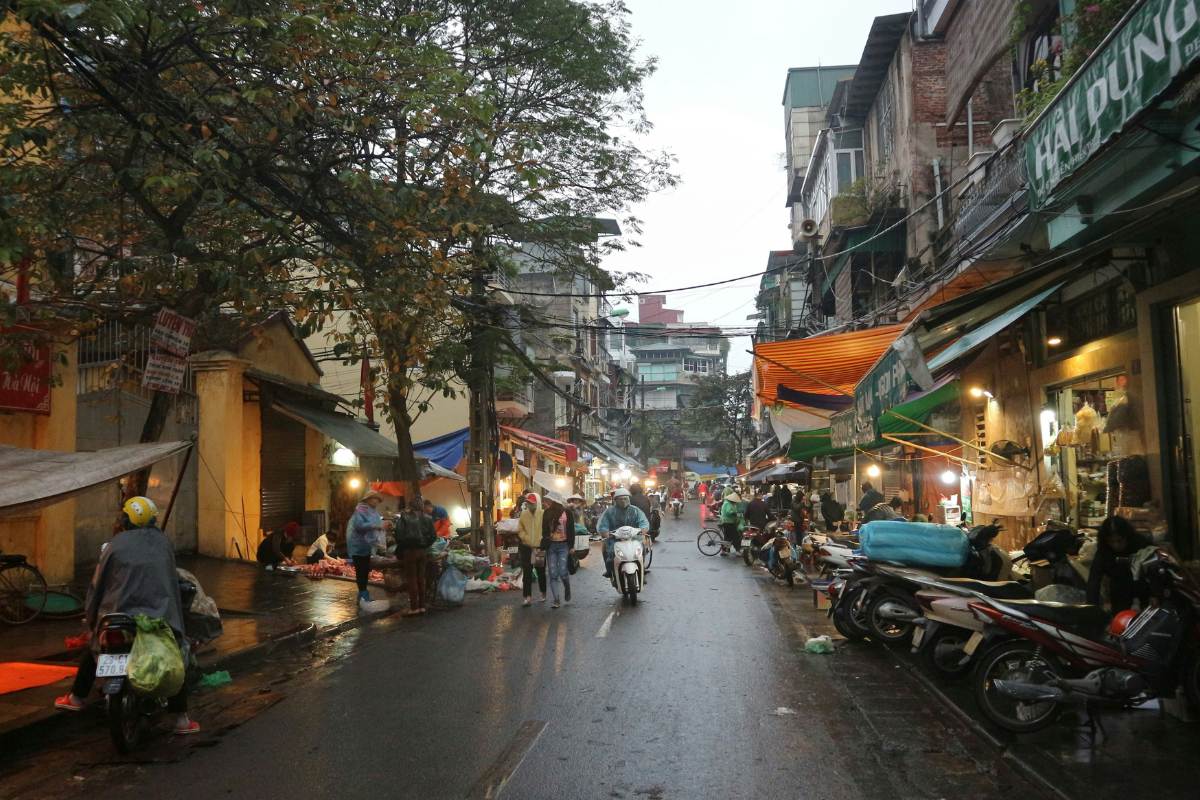
This is Hanoi's beating heart and its biggest tourist concentration, and it earns both. Thirty-six streets, each historically named for the single trade it specialized in — Hàng Bạc (silver), Hàng Gai (silk), Hàng Mã (paper offerings) — and many still loosely follow that pattern centuries later. Walk it without a destination at least once. Get lost on purpose between Hoàn Kiếm Lake and Long Biên Bridge.
Hoàn Kiếm Lake sits at the Old Quarter's southern edge and is the city's actual social center — locals doing tai chi at dawn, badminton in the evening, the small red Huc Bridge leading to Ngọc Sơn Temple on its tiny island. Come at sunrise if you want to see Hanoi the way Hanoians actually use this space, before the tour groups arrive.
The Night Market (weekends, Hàng Đào to Hàng Đường) takes over the main Old Quarter streets with clothes, souvenirs, and street food stalls. It's touristy, it's crowded, and it's also genuinely fun for a couple of hours.
What to Eat
Hanoi is arguably Vietnam's best food city, and it's not close.
Phở was born here, not in the south, and Hanoi-style phở is simpler and more restrained than what most people outside Vietnam know — clear broth, thin rice noodles, beef or chicken, minimal herbs. Phở Bát Đàn and Phở Gia Truyền (both on Bát Đàn street) are the famous queue-and-pay-first spots; the lines are part of the experience.
Bún chả is grilled pork patties and pork belly served in a sweet-sour fish sauce broth with cold noodles and herbs on the side — assemble it yourself. This is the dish that gets eaten with a side of pride locally; order the version with crab spring rolls (nem cua bể) if it's on the menu.
Bánh mì here is leaner and less stacked than the Saigon version but no less good — look for a cart with a queue rather than a storefront.
Egg coffee (cà phê trứng) is Hanoi's signature drink: whipped egg yolk, condensed milk, and strong robusta coffee, somewhere between a coffee and a dessert. Cafe Giảng, run by the family that invented it in the 1940s, is the original and still the best version.
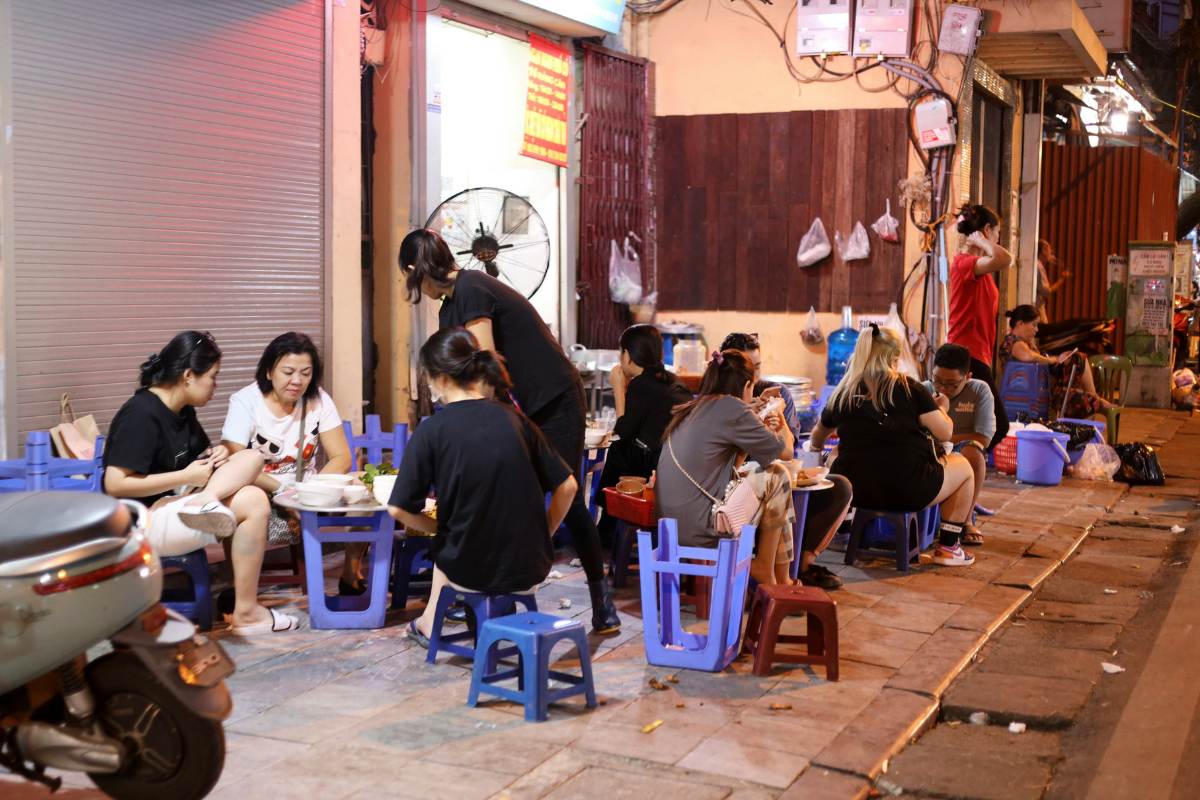
Bia hơi — fresh, cheap draft beer brewed daily and served from kegs at tiny plastic-stool street corners — is a Hanoi institution in its own right. The corner of Tạ Hiện and Lương Ngọc Quyến (informally "Bia Hơi Corner") is ground zero.
Beyond the Old Quarter
Temple of Literature — Vietnam's first national university, founded in 1070, dedicated to Confucius. Quiet courtyards, stone stelae resting on turtle statues recording the names of doctoral graduates going back centuries. A genuine break from the street noise.
Hỏa Lò Prison ("Hanoi Hilton") — originally built by the French colonial government to imprison Vietnamese political activists, later used to hold American POWs during the war. Heavy, well-curated, essential context for understanding the country's twentieth century.
Ho Chi Minh Mausoleum and Complex — the embalmed body of Ho Chi Minh lies in state here (dress code strictly enforced, no photos inside, closed certain days and during the annual maintenance period when the body is sent to Russia for preservation work). The surrounding complex includes his modest stilt house and the One Pillar Pagoda, worth the visit even if the mausoleum itself isn't your thing.
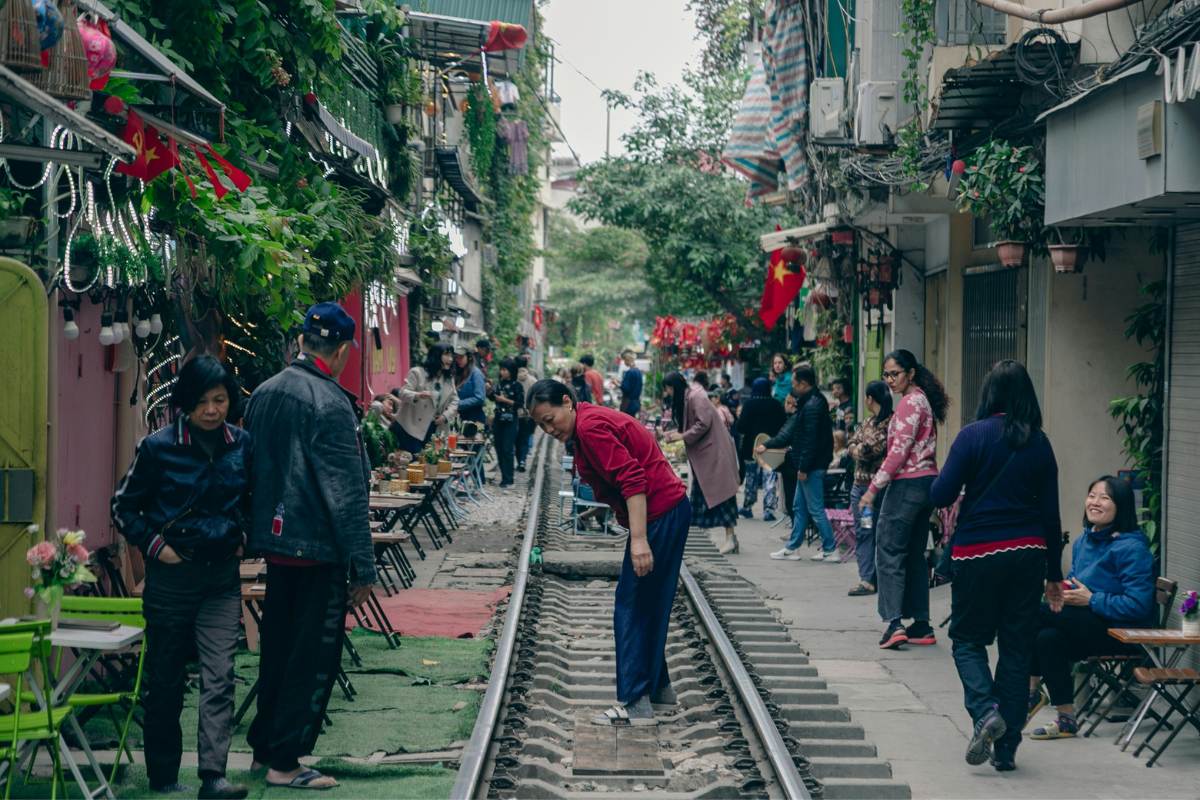
Train Street — a narrow residential street where the train runs directly through, close enough to touch the buildings on either side. Access has been restricted and reopened repeatedly over safety concerns; check current status before going, and never stand on the tracks for a photo when a train is due.
West Lake (Hồ Tây) — the city's largest lake, ringed by upscale cafes, a growing expat scene, and Trấn Quốc Pagoda, Vietnam's oldest Buddhist temple, sitting on a small peninsula at the lake's edge. A good half-day escape from Old Quarter density.
Day Trips
Halong Bay is the obvious one — limestone karsts rising out of emerald water, UNESCO-listed, usually done as an overnight boat cruise from Hanoi (roughly 2.5–3.5 hours each way by road or new expressway). Book a smaller boat operator over the mass-market ones if you want a quieter experience; the bay gets crowded with tour traffic in peak season.
Ninh Bình ("Halong Bay on land") offers the same karst scenery without the water crowding — rowboat through Tam Coc or Trang An's river caves, climb Mua Cave viewpoint for the postcard shot over the rice paddies. Doable as a long day trip or better as an overnight.
Sapa, in the northern highlands near the Chinese border, is further (an overnight train or a few hours by new highway) but delivers terraced rice fields, cooler mountain air, and trekking through ethnic minority villages. Worth two or three days if your itinerary allows it.
Getting Around
Walking works fine within the Old Quarter and central areas — distances are short even if the sidewalks are often occupied by parked motorbikes, forcing you onto the street itself.
Grab (the regional Uber equivalent) is the easiest way to book both cars and motorbike taxis, with upfront pricing in the app — far simpler than negotiating with street taxis.
Renting a motorbike is an option for the confident only. Hanoi traffic has its own rhythm and very little patience for hesitation. If you haven't ridden in chaotic traffic before, this isn't the place to start.
Crossing the street is a skill in itself: walk at a slow, steady, predictable pace and let the traffic flow around you. Stopping or sprinting is what causes accidents, not the traffic itself.
When to Go
October to December is the sweet spot — dry, cool, comfortable, with clear skies for day trips to Halong Bay and Ninh Bình.
March and April are also good — mild temperatures before the summer humidity sets in, with the added bonus of clear visibility for the karst landscapes.
May to September brings hot, humid weather and the rainy season, with sudden downpours and occasional typhoon risk, especially July through September. Not impossible to visit, just harder going.
January and February can be cold, grey, and drizzly by Hanoi standards (which still means mild compared to most of the world, but pack layers) — though this period also includes Tết (Lunar New Year), when the city transforms with flower markets and decorations but many businesses close for several days.
Practical Notes
- Visa: many nationalities get visa-free entry for short stays or can apply for an e-visa in advance — check current requirements for your passport before booking.
- Hanoi's Old Quarter sidewalks are effectively extensions of shops and motorbike parking — expect to walk in the street regularly, and stay alert.
- Bargaining is expected in markets and with unmetered transport, not in restaurants or fixed-price shops.
- Tap water isn't drinkable — stick to bottled or filtered water, widely available everywhere.
- The Old Quarter and French Quarter (around the Opera House) make the most practical bases — central, walkable, well-connected to everything above.
- Air quality can be poor in winter months due to seasonal burning and traffic — worth checking AQI if you have respiratory sensitivities.


