Bangkok Travel Guide: Temple Gold, Street Food Chaos & the City That Never Lets You Go
April 6, 2026 · TripOnly

Why Bangkok Gets Under Your Skin
There are cities that impress you. Bangkok is one of the few that consumes you. It is relentless and generous in equal measure — a place where a centuries-old temple sits behind a 7-Eleven, where a Michelin-starred meal costs less than a London sandwich, where the night market doesn't really get going until midnight and the monks begin their alms rounds at dawn.
It is also one of the most visited cities on earth, and it earns that status not through marketing but through sheer overwhelming experience. The food alone would be enough. The temples alone would be enough. The neighbourhoods, the waterways, the nightlife, the markets — each would be enough on their own. Bangkok gives you all of it simultaneously and dares you to keep up.
First-timers are often overwhelmed. Return visitors are often obsessed. This is the natural arc.
When to Go
Cool season (November–February) is the best time to visit. Temperatures sit around 25–32°C, humidity is lower, and the skies are mostly clear. December and January are peak tourist months — book accommodation early.
Hot season (March–May) is fierce. Temperatures regularly exceed 38°C with punishing humidity. Songkran (Thai New Year water festival) in mid-April is a chaotic, joyful exception — one of the great street parties in Asia — but the heat surrounding it is real.
Rainy season (June–October) brings afternoon downpours, lower prices, and fewer crowds. The city doesn't shut down — rains are usually intense but brief — and the green season has its own lush appeal. October and early November are transition months with good value and improving weather.
Getting There & Around
By Air: Suvarnabhumi Airport (BKK) is Bangkok's main international gateway, 30 km east of the city. Don't take a taxi — the Airport Rail Link (City Line) connects to Phaya Thai station in 30 minutes for a fraction of the price. Don Mueang Airport (DMK) serves budget carriers and connects by bus and taxi (no rail link).
Getting Around:
- BTS Skytrain: The elevated rail network covering the main commercial and tourist areas — Sukhumvit, Silom, Siam. Fast, air-conditioned, and easy to navigate. Get a Rabbit Card for seamless travel.
- MRT: The underground network fills BTS gaps, connecting Chatuchak, Chinatown (Yaowarat), Lumphini, and Bang Sue Grand Station.
- Chao Phraya Express Boat: The fastest and most atmospheric way to reach the riverside temples — Wat Pho, Wat Arun, the Grand Palace. Colour-coded flags denote different express routes; the orange flag runs most frequently.
- Khlong boats: Canal longtail boats on Khlong Saen Saep cut through gridlocked traffic to connect the old city area to Siam and Pratunam. Exhilarating. Slightly terrifying. Entirely practical.
- Tuk-tuk: Fun for short distances and the experience. Agree the price before getting in. Avoid any driver who offers to take you to a "special gem shop" on the way.
- Grab: The regional rideshare app. Essential for longer journeys and anywhere the rail network doesn't reach. Far more reliable than flagging a taxi.
- On foot: Bangkok rewards slow walkers in the right neighbourhoods — Rattanakosin, Chinatown, Ari, Phra Nakhon. In others, the heat and lack of pavements make walking difficult.
Neighbourhoods to Know
Rattanakosin — The Old Royal City
The historic heart of Bangkok, occupying a loop of the Chao Phraya River. The Grand Palace, Wat Pho, Wat Mahathat, and Sanam Luang are all here. The neighbourhood has a ceremonial, slightly hushed quality — the weight of history is palpable. Not a nightlife district; better visited in the morning when the light is good and the heat hasn't built.
Banglamphu & Khao San Road
Adjacent to Rattanakosin, Banglamphu is Bangkok's backpacker heartland, centred on the famous (infamous) Khao San Road. It is exactly what it is: hostels, pad thai for 60 baht, bucket cocktails, and travellers from everywhere. Don't dismiss it — Khao San has real energy, and the surrounding streets of Banglamphu are genuinely charming with excellent temples, local restaurants, and a more relaxed pace.
Chinatown (Yaowarat)
One of the world's great urban Chinatowns and Bangkok's best neighbourhood for street food. Yaowarat Road and its surrounding lanes come alive at dusk with seafood stalls, roast duck vendors, gold shops, and a density of flavour that makes rational dinner planning impossible. Go hungry. Walk slowly. Eat constantly. The new MRT Yaowarat station has made it easier to reach without the traffic nightmare.
Silom & Sathorn — Finance and After-Dark
Bangkok's business district by day becomes one of its most layered neighbourhoods by night. Silom Road has excellent restaurants, the famous Patpong night market (and its less-family-friendly parallel streets), and the Sri Mariamman Hindu Temple incongruously glowing among the office towers. Sathorn is where the city's best rooftop bars sit above the skyline.
Sukhumvit — Expat Central
The long, traffic-choked artery of BTS-served Bangkok. Sukhumvit is where most expats live, where the international restaurants concentrate, and where the nightlife ranges from rooftop sophistication (Thonglor, Ekkamai) to the raw energy of Nana and Asok. The higher the soi (side street) number, the quieter and more residential it gets. Thonglor (Soi 55) and Ekkamai (Soi 63) are the neighbourhoods of choice for Bangkok's creative and food-forward crowd.
Ari & Samsen — The Local Bangkok
North of the tourist trail, Ari is where Bangkok's young professionals actually live. Tree-lined streets, independent coffee shops, zero tourist menus, excellent local restaurants, weekend markets, and a neighbourhood calm that feels like a different city. Samsen, alongside the river, is equally unhurried with traditional shophouses and canal-side guesthouses. Both repay an afternoon away from the temples.
Dusit
The royal district, home to the Dusit Palace complex, Vimanmek Mansion (the world's largest golden teak building), and the magnificently over-engineered Ananta Samakhom Throne Hall. Quieter than Rattanakosin, undervisited, and worth a morning for the architecture and the tree-lined boulevards that feel almost Parisian.
The Essential Sights
The Grand Palace (Phra Borom Maha Ratcha Wang)
The most visited site in Thailand and one of the most spectacular royal complexes in Southeast Asia. Built in 1782 and still used for state occasions, the palace compound covers 218,400 square metres of gilded spires, throne halls, murals, and mythological guardians. The adjacent Wat Phra Kaew (Temple of the Emerald Buddha) contains Thailand's most sacred image — a small jade figure that the king personally changes robes on three times a year. Dress code is strictly enforced: shoulders and knees covered. Arrive before 9am. Budget at least three hours.
Wat Pho (Temple of the Reclining Buddha)
A five-minute walk from the Grand Palace, Wat Pho predates Bangkok itself and is the country's oldest and largest temple complex. The Reclining Buddha — 46 metres long, covered in gold leaf, with mother-of-pearl inlaid feet depicting the 108 auspicious characteristics of the Buddha — is one of the most extraordinary religious images in Southeast Asia. The temple also houses Thailand's first university and the birthplace of traditional Thai massage. Book a massage here (from licensed practitioners, in the temple itself) and then wonder why you don't live in Bangkok.
Wat Arun (Temple of Dawn)
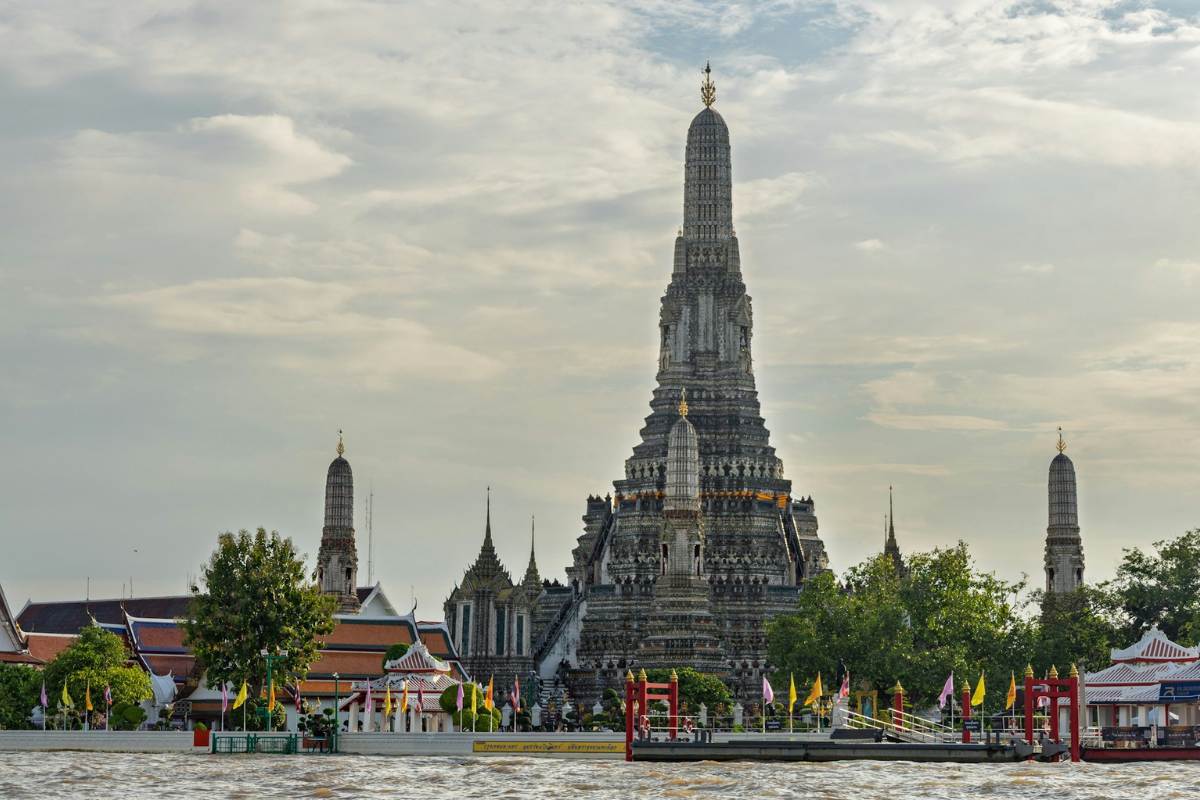 Across the Chao Phraya from Wat Pho, Wat Arun's distinctive prang (Khmer-style tower) is encrusted with fragments of Chinese porcelain that shimmer differently at every hour of the day. At dawn (as the name suggests) and at dusk, the light is extraordinary. Cross the river by ferry from Tha Tien pier — a two-minute crossing that costs 5 baht. Climb the steep central tower for views over the river and the city.
Chatuchak Weekend Market
One of the largest markets in the world: 15,000 stalls across 35 acres, selling everything from vintage clothing to live reptiles to handmade ceramics to antique Buddha images. Open Saturday and Sunday only. Go early (before 11am before the heat and crowds overwhelm). Navigate by the map at each entrance and pick a section — trying to cover everything is a category error. The food section (Section 26/27) is excellent for lunch.
Jim Thompson House
The former home of the American businessman who revived Thailand's silk industry in the 1950s and mysteriously disappeared in Malaysia's Cameron Highlands in 1967. The house is a masterclass in Thai traditional architecture and Asian art collection — six linked teak structures filled with antiques, sculptures, and silk. One of Bangkok's most atmospheric and underrated attractions. The garden is a green oasis in the city heat.
Wat Saket & the Golden Mount
A man-made hill crowned by a golden chedi, offering 360-degree views over the old city rooftops from a height that feels disproportionately impressive for Bangkok's flat geography. 318 steps spiral up through temple bells and frangipani. Best at sunrise or in the early evening.
The Chao Phraya River
Bangkok's great artery deserves time on the water. The express boat is practical; the tourist boat (Chao Phraya Tourist Boat) narrates as it goes. Better still: take a longtail boat tour through the khlongs (canals) of Thonburi on the opposite bank — a Bangkok that barely changed in fifty years, of wooden houses on stilts, spirit houses, monks at riverside temples, and an entirely different relationship with the city.
What to Eat
Bangkok may have the best street food culture in the world. The argument is not really close.
Pad Thai: The national dish, done best by street vendors with a wok and a philosophy. Thipsamai on Mahachai Road is the famous version — queues form before it opens. Try it wrapped in an egg omelette sheet.
Tom Yum Goong: The hot and sour prawn soup that defines Thai flavour — lemongrass, kaffir lime leaves, galangal, chilli, fish sauce. Order it at any restaurant; judge it by how clear and fierce the broth is.
Som Tum: Green papaya salad, pounded in a mortar with fish sauce, lime, palm sugar, dried shrimp, and chillies. The number of chillies matters: ask clearly how much heat you want and then double it, because the vendors will adjust for tourists.
Khao Man Gai: Poached chicken over rice cooked in chicken stock, with a bowl of clear broth and a complex dipping sauce. Breakfast food. The correct hangover cure. Available at all hours from specialist vendors.
Boat Noodles: Small, intensely flavoured bowls of rice noodles in pork or beef broth, served tableside from vessels on the khlongs historically (now mostly on land). Order four at once. They're tiny. That's the point.
Mango Sticky Rice (Khao Niao Mamuang): Ripe mango over glutinous rice with warm coconut cream. Seasonally available (mango season peaks April–June). Get it from a market vendor and eat it standing up.
Roast Duck on Rice (Khao Na Ped): Particularly good in Chinatown. Glossy, lacquered duck over jasmine rice with a light broth and chilli vinegar. Order double.
Thai Iced Tea (Cha Yen): Strong orange tea over ice with condensed milk. Available everywhere. A necessary counterpoint to the chilli heat of everything else.
Night Market Grazing: Don't plan dinner. Go to Yaowarat, Talad Rot Fai (Train Market), Or Tor Kor Market, or the Jodd Fairs night market and eat in order of what smells best. Budget 200–400 baht for a full evening of eating.
Where to Drink & Go Out
Bangkok's nightlife has genuine range — from dive bars in Banglamphu to world-class rooftop cocktail bars to clubs that operate until dawn under rules that seem to shift by the week.
Rooftop Bars: Octave Rooftop at the Marriott Sukhumvit, Sky Bar at Lebua (the Hangover II bar), and Vogue Lounge at Sofitel are the signature panoramic experiences. Book ahead for the good spots and arrive for sunset.
Thonglor & Ekkamai: The serious bar and restaurant scene. Japanese-influenced cocktail bars, natural wine shops, craft beer spots, and restaurants that would be celebrated in any major city. Less touristy than Silom, more creative than the hotel bars.
Chinatown Craft Bars: A newer wave of cocktail bars has opened in converted shophouses in Yaowarat — creative, affordable, and excellent on atmosphere.
RCA (Royal City Avenue): Bangkok's club strip. Enormous venues, Thai pop and hip-hop, young local crowd. Not for the faint-hearted or the early-to-bed. Starts after midnight.
Day Trips Worth Taking
Ayutthaya
80 km north of Bangkok, the ancient capital of the Kingdom of Ayutthaya (1351–1767) is a UNESCO World Heritage Site of extraordinary scope. Dozens of ruined temple complexes spread across a river island, including the famous Buddha head entwined in tree roots at Wat Mahathat. Reachable by train from Hua Lamphong station in 90 minutes or by organised boat tour up the Chao Phraya. A full-day trip minimum.
Damnoen Saduak Floating Market
The classic floating market experience, 100 km southwest of Bangkok. Boat vendors selling tropical fruit, pad thai, and souvenirs from wooden canal boats in photogenic chaos. Touristy? Yes. Still impressive in its own way if you arrive before 8am. Combine with the Maeklong Railway Market (where a train bisects a covered fresh food market four times daily) for a full day excursion.
Kanchanaburi
130 km northwest, the site of the infamous Bridge on the River Kwai and the Death Railway — built by Allied POWs and forced labourers under brutal Japanese occupation during World War II. The Allied War Cemetery and JEATH War Museum handle a difficult history with appropriate gravity. The surrounding area has waterfalls, national parks, and river guesthouses for those staying overnight.
Koh Samet & Koh Chang
If your schedule allows two to three extra days, both islands are reachable from Bangkok. Koh Samet (3–4 hours, including a short ferry) is compact, pretty, and good for a quick beach fix. Koh Chang is larger, more forested, and more rewarding for those with time.
Practical Tips
- Heat: Bangkok is hot year-round. Hydrate constantly, wear light clothing, and don't underestimate the energy cost of sightseeing in 35°C heat. Air-conditioned BTS stations are legitimate rest points.
- Temple Dress: Shoulders and knees must be covered at all temples. Carry a lightweight scarf or sarong. Many temples loan sarongs at the entrance.
- Scams: Bangkok has a well-documented set of tourist scams — the gem scam, the tuk-tuk tour to "a special shop," the closed attraction ploy. If a stranger approaches you unprompted with an offer that sounds helpful, it probably isn't. Use Grab instead of flagging taxis.
- Currency: Thai Baht (THB). ATMs are everywhere but charge foreign card fees — exchange cash at licensed exchange booths (SuperRich and Vasu Exchange offer excellent rates) rather than airport counters.
- Food Safety: Eat where Thais eat. High turnover stalls with queues are safe; the food has been cooked in the last ten minutes. Avoid anything sitting under a heat lamp.
- Wai: The Thai greeting — palms together, slight bow. You don't need to initiate it constantly, but returning a wai is always appropriate.
- Monks: Don't touch monks (women especially must not make physical contact). On public transport, seats near monks are sometimes reserved. On temple grounds, behave with genuine respect, not performative reverence.
- Bargaining: In markets, yes. In restaurants and modern shops, no. Starting at 50–60% of the asking price is reasonable in street markets.
- Water: Drink bottled water. Even locals don't drink tap water.
- Electricity: Thailand uses 220V with Type A, B, and C plugs. Most modern hotels have universal sockets; bring a universal adapter to be safe.
Where to Stay
Rattanakosin / Banglamphu: Best for temple proximity and old Bangkok atmosphere. Guesthouses along Khao San Road and boutique hotels on the quieter Phra Athit Road. Good value; less central for Sukhumvit nightlife.
Silom & Sathorn: Well-connected by BTS and MRT. Good mix of business hotels and boutique options. Walking distance to the river and Chinatown via MRT. Excellent restaurant scene.
Sukhumvit (Thonglor / Ekkamai): The choice for food lovers and nightlife seekers. Excellent BTS access. Wide range from budget to luxury. The further up the soi number, the quieter the area.
Riverside (Chao Phraya): The grande dame luxury option — the Mandarin Oriental, Capella, Peninsula. Expensive, beautiful, and genuinely special for a splurge. Slightly removed from BTS/MRT but served by the Chao Phraya Tourist Boat and hotel shuttles.
Ari: For travellers who want a genuinely local feel. BTS Ari station. Independent coffee shops, excellent local restaurants, no tourist menus. A quieter, saner Bangkok.
Final Thoughts
Bangkok asks something of you. It asks you to slow down and speed up simultaneously — to sit with a bowl of boat noodles for an hour in the heat, and also to move fast enough to catch the light on Wat Arun at dawn, to squeeze onto a khlong boat before the morning rush, to be in Chinatown as the charcoal fires come alive at dusk.
It is a city of contradictions held together by something that resists simple description — a generosity of spirit, a refusal to take itself too seriously, an appetite for life that is entirely, infectiously its own.
Come without a rigid plan. Eat everything. Get lost in the right neighbourhood. Let Bangkok decide what day you're having.
You won't regret it.


