Best Places to Visit in Italy: The Complete Guide from North to South
March 29, 2026 · TripOnly

Best Places to Visit in Italy: The Complete Guide from North to South
Italy is the kind of country that makes you feel like you're doing it wrong.
You arrive in Rome and spend three days at the Colosseum, the Vatican, and the Trevi Fountain and leave thinking you've seen it. You haven't seen it. Then someone tells you about a neighbourhood called Trastevere, or a bar in Testaccio, or a church in the suburbs with a Caravaggio that no one visits — and you realise the place is essentially inexhaustible.
Multiply this by 20 regions, 58 UNESCO World Heritage Sites, and a food culture so localised that the pasta changes every 30 kilometres, and the problem becomes clear: Italy does not reward a checklist approach. It rewards time, curiosity, and the willingness to stop somewhere you didn't plan on stopping.
This guide is not a checklist. It is a map of the country from north to south — the cities worth more than a day, the regions that most people fly over, and a few places that will justify the entire trip.
The North
The Dolomites
Start here, if you can, because the Dolomites recalibrate your sense of what mountains are supposed to look like.
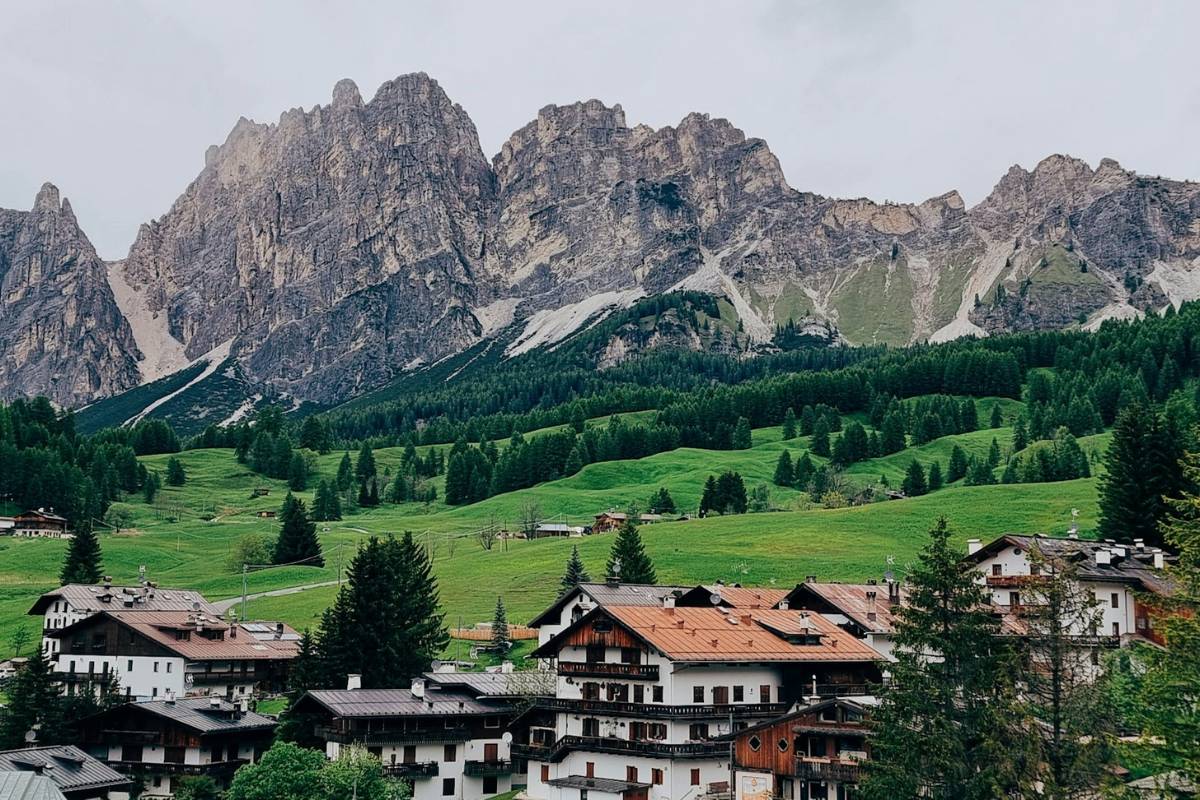 These peaks — a UNESCO World Heritage Site and geologically distinct from the Alps proper — rise in pale vertical towers of dolomitic limestone from the high valleys of South Tyrol and the Veneto. The villages below them — Cortina d'Ampezzo, Ortisei in the Val Gardena, Canazei — have the dual character of serious skiing destinations and serious hiking bases, and the transition between winter and summer here is one of the most dramatic in Europe.
In summer, the high alpine meadows of the Alpe di Siusi — the largest in the Alps — bloom with wildflowers against a backdrop of the Sassolungo and Sassopiatto peaks that no photograph fully captures. The via ferrata routes along the cliff faces and ridges offer climbing for non-technical mountaineers. The rifugi — mountain huts serving hot meals and cold beer at altitude — are among the most civilised institutions in Italian outdoor culture.
The villages have a distinctly Austrian character — this was South Tyrol until 1919 — with German as a first language in many households and an architecture and food culture that reflects the border region's mixed heritage. The food is excellent and different: speck, canederli dumplings in broth, barley soups, strudel alongside the polenta and northern Italian risotto.
Come in July and August for the meadows and hiking. Come in December for the Christmas markets and the snow.
Venice
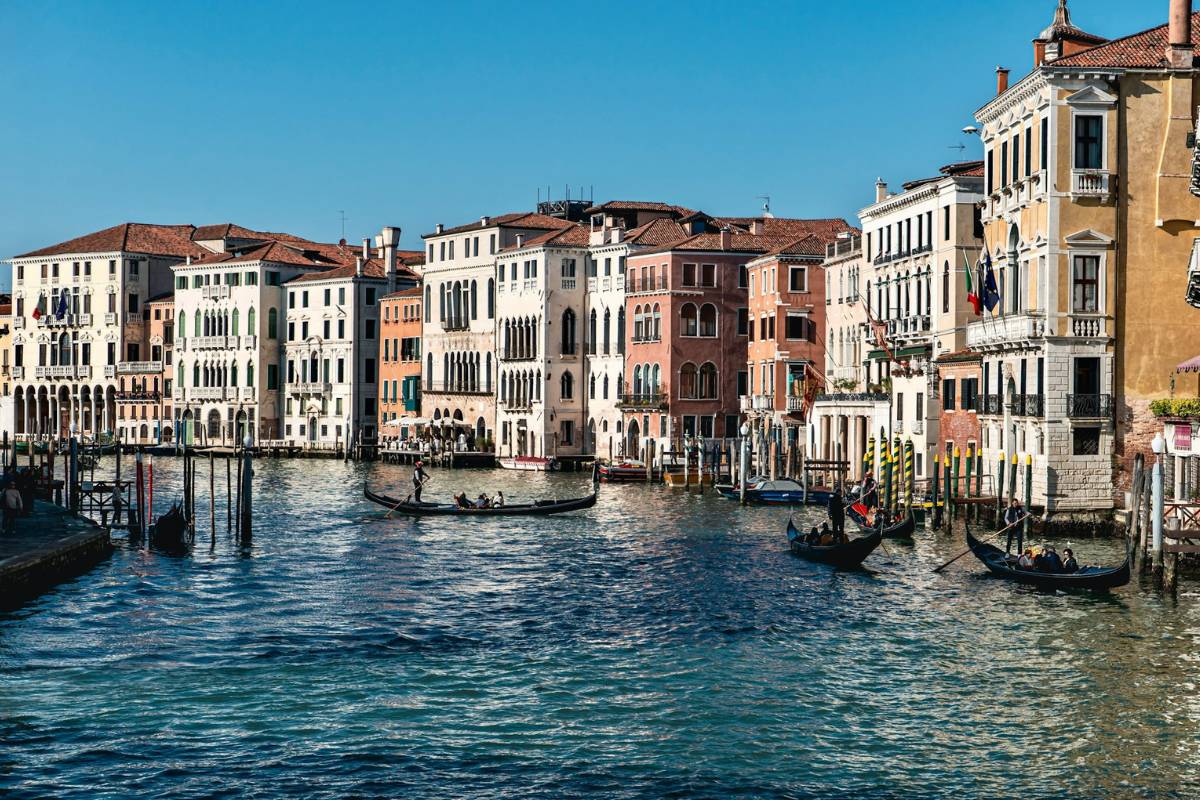 Venice needs no introduction and benefits from a different kind of one.
The problem with Venice is not that it's overrated — it isn't, the city is as extraordinary as advertised — but that most people visit it incorrectly. They come in the middle of summer, stay two days, see the Piazza San Marco and the Rialto, take a gondola ride, and leave with the impression that they've been to an overpriced open-air museum full of other tourists.
The correct Venice is experienced in the early morning, before ten o'clock, when the crowds haven't arrived and the light on the canals is gold and still. It is experienced in the sestieri away from the tourist axis — Cannaregio, Dorsoduro, Castello — where the city is quieter and the locals are doing the ordinary business of living in an extraordinary place. It is experienced in November, when the acqua alta floods the lower parts of the city and the atmosphere becomes something genuinely other-worldly.
The Gallerie dell'Accademia holds the definitive collection of Venetian painting — Bellini, Giorgione, Titian, Tintoretto, Veronese. The Peggy Guggenheim Collection on the Grand Canal is one of the finest modern art museums in Europe. The Scuola Grande di San Rocco has Tintoretto ceiling paintings that make the Sistine Chapel feel like fair competition.
Stay at least three nights. Arrive before June or after September. Get lost on purpose.
Bologna
Bologna is the most underrated major city in Italy, which is saying something in a country where underrated cities include Lecce, Palermo, and Trieste.
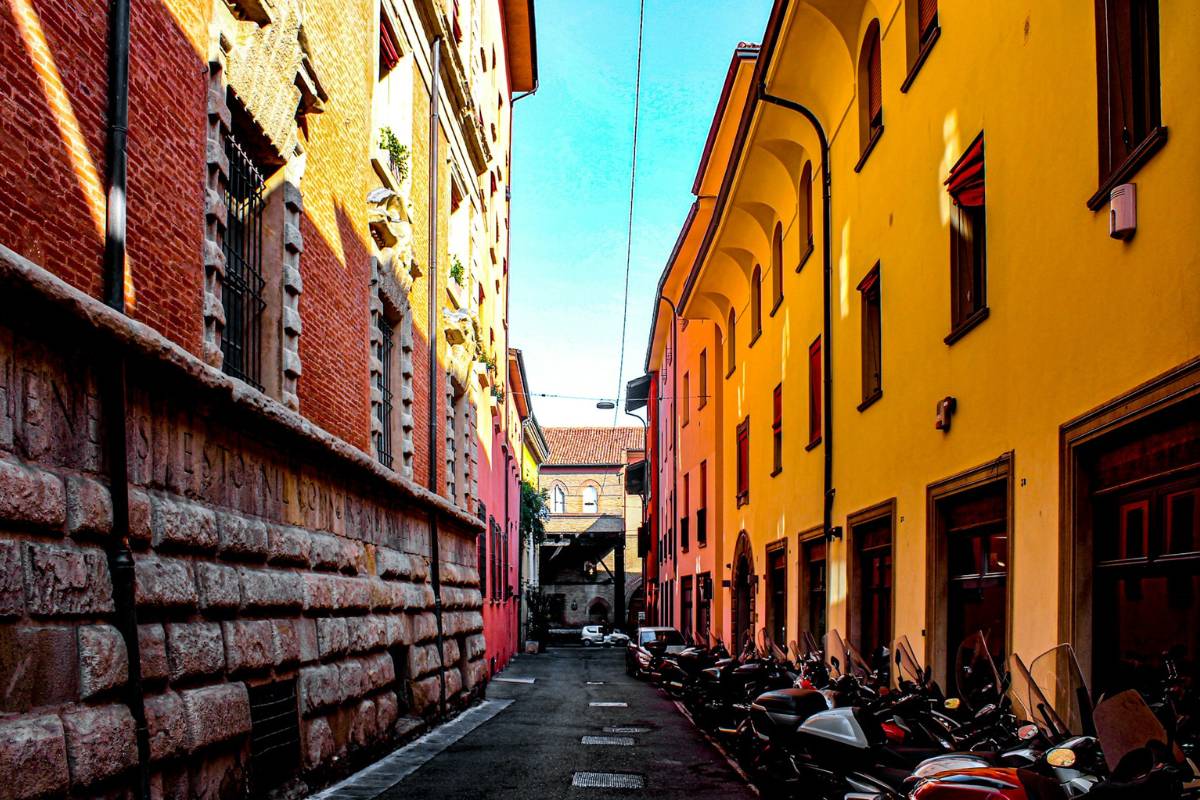 It is the home of tagliatelle al ragù — the original, not the version the rest of the world called bolognese. It is the home of mortadella, tortellini in brodo, and a university founded in 1088 that makes it the oldest continuously operating university in the world. It has 38 kilometres of arcaded porticoes under which you can walk across the entire city centre without being rained on, a feat of medieval urban planning that remains astonishing.
The food market — Mercato di Mezzo in the old ghetto neighbourhood — is one of the best in Italy. The two medieval towers leaning over the city centre are freely visible from every angle. The Pinacoteca Nazionale holds a collection of Bolognese baroque painting that is serious and largely unvisited. The aperitivo culture — early evening drinks with abundant free food — is the best in northern Italy.
Bologna works as a base for Emilia-Romagna broadly: an hour to Parma, an hour to Modena (Ferrari museum, Osteria Francescana if you can get a table), an hour to Ferrara. But the city itself justifies several days without any of that.
Central Italy
Florence
Florence is one of the most concentrated accumulations of art in the world. The Uffizi Gallery — Botticelli's Birth of Venus and Primavera, Leonardo, Raphael, Michelangelo, Caravaggio, all in a single building — is two to three hours of sustained confrontation with the highest achievements of Western painting. The Accademia has the David. The Bargello has Donatello. The Duomo's dome, engineered by Brunelleschi without scaffolding and without precedent, is a technical achievement that architects still study.
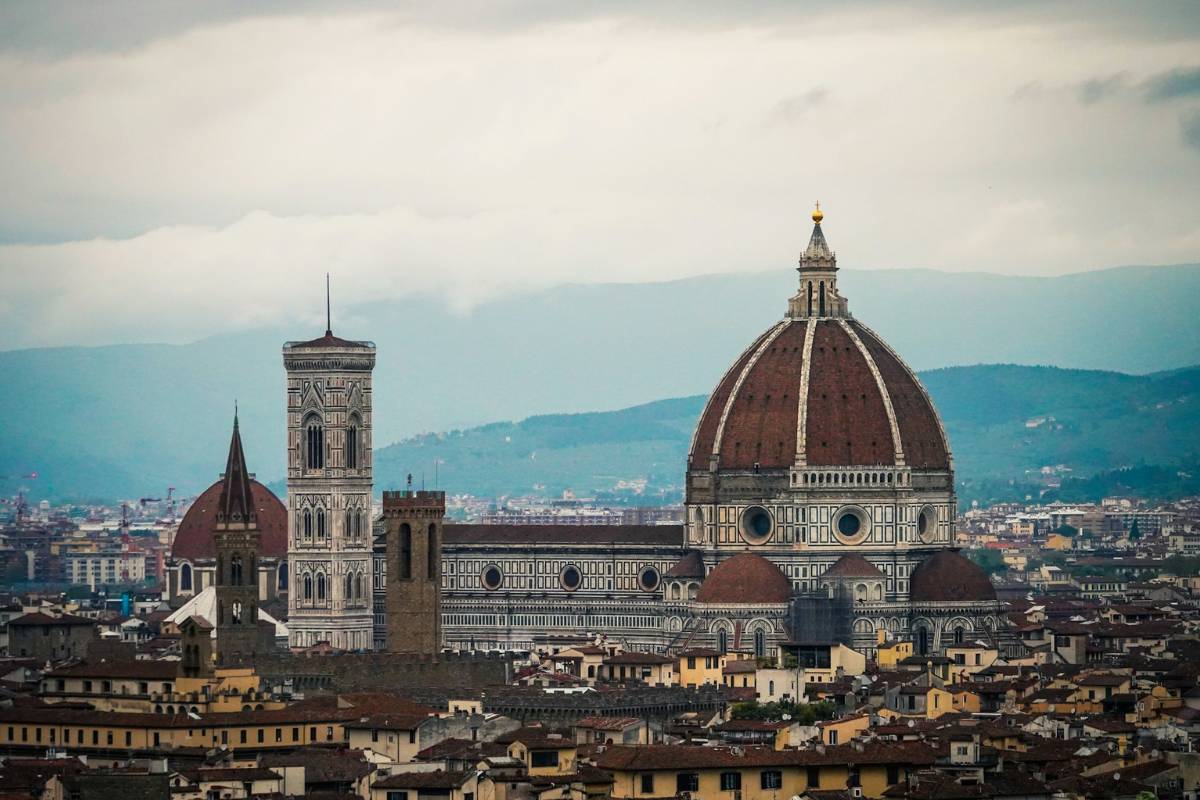 This is also the problem with Florence: it can feel like obligation rather than pleasure. The solution is the same as Venice — get there early, get into the less-visited corners, and eat better than most tourists manage.
The Oltrarno neighbourhood, on the south side of the Arno, is the part of Florence that still feels like a city rather than a museum: artisan workshops, neighbourhood restaurants, the Pitti Palace and the Boboli Gardens above it, the view from Piazzale Michelangelo at sunset. The Santo Spirito piazza fills with locals in the evening in a way that the tourist-heavy north bank of the Arno rarely does.
Book the major museums weeks ahead. Have lunch in a trattoria with no English menu. Walk to San Miniato al Monte above the city for the view and the Romanesque church that time forgot.
Tuscany Beyond Florence
The countryside between Florence and Siena — the Chianti Classico zone — is the landscape that made the world fall in love with Tuscany: cypress-lined roads, hilltop villages, olive groves and vineyards rolling in every direction. It is extraordinarily beautiful and entirely worth experiencing, ideally with a hire car and no fixed schedule.
Siena is the city Florence tourists don't visit and should. The Piazza del Campo — the distinctive shell-shaped main square — is one of the great urban spaces in Italy, and the surrounding medieval streets preserve a visual coherence that Florence has partly lost to tourism. The Palio horse race around the Campo in July and August is one of the more viscerally intense civic rituals in Europe; the weeks of neighbourhood rivalry and preparation that precede it are almost more interesting than the race itself.
San Gimignano is touristy and still worth half a day for its medieval towers. Montepulciano and Pienza in the Val d'Orcia — a UNESCO landscape of exceptional beauty — justify a full day each. The pecorino from Pienza and the Vino Nobile from Montepulciano are the correct souvenirs.
Further south, the Maremma — Tuscany's wild southwest — is what the rest of Tuscany used to be before the tourists arrived: cattle ranches, Etruscan ruins, natural hot springs at Saturnia, medieval towns perched on volcanic tufa outcrops at Pitigliano and Sorano. It rewards exploration and punishes the time-poor.
Rome
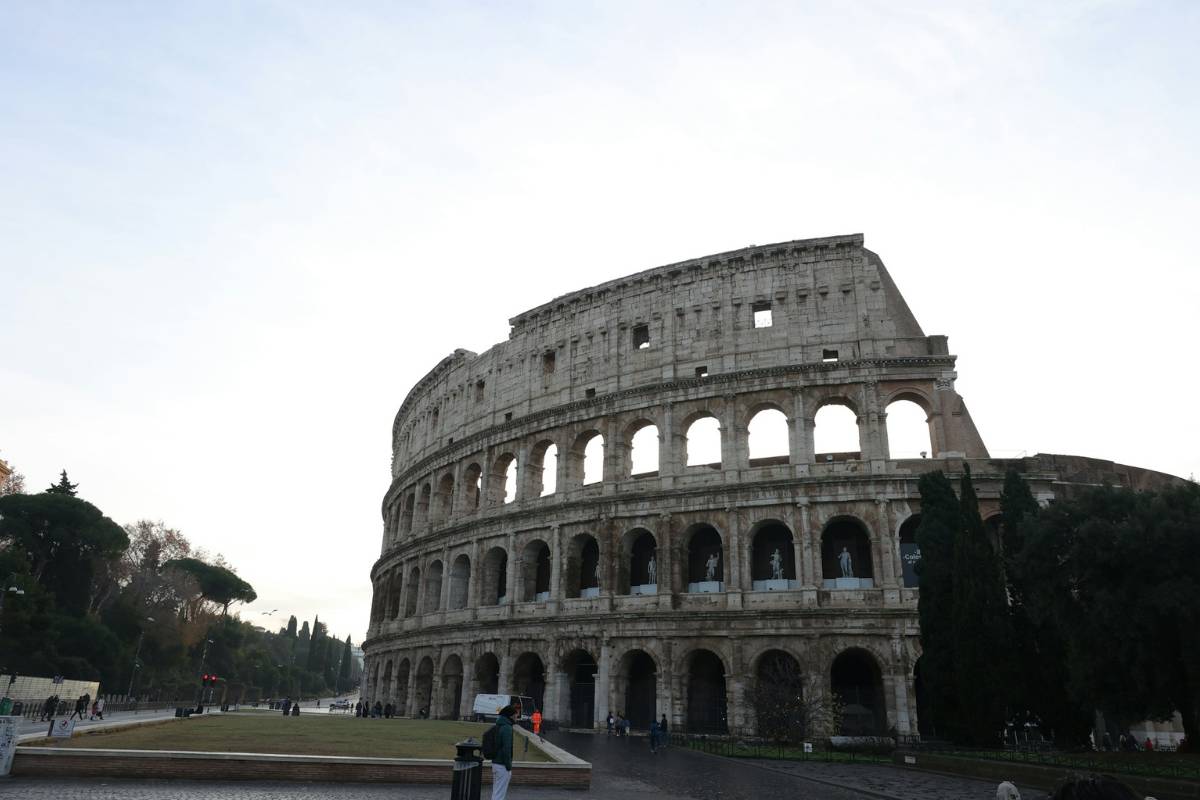 Rome is the most complex city in Italy and possibly in Europe — a place that has been continuously inhabited and continuously accumulated for nearly three thousand years, with the result that every layer of history is visible simultaneously. An ancient temple is embedded in a medieval church. A baroque piazza was built over a Roman stadium. The modern city wraps around the ancient one without quite absorbing it.
The obvious sites deserve their reputation: the Colosseum and the Forum are genuinely staggering in scale and preservation. The Vatican Museums and the Sistine Chapel are worth the queue. The Pantheon, more than any other single building in Rome, deserves time sitting in and looking up at — it has been in continuous use for nearly 2,000 years and its dome remains an engineering feat.
Less visited and equally significant: the Borghese Gallery (Bernini sculptures, advance booking essential), the Capitoline Museums (the oldest public museums in the world), the Caravaggio churches scattered through the centro storico, and Trastevere in the evening when the neighbourhood comes into its own.
Rome rewards slow travel more than anywhere else in Italy. Give it four or five days minimum. Walk rather than taking taxis. Eat in the places that don't have photographs on the menu.
Matera
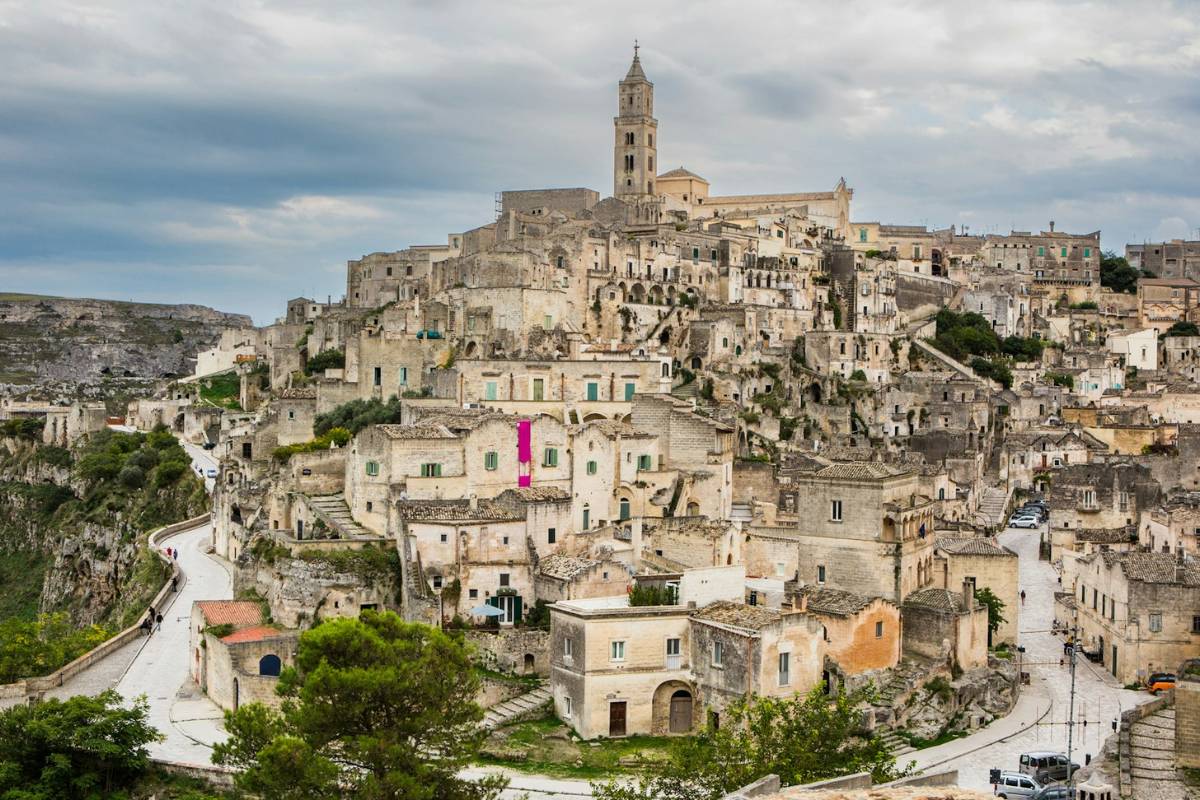 Matera is one of the oldest continuously inhabited settlements in the world — human beings have been living in the cave dwellings of the Sassi for at least 9,000 years. The city, in Basilicata in the deep south, was declared a UNESCO World Heritage Site in 1993 and the European Capital of Culture in 2019. Both are deserved.
The Sassi — two cave districts carved into the sides of a ravine — are extraordinary: a labyrinth of ancient dwellings, cave churches, cisterns, and terraces that descend toward the ravine below the modern town. Many of the caves are now boutique hotels and restaurants; sleeping in one, looking out over the gorge, is one of the more genuinely unusual accommodation experiences in Italy.
The surrounding Murgia plateau is a landscape of extraordinary bleakness and beauty — gorges, rock churches, the kind of terrain that makes the Basilicata interior feel like a different country from the Mediterranean coast an hour away.
The South and the Islands
Naples
Naples is the most Italian city in Italy, which is either a recommendation or a warning depending on your temperament.
It is chaotic, alive, occasionally overwhelming, and possessed of a food culture — pizza, sfogliatella pastries, fresh seafood, espresso served in tiny cups at bars where you stand rather than sit — that has more to do with the street than with the restaurant. The centro storico is a UNESCO World Heritage Site, the streets narrower and darker and louder than anything in the north. The National Archaeological Museum holds the finest collection of Roman artefacts in the world, including the mosaics from Pompeii.
Pompeii and Herculaneum are less than an hour by train — Herculaneum in particular, smaller and more intimate than Pompeii, is one of the most affecting archaeological sites in Europe. The islands of the Bay of Naples — Capri, Ischia, Procida — each justify at least a day. Procida, smallest and least visited of the three, is the one to choose if you want the South as it was rather than the South as it has become.
Puglia
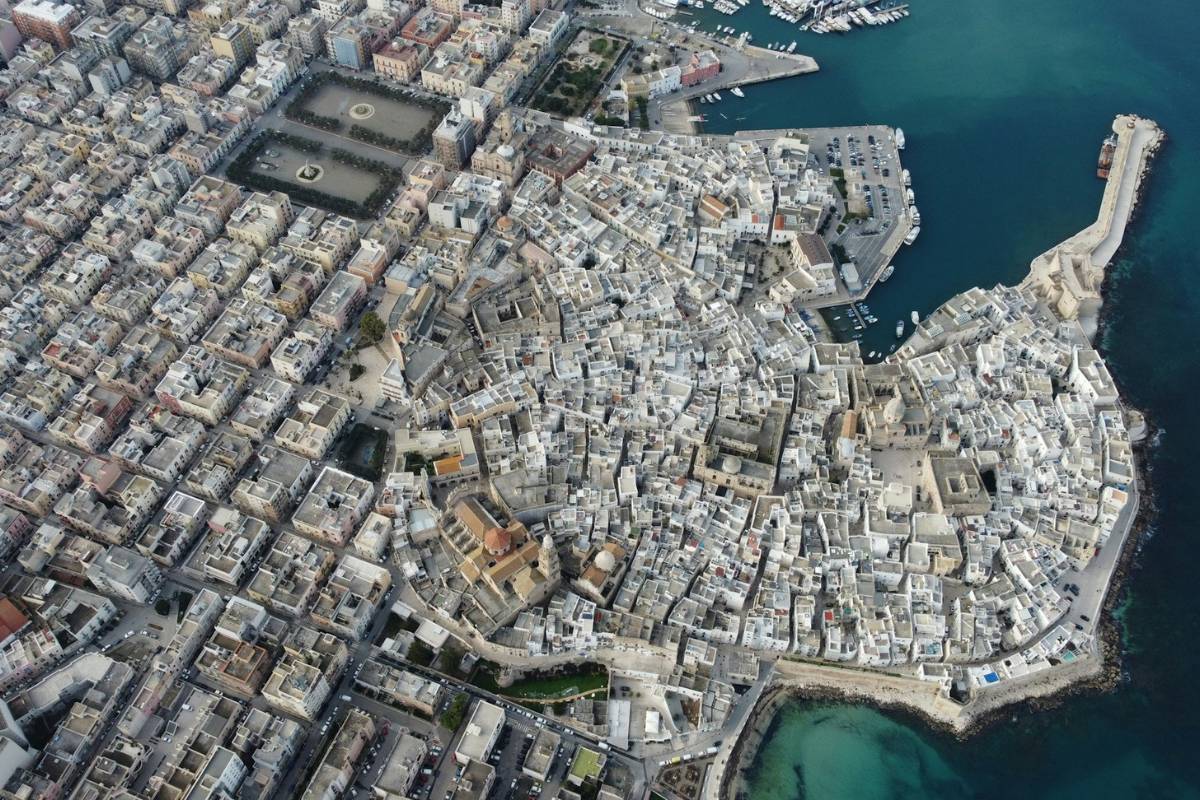 The heel of Italy's boot has been covered in detail in our Amalfi Coast guide, and Puglia deserves its own full post — which it will have. But briefly: the trulli of Alberobello, the baroque of Lecce, the Adriatic coast of the Salento, the food (burrata, orecchiette, raw sea urchin eaten at the water's edge) — Puglia is the most complete region in the Italian south for first-time visitors who want something genuinely different from the Tuscany-Rome-Venice circuit.
Go in May or September. Hire a car. Eat everything.
Sicily
Sicily is a separate civilisation that happens to be Italian by nationality.
The island has been ruled by Greeks, Romans, Byzantines, Arabs, Normans, and Spanish successively, and the archaeology and architecture reflect every layer simultaneously: Greek temples at Agrigento and Selinunte, a Norman cathedral in Palermo whose interior is covered in Byzantine mosaics, Arab-Norman churches in Cefalù and Monreale that are among the most beautiful in Europe, Spanish baroque towns in the Val di Noto rebuilt after the earthquake of 1693.
Palermo is the most interesting city in Italy that most travellers underestimate. The street food — arancini, panelle chickpea fritters, sfincione pizza, pani ca meusa (spleen sandwich, which you should try) — is eaten standing up at the Ballarò and Vucciria markets. The Palermo Cathedral and the Palazzo dei Normanni royal palace are architectural arguments for centuries of civilisation.
Catania, on the east coast below Mount Etna, is less visited than Palermo and equally compelling — a baroque city built from lava stone with a fish market that opens before dawn and a food scene that has gathered serious attention in recent years. Taormina is beautiful and busy; the Greek theatre above the town with Etna as its backdrop is one of the most dramatically situated ancient theatres in the world. Go early morning.
The Val di Noto towns — Ragusa, Modica, Scicli — are the least visited baroque World Heritage Sites in Italy and among the most extraordinary. Modica's chocolate, made to an ancient Aztec recipe without cocoa butter, is available in small shops throughout the town and is unlike anything else sold under the name of chocolate.
When to Go
Italy is a year-round destination but the experience varies considerably by season.
April to June is the optimal window: the crowds haven't peaked, the temperatures are comfortable across the entire country, the wildflowers are out in Tuscany and the Dolomites, and the Sicilian coast is warm enough for swimming from May onward.
September and October are the other peak period: the summer crowds have thinned, the harvests are underway (grape in September, olive in October), the light is golden and lower, and the countryside is at its most beautiful.
July and August are hot, crowded, and expensive everywhere except the mountains. If you must go in high summer, go to the Dolomites or the Calabrian coast and avoid the major art cities during the day.
November through March is the least visited period and not without its rewards. The museums are navigable. Sicily and Puglia remain mild. The Christmas markets in the north are genuine rather than performance. And Italy's food, wine, and cafe culture operate at full capacity regardless of the season — which means that a grey January day in Bologna, eating tagliatelle in a restaurant where you're the only tourist, is not a bad thing at all.
A Note on How to Do It
The temptation with Italy is to move constantly — Rome to Florence to Venice to the Amalfi Coast in ten days, covering the greatest hits and arriving home having confirmed what the brochures promised.
This works. It produces a perfectly adequate holiday. But it doesn't produce the experience that makes people return to Italy every few years for the rest of their lives.
What produces that is slower movement: fewer cities, more time in each, afternoons with no particular plan, meals that run longer than expected, a village that wasn't in the guidebook, a conversation with whoever pours the wine. Italy rewards this approach disproportionately — it is a country where the unplanned moment is often the best one.
Pick fewer places. Stay longer. Eat slower.
The country will justify everything.


