Best Places to Visit in France: The Complete Guide Beyond Paris
March 29, 2026 · TripOnly

Best Places to Visit in France: The Complete Guide Beyond Paris
France is the most visited country in the world — around 100 million tourists a year — and, paradoxically, one of the most consistently underexplored.
The numbers are deceptive. A significant proportion of those visitors land at Charles de Gaulle, spend three to five days in Paris, and fly home. Paris is, by most measures, the greatest city in Europe, and it justifies the attention. But it is one city in a country of 18 administrative regions, each with its own landscape, its own culinary identity, and in some cases its own language. The France that French people know — and the France that rewards sustained exploration — begins at the Paris city limits.
This is a guide to that France. Paris first, briefly, because it deserves its reputation. Then everything else.
Paris
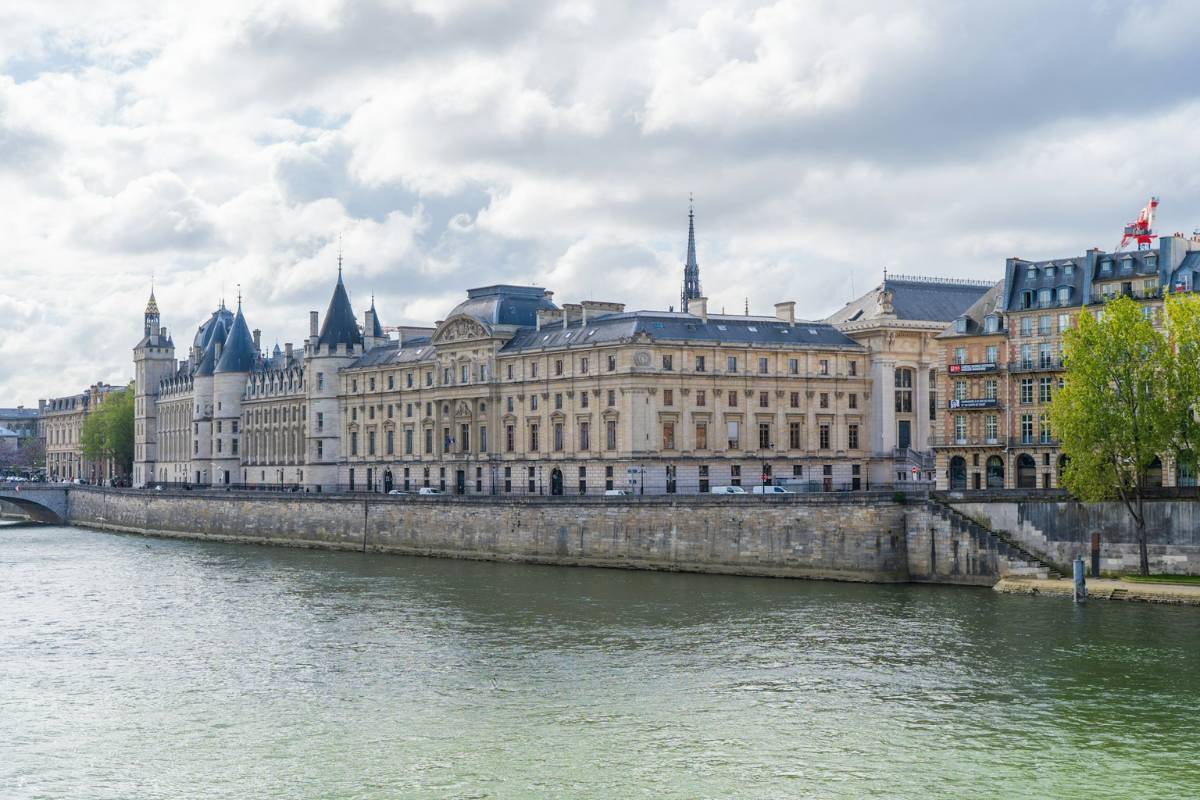 The case for Paris has been made better than any travel guide can make it, so let's be efficient: the Louvre is worth two days, the Musée d'Orsay is worth one, and the Pompidou Centre is worth an afternoon. The Eiffel Tower is better from a distance than from the top. Notre-Dame, after five years of restoration following the 2019 fire, has reopened and is worth seeing in its renewed state. Versailles is a 40-minute train ride and a full day, not a half one.
The Paris that stays with people, however, is not the Paris of the monuments. It is the Paris of the neighbourhood — the specific quality of a Tuesday morning in the Marais, coffee at a zinc bar in the 11th, the Canal Saint-Martin in the afternoon, the covered passages of the 2nd arrondissement, which are 19th-century shopping arcades of such melancholy beauty that visiting them feels slightly illicit.
Eat well. The bistro cooking of Paris — steak tartare, duck confit, soupe à l'oignon, tarte Tatin — is a specific tradition that the city does better than anywhere else and that requires no Michelin stars to find.
Stay at least four nights. Then go somewhere else.
The North and Northeast
Normandy
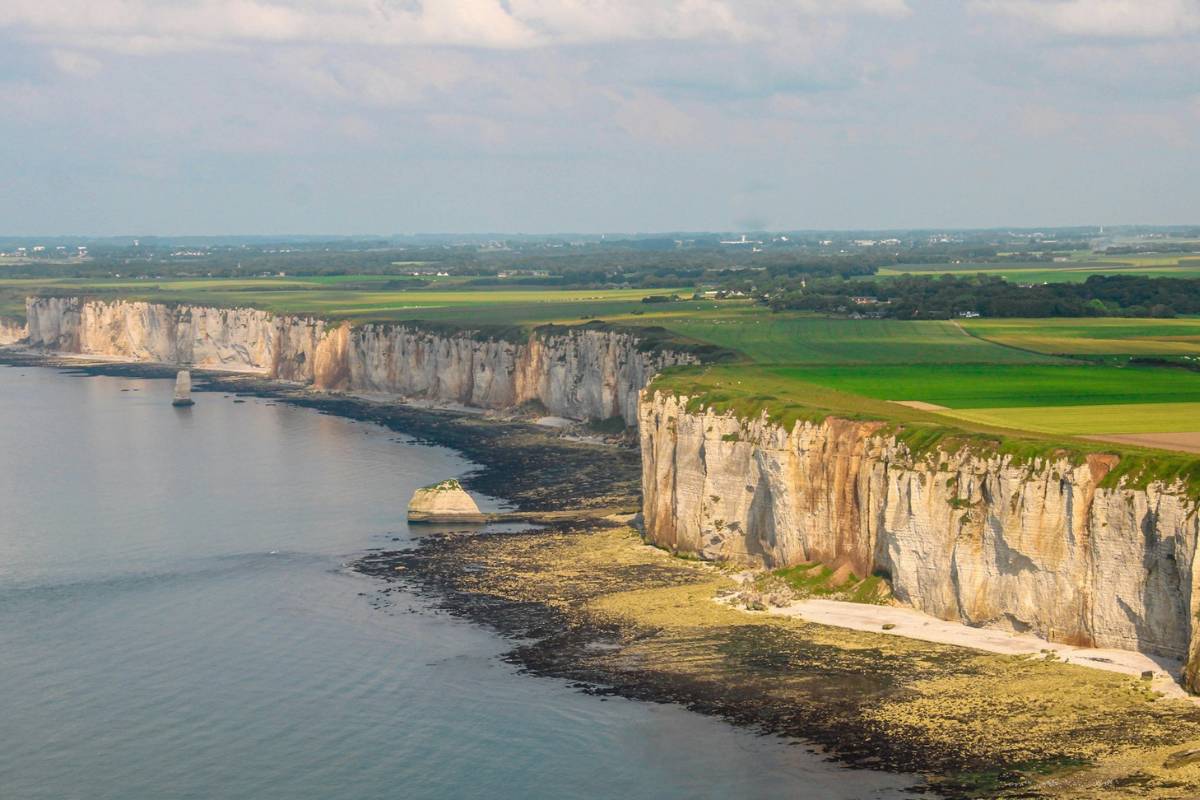 Normandy operates on two registers that coexist without contradiction: one of the most beautiful and productive agricultural landscapes in France, and the site of some of the most significant events of the 20th century.
The D-Day beaches — Utah, Omaha, Gold, Juno, Sword — stretch along the Normandy coast from the Cotentin Peninsula to the east of Caen. The American Cemetery above Omaha Beach, with its 9,387 white crosses arranged on a bluff above the sea, is one of the most sobering places in Europe. The museums at Caen and at Arromanches, where sections of the Mulberry Harbour used to land supplies in June 1944 are still visible in the water, are among the best military history museums on the continent.
Beyond the history: the medieval city of Rouen, where Joan of Arc was burned at the stake in 1431, has a Gothic cathedral that Monet painted over 30 times in different lights (the series is now split between the Musée d'Orsay and various international collections). The Bayeux Tapestry — technically an embroidery, 70 metres long, depicting the Norman conquest of England in 1066 — is in the town of Bayeux and is more viscerally impressive than photographs suggest.
And Mont-Saint-Michel: the tidal island monastery off the Normandy coast, connected to the mainland by a causeway that disappears at high tide, rising from the sea in a profile that has been an object of wonder since the 8th century. It is one of the most visited sites in France and entirely earns the attention. Go early morning or stay the night — the island empties when the day-trippers leave and the atmosphere becomes something genuinely medieval.
Alsace
Alsace sits on the French-German border, and the border shows in everything: in the language (Alsatian, a Germanic dialect, is still spoken in villages), in the architecture (half-timbered houses with steep roofs, flower boxes at every window), in the food (choucroute, flammekueche, baeckeoffe — hearty, wine-based, entirely unlike the rest of French cooking), and in the wine (Riesling, Gewürztraminer, Pinot Gris, made in the German style but with a French sensibility).
Strasbourg is the capital — a city of considerable beauty whose Grande Île UNESCO World Heritage area includes one of the finest Gothic cathedrals in Europe and the Petite France quarter, where former tanneries and millers' houses stand over the canals of the Ill River. It also hosts the European Parliament, which gives it an international dimension unusual for a city of 290,000.
Colmar, 70 kilometres south, is what Strasbourg would be if it were smaller and even more focused on being picturesque. The Petite Venise district is canals and half-timbered houses and flower boxes in a combination that seems designed to make photographers weep. The Unterlinden Museum holds the Isenheim Altarpiece — a polyptych painted by Matthias Grünewald around 1515 that is, by common consent, one of the greatest works of German Renaissance painting and entirely worth the detour.
The Route des Vins d'Alsace, running 170 kilometres through the vineyard villages between Strasbourg and Mulhouse, is the most beautiful wine route in France.
The East
Lyon
Lyon is the food capital of France, which makes it, by extension, one of the food capitals of the world.
The city produced Paul Bocuse — the most influential French chef of the 20th century — and the tradition he refined is still alive in the bouchons that line the streets of the Presqu'île: small, informal restaurants serving quenelles, salade lyonnaise, andouillette, praline tart, and the specifically Lyonnais charcuterie tradition that has been uninterrupted since the Renaissance. A bouchon lunch in Lyon is one of the defining eating experiences in France and costs considerably less than its equivalent in Paris.
Beyond the food: the old town — Vieux-Lyon — is the largest Renaissance urban ensemble in France, a UNESCO World Heritage Site of traboules (the covered passageways threading between buildings that silk merchants used to transport their goods) and pastel-coloured facades. The Fourvière hill above the old town has a Roman theatre still in use for summer performances and a view over the confluence of the Rhône and the Saône that explains why the Romans considered this one of the finest sites in Gaul.
Lyon is two hours from Paris by TGV. It is, inexplicably, visited by a fraction of the tourists who go to Provence or the Riviera. This is their loss and, for now, your advantage.
The French Alps and Chamonix
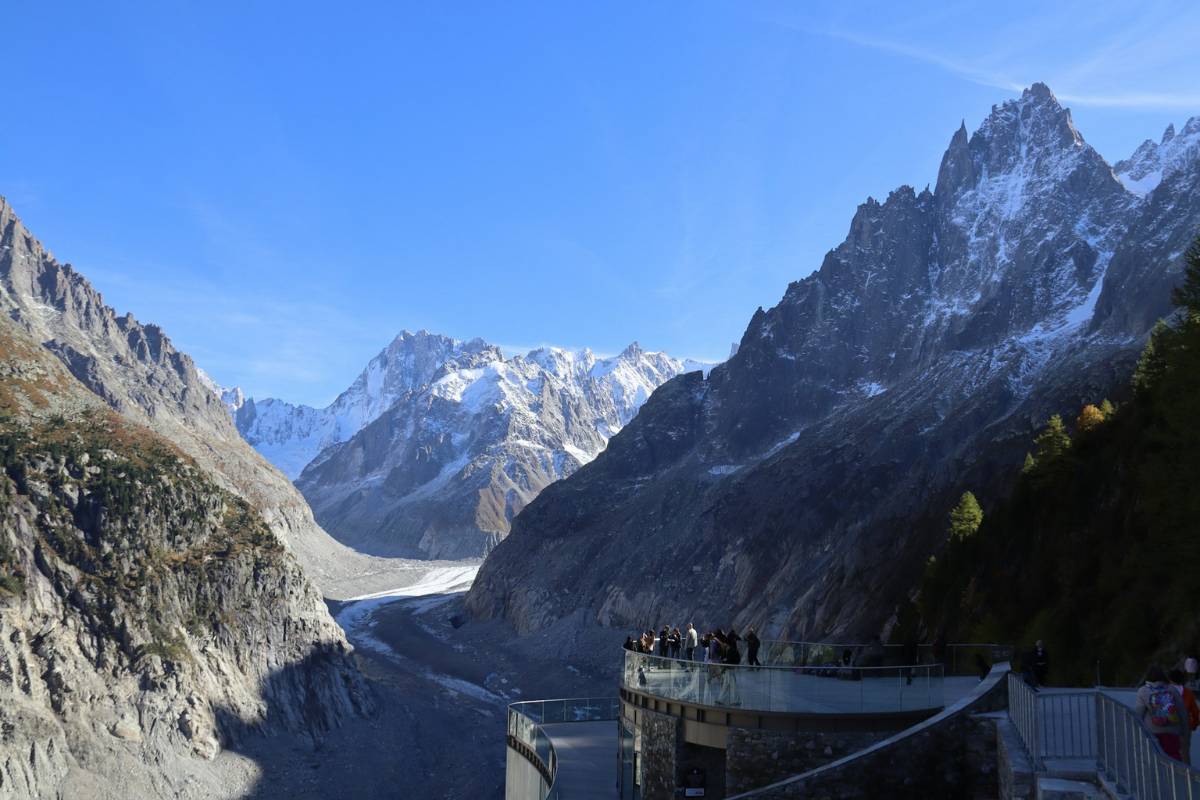 The Alps form the eastern border of France from Lake Geneva to the Mediterranean, and the French side of them — the Haute-Savoie, the Isère, the Hautes-Alpes — is among the finest mountain country in Europe.
Chamonix sits at the foot of Mont Blanc — at 4,808 metres the highest peak in the Alps and in western Europe — and has been drawing alpinists, scientists, and later tourists since the 18th century. The Aiguille du Midi cable car ascends to 3,842 metres in about 20 minutes, depositing you in a world of snow and rock and silence with the entire Mont Blanc massif at eye level. The Mer de Glace — the largest glacier in France — is accessible by a rack railway from the town and is worth visiting now, before the glacier continues the retreat that has taken it 150 metres down the valley in the past century.
In summer, the hiking is extraordinary: the Tour du Mont Blanc, a multi-day circuit around the massif crossing into Italy and Switzerland, is one of the great long-distance walks in Europe. Lac Blanc, a high alpine lake reflecting the Mont Blanc chain, is a day hike from Chamonix that people describe for the rest of their lives.
In winter, the skiing is among the best in the Alps — challenging, high-altitude, with a vertical drop that puts most resorts in context.
The South
Provence
Provence is the France that launched a thousand dinner party fantasies — lavender fields, olive groves, markets overflowing with tomatoes and herbs, stone farmhouses in the hills, rosé wine at noon — and it is, to its credit, largely what it promises.
The lavender blooms in late June and July in the Valensole plateau and the Luberon hills. The light in Provence is exactly as described: clear, southern, warm on stone in a way that explains why Cézanne and Van Gogh came here and couldn't leave.
Aix-en-Provence is the most civilised city in the south — a university town with broad, plane-tree-lined boulevards, excellent markets, and a density of 17th and 18th-century architecture that makes it the most refined urban environment between Lyon and the coast. The Cézanne trail leads through the city and out to the Sainte-Victoire mountain that he painted over 80 times.
Arles has more Roman monuments per square kilometre than almost anywhere outside Rome itself: an amphitheatre from the 1st century still used for bullfighting and concerts, the remains of a Roman forum, baths, a theatre. Van Gogh spent a year here in 1888-89 and produced some of the most recognisable paintings in the world — the yellow house, the starry night over the Rhône, the café terrace. The Foundation Van Gogh Arles has a serious contemporary art programme anchored in his legacy.
Avignon is the city of the Popes — between 1309 and 1377, the papacy relocated here from Rome, and the Palais des Papes that remains is the largest Gothic palace in the world. The famous Pont d'Avignon, the 12th-century bridge that extends into the Rhône and stops before the opposite bank, is simultaneously one of the most anti-climactic monuments in France (it goes nowhere) and one of the most oddly beautiful.
The Luberon villages — Gordes, Roussillon, Lacoste, Ménerbes — are the Provence of postcards, and they are as beautiful as the postcards suggest, and crowded in summer. Go in May or October.
The Pont du Gard, 25 kilometres from Avignon, is a Roman aqueduct of three tiers of arches crossing the Gardon River that remains, 2,100 years after its construction, one of the most impressive engineering achievements visible anywhere in Europe. It carried water 50 kilometres from a spring to Nîmes. The scale is incomprehensible until you're standing beside it.
The French Riviera
The Côte d'Azur runs from the Italian border to Saint-Tropez, and its reputation for glamour is accurate and slightly beside the point — the light, the water, the proximity of Alps to Mediterranean, the density of remarkable small places within an hour of each other are the actual arguments.
Nice is the capital and the best base: a proper city of 340,000 with a genuine old town, a serious museum district (the Musée Matisse and the Musée National Marc Chagall are both world-class), the Promenade des Anglais along the seafront, and a market culture — the Cours Saleya flower and food market — that operates daily except Monday.
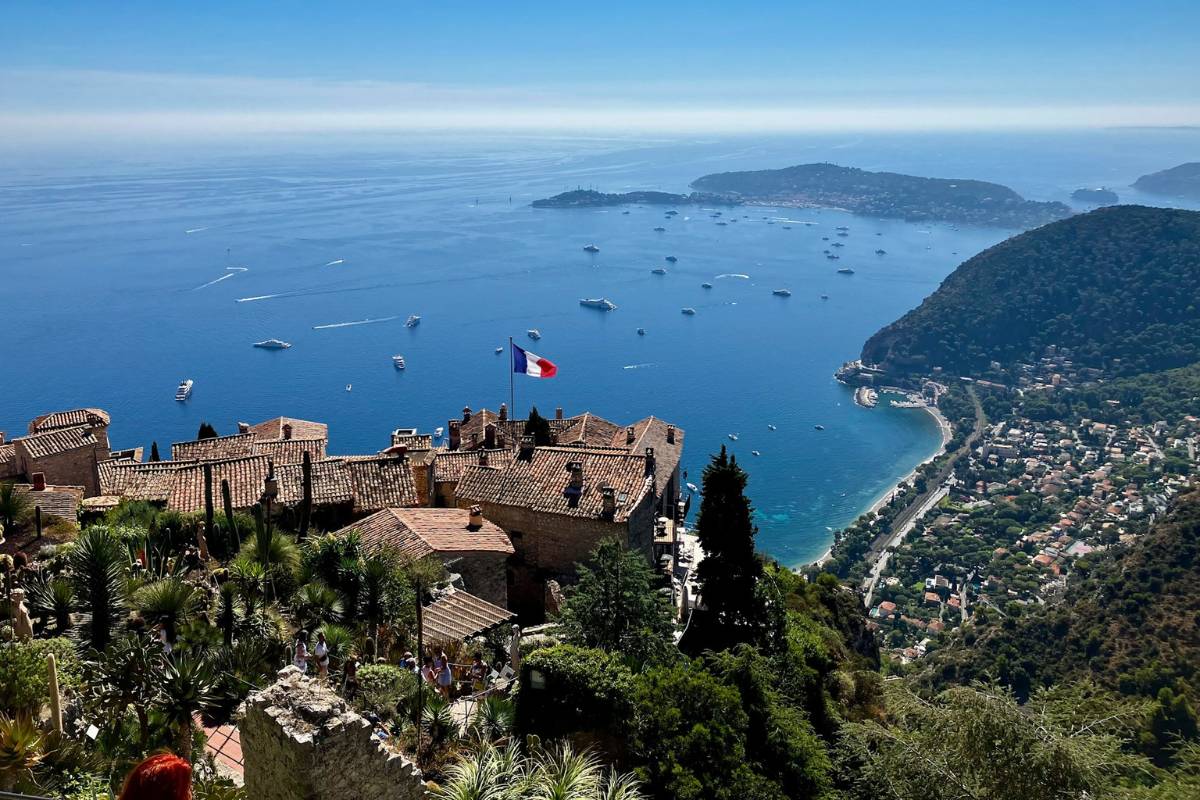
Èze, perched on a rock 427 metres above the sea, is the most dramatically situated village in France. The cactus garden at the summit has a view along the coast that on clear days extends to Corsica. Antibes has the Musée Picasso in the castle above the old port — Picasso worked in the castle for several months in 1946 and left the paintings behind as a gift to the town. Menton, at the Italian border, is warmer and quieter than the rest of the Riviera, with the most extraordinary lemon festival in February and gardens that the Riviera's microclimate fills with plants that have no business surviving in France.
 The inland Riviera — the arrière-pays — is the part that most visitors miss entirely. The hilltop villages of Saint-Paul-de-Vence and Vence are serious artistic destinations: the Fondation Maeght in Saint-Paul has one of the finest private collections of 20th-century art in Europe, and the Chapelle du Rosaire in Vence was designed entirely by Matisse when he was in his 80s and is one of the most moving spaces in French art.
Bordeaux and the Southwest
Bordeaux spent much of the 20th century as a handsome but slightly provincial port city living off its wine reputation. A major urban renovation project from the early 2000s transformed it into one of the most architecturally coherent and liveable cities in France.
The waterfront — the Quai des Chartrons and the Quai Louis XVIII — has been pedestrianised and the old wine merchant warehouses converted into restaurants, galleries, and wine bars. The Miroir d'Eau, a reflective pool on the Place de la Bourse that fills with a thin film of water and reflects the 18th-century exchange building above it, is one of the most photographed urban spaces in France and, on a still morning, entirely justified.
Saint-Émilion, 40 kilometres east of Bordeaux, is a medieval walled town built on top of its own wine caves — literally, the limestone beneath the town is hollowed out into cellars that date back to the 8th century. The monolithic church, carved entirely into the rock, is unlike any other church in France. The wine is world-famous and available in the cellars for considerably less than it costs in restaurants.
The Dordogne valley east of Bordeaux is the France that people mean when they talk about French countryside: medieval castles above the river, prehistoric cave paintings at Lascaux (the originals closed to protect them; the replica cave is extraordinary), walnut orchards and foie gras farms, markets that have been operating in the same squares for centuries.
Brittany
Brittany is the France that surprises visitors who arrive expecting Provence.
The northwest peninsula is Celtic in heritage — the Breton language is related to Welsh and Cornish, not French — and Atlantic in character: granite coastlines, grey skies that clear suddenly and brilliantly, fishing villages, oyster beds, crêperies, and a seafood tradition that is among the finest in Europe. The mussels, oysters, scallops, and lobster of Brittany are to French coastal cooking what Puglia's seafood is to Italian.
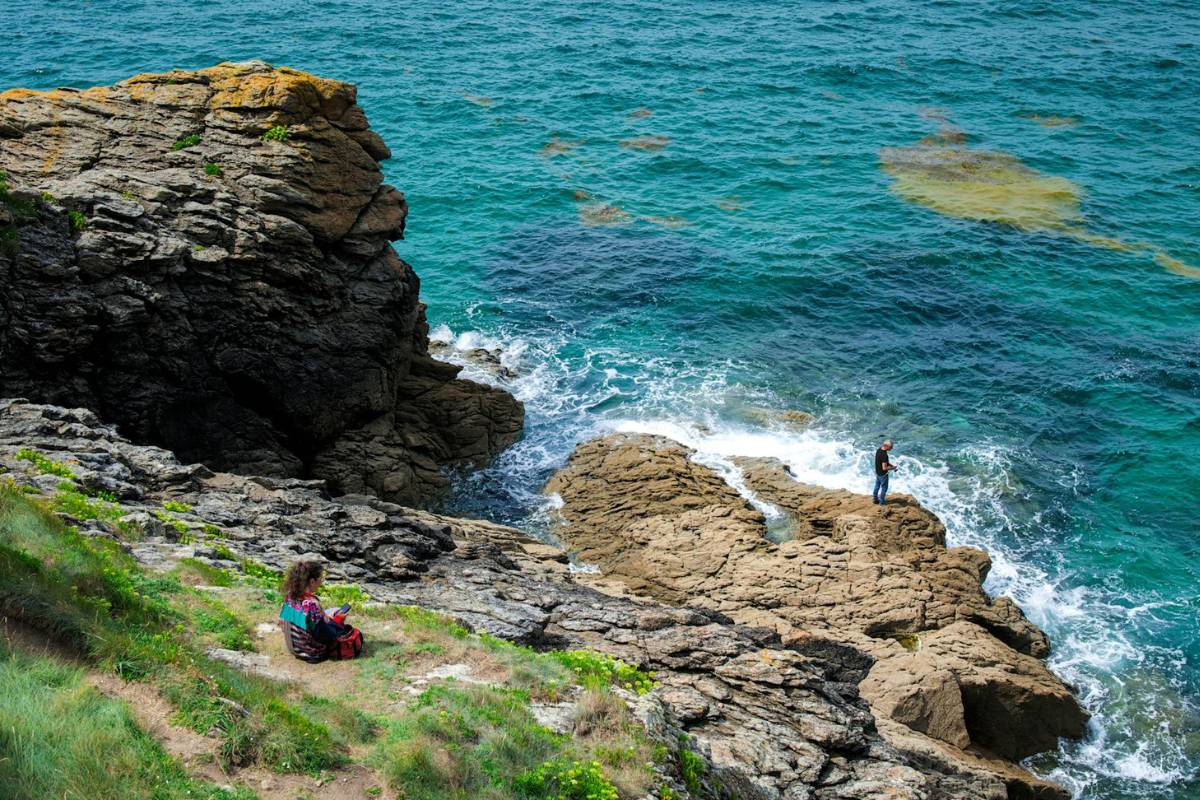 Saint-Malo is the most satisfying town in Brittany — a walled port city that was almost entirely destroyed in 1944 and rebuilt stone by stone in its original form, with the result that the ramparts and the old town feel entirely authentic even though they are largely 1950s reconstructions. The walk along the ramparts above the sea, particularly at high tide when the Atlantic fills the harbour, is magnificent.
Carnac has the most significant megalithic monument complex outside Stonehenge — nearly 3,000 standing stones arranged in alignments across the landscape, erected around 3,300 BC and still not entirely explained. The scale is comprehensible only from the air or from the observation tower at the edge of the site.
The Pointe du Raz at the western tip of the peninsula is the most dramatic headland in France — a granite promontory above the Atlantic where the sea breaks in every direction and the wind removes all other concerns.
When to Go
France's geography ranges from Arctic (Alsace in January) to subtropical (the Riviera in August) within a few hundred kilometres, which makes timing depend entirely on destination.
Spring (April–June) is the best general window: the lavender isn't out yet in Provence but the wildflowers are, the Loire châteaux are photographable without crowds, Normandy is green and mild, and Paris is at its most beautiful in the particular light of a May afternoon.
Summer (July–August) is high season everywhere. The Riviera and Provence are crowded and hot. The Alps are perfect for hiking. Brittany and Normandy are pleasant. Paris empties slightly as Parisians leave for the countryside — which paradoxically makes it a good time to be there.
Autumn (September–October) rivals spring as the optimal window: the harvest is underway in Bordeaux, Burgundy, Alsace, and Champagne, the Riviera is still warm enough to swim, and the crowds have thinned across the south.
Winter (November–March) is excellent in the Alps for skiing, mild on the Riviera and in Provence, and deeply atmospheric in Alsace around Christmas — Strasbourg and Colmar host two of the oldest and most beautiful Christmas markets in Europe, running from late November through December.
A Note on Getting Around
France has the best rail network in Europe for intercity travel. The TGV connects Paris to Lyon in two hours, to Bordeaux in two hours, to Marseille in three hours, to Strasbourg in two hours. For regional exploration — the Dordogne, the Luberon villages, the Alsace wine route, Brittany's peninsula — a hire car is essential.
The Eurostar from London to Paris takes two hours and 20 minutes. The train from Barcelona to Paris takes six and a half hours through the Pyrenees and is one of the finest long-distance rail journeys in Europe.
France rewards the traveller who moves slowly and eats well at every stop. The country's genius — its particular contribution to the idea of how to live — is distributed across its 18 regions in local cheeses, local wines, local cooking traditions, and local ways of spending an afternoon that differ completely from one valley to the next.
Come with time. Leave with the intention of returning.
You will return.


