Albanian Riviera Travel Guide: Europe’s Last Wild Mediterranean Coastline
April 14, 2026 · TripOnly

Why the Albanian Riviera
The Albanian Riviera runs along the Ionian coast from Vlorë south to the Greek border near Sarandë — a dramatic 150+ km stretch where the Ceraunian Mountains drop straight into some of the clearest turquoise water in Europe. It’s rugged, authentic, and still refreshingly unpolished compared to its neighbours.
This coastline has been inhabited since antiquity. Greek colonies, Roman outposts, Byzantine churches, Ottoman rule, and a long period of isolation under communism have left a layered history. Butrint, one of the most important archaeological sites in the Balkans and a UNESCO World Heritage Site, shows continuous occupation from the Bronze Age through Greek, Roman, Byzantine, and Venetian times.
What makes it special today is the combination: Caribbean-level water clarity, mountains that plunge into the sea, traditional villages with stone houses, and a cost of living (and visiting) that remains far below Croatia, Greece, or Montenegro. The beaches are mostly pebble and stone, the sea is electric blue, and in many places you can still have a quiet swim even in high summer if you know where to go.
It’s raw. It’s beautiful. And it won’t stay this way forever.
When to Go
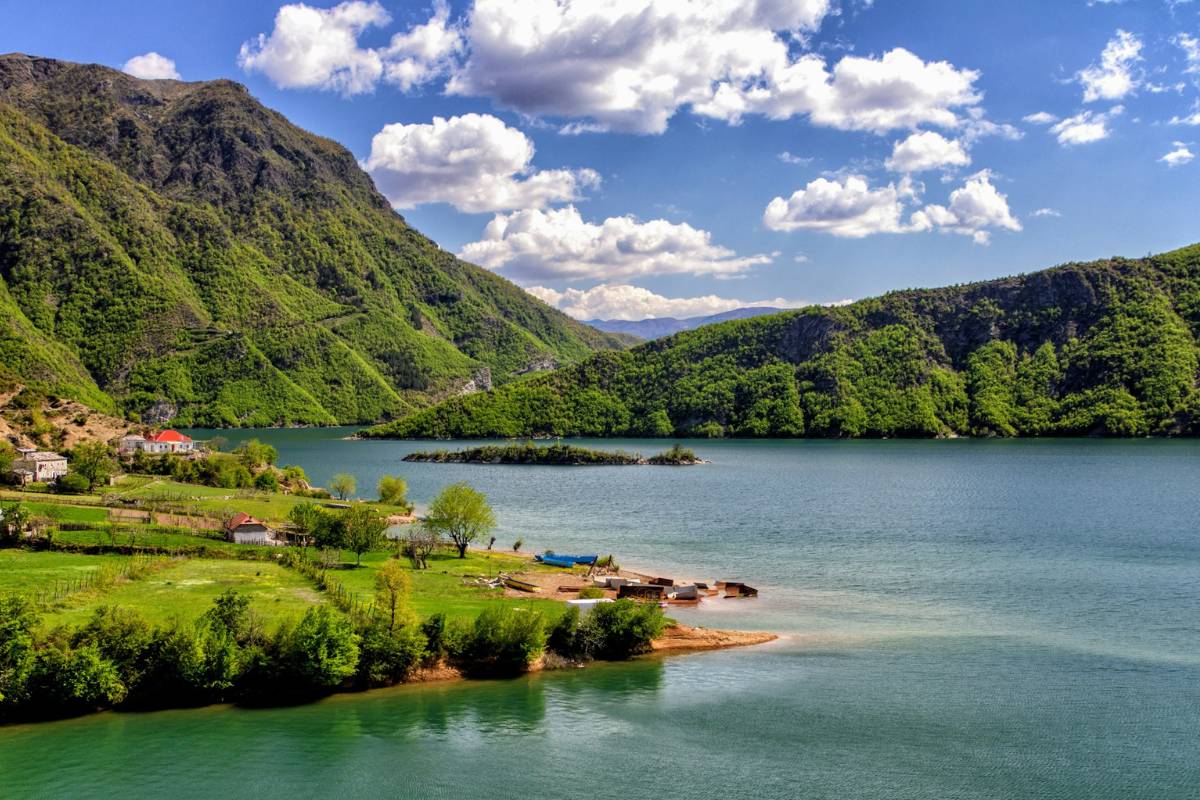
May to mid-June and September to early October are the sweet spots. Warm enough to swim (sea temperatures reach 22–24°C by June and stay high into October), but without the full summer crowds and heat. The light is gorgeous, the hills are green (or golden in autumn), and prices are noticeably lower.
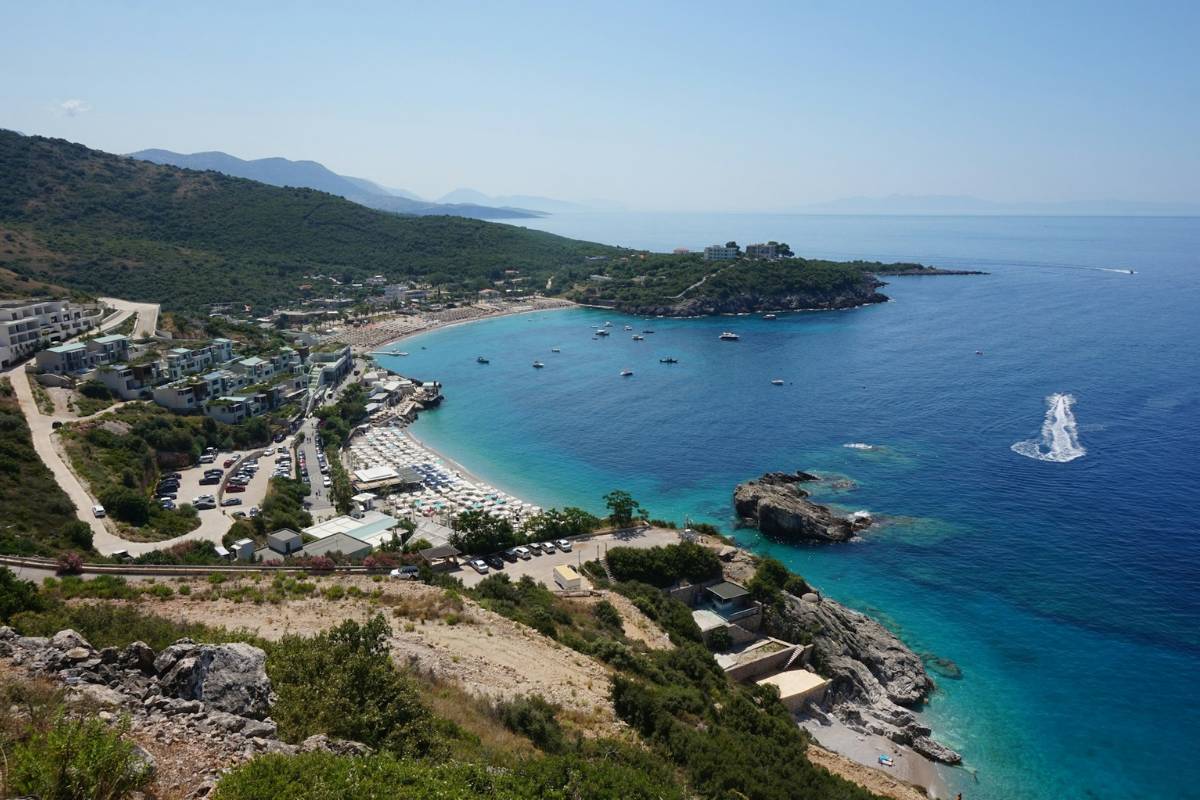
July and August are peak season. Expect hot days (28–35°C), packed beaches in Ksamil and Dhërmi, loud beach clubs, and higher prices. Still very doable if you like energy and nightlife, but book everything early.
April and late October are quieter and cheaper, but some places close and the sea can be chilly for swimming.
Winter is almost deserted — dramatic, stormy, and perfect if you want the place to yourself.
Getting There
No major airport directly on the Riviera, which helps keep it sane.
By air: Fly into Tirana (TIA), then bus, minibus (furgon), or private transfer south (3.5–5 hours depending on exact destination). Sarandë has a small airport with seasonal flights.
By ferry: The nicest way — from Corfu (Greece) to Sarandë. Daily ferries, 30–70 minutes. One of the most scenic short sea crossings in the Mediterranean.
Overland: From Greece via the border at Kakavia or from North Macedonia. The drive from Tirana along the coast via Llogara Pass is spectacular — one of the best road trips in the Balkans.
Getting Around
Renting a car gives you maximum freedom — the coastal road (SH8) is dramatic and rewarding, though winding and narrow in places. Scooters are popular in the main towns.
Public transport (furgons) runs regularly between Sarandë, Ksamil, Himarë, Dhërmi, etc., but schedules are loose. Taxis are cheap and easy to find. Boat taxis and day-trip boats are excellent for reaching hidden beaches and caves.
The Highlights
Ksamil
The postcard star of the Riviera. Small islands just offshore, white sand mixed with pebbles, and water so clear you can see your toes from chest height. It gets very busy in summer and has a party vibe, but for good reason. Swim out to the islands or take a boat. Sunset here is ridiculous.
Himarë
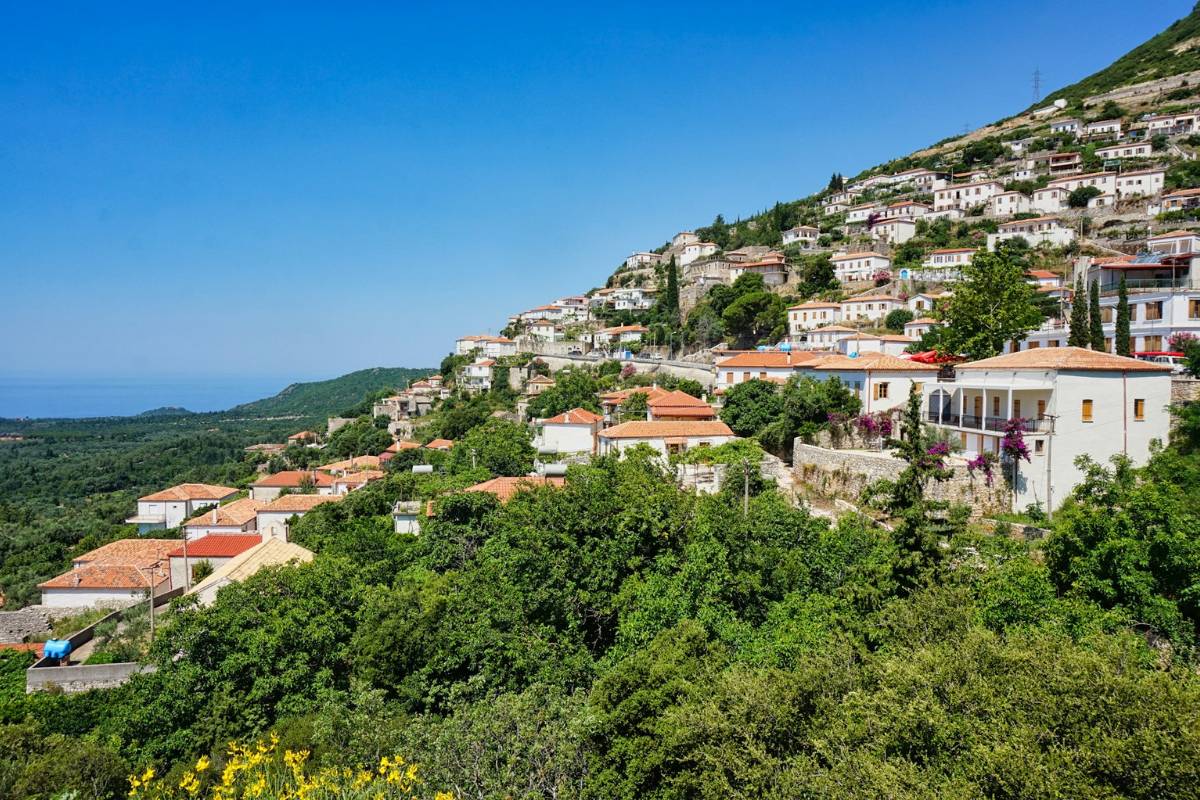
My personal favourite base. More authentic and relaxed than Ksamil. A hilltop old town with a castle, beautiful beaches below (Livadhi, Potami), and good restaurants. Feels like a real town rather than purely a resort.
Dhërmi & Drymades
Dhërmi has a long beach with beach clubs and a dramatic mountain backdrop. Drymades (just south) is quieter and more dramatic. The hike or drive down to Gjipe Beach (a deep canyon opening onto the sea) is worth it.
Sarandë
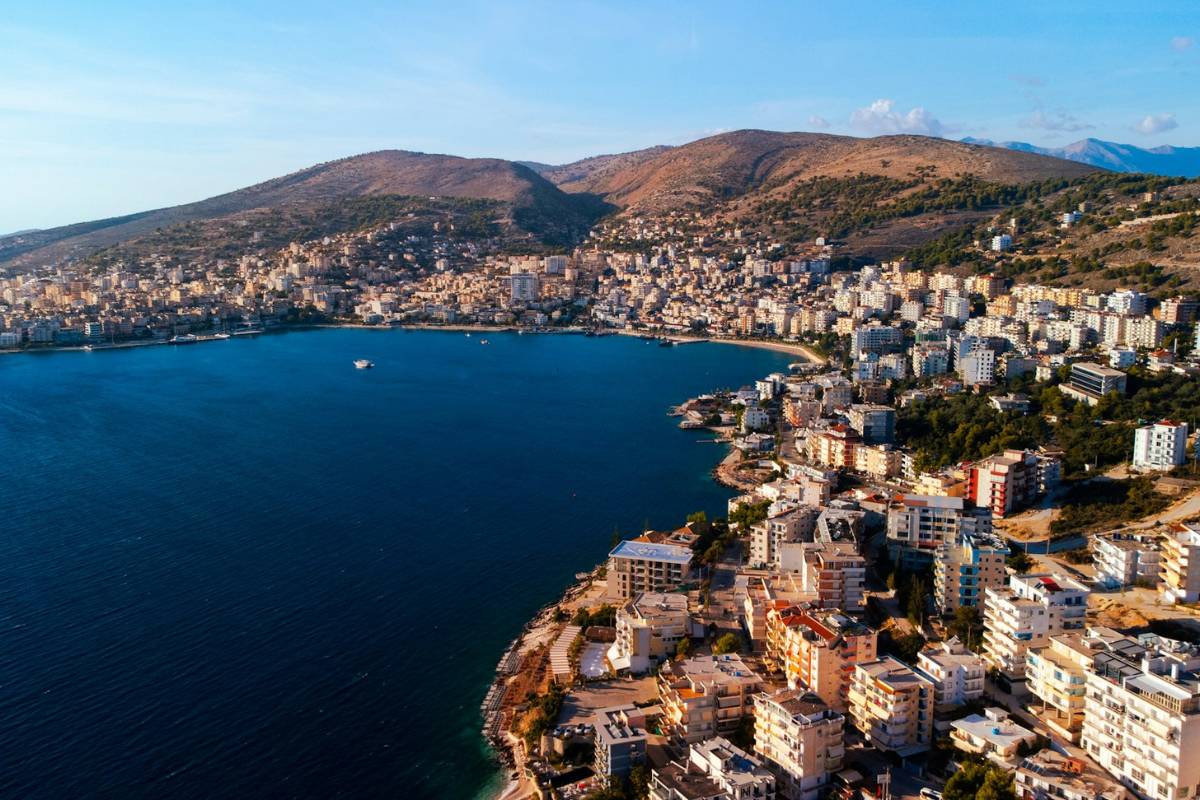
The biggest town and main transport hub. Good for a night or two — waterfront promenade, ferries to Corfu, restaurants, and easy access to Butrint and the Blue Eye. Less charming than the smaller villages but very convenient.
Butrint
UNESCO site and absolute must-visit. An ancient city with layers of Greek theatre, Roman baths, Byzantine basilica, and Venetian fortress, all set in a beautiful natural park beside a lagoon. Feels like a smaller, less crowded version of Ephesus or Delphi.
The Blue Eye (Syri i Kaltër)
A powerful natural spring with impossibly blue water. You can swim in the pool above it. Magical, especially early morning before the tour buses arrive.
Llogara Pass & Beaches further north
Dramatic mountain pass with views, fresh air, and access to quieter beaches like Palasë.
Food and Drink
Albanian Riviera food is simple, fresh, and excellent.
- Seafood — Grilled fish, octopus, calamari, and mussels. Order by the kilo at seaside tavernas.
- Byrek and qofte for quick bites.
- Tavë Kosi (lamb baked with yogurt) and grilled meats.
- Fresh Greek-style salads, olives, and homemade bread.
- Local wine and raki — try the stuff from mountain villages.
Portions are generous and prices are still very kind to the wallet. A fantastic seafood meal with wine and dessert for two can easily be under €30–40 in many places.
Practical Notes
Currency: Albanian Lek (ALL). Cards are accepted in bigger places, but cash is king in smaller villages and beach bars.
Language: Albanian (very hard), but English and Italian are widely spoken along the coast, especially by younger people.
Safety: One of the safest countries in Europe for tourists. Just use normal street smarts.
Internet: Decent 4G almost everywhere. eSIMs or local SIM easy to buy.
Sustainability note: Some areas are struggling with plastic waste and construction. Bring a reusable water bottle and support local businesses that seem to care.
Where to Stay
- Ksamil — Beachfront guesthouses or apartments with island views.
- Himarë — Best balance of atmosphere and authenticity. Many nice family-run places with sea views.
- Dhërmi — More boutique and party-oriented options.
- Sarandë — Modern hotels and apartments if you want convenience.
Book ahead for June–September. Many places are small guesthouses run by families — the hospitality is genuine.
How Long to Stay
Minimum 4–5 nights. A week is perfect. You can base yourself in one or two places (e.g., Himarë + Sarandë/Ksamil) and do day trips. The pace here is slow — long lunches, afternoon swims, evening promenades. Let it be.
Final Thoughts
The Albanian Riviera still feels like a discovery. The water really is that colour. The fish is pulled out of the sea that morning. The mountains really do drop into the bay like that. And you can still have an incredible holiday here for a fraction of what you’d pay 100 km away in Greece or Croatia.
It’s changing fast — new hotels are going up, more flights are coming, and the secret is definitely out. But for now, it remains one of the last stretches of the Mediterranean where you can experience raw beauty without the full tourist machine in full swing.
Come swim in water so clear it almost doesn’t feel real. Eat octopus grilled over wood fire while the sun sets behind the mountains. Wake up to the sound of the Ionian Sea.
This is the real deal. For now.
Sit at a beach taverna in Himarë or Ksamil as the light turns golden. Order the fresh fish. Drink the cold local beer or wine. Watch the mountains turn purple.
You’ll understand why people keep extending their stay.


