Turkey's Hidden Destinations: Nine Places the Crowds Haven't Reached Yet
April 10, 2026 · TripOnly

On the Places That Stay at the Edge of the Map
The best way to understand a country is to find out where its own people go on weekends. In Turkey, that question will take you to Bodrum, Antalya, Cappadocia — all beautiful, all deserved. But ask the right people and the answers open up a different geography entirely: a city buried under the Euphrates, a lake studied by NASA for its resemblance to Mars, a valley that could pass for Cappadocia that almost nobody knows, and a small Aegean resort town that built its entire architectural identity around one man's house.
This is that other Turkey.
Akyaka, Muğla — The Town That Invented Its Own Architecture
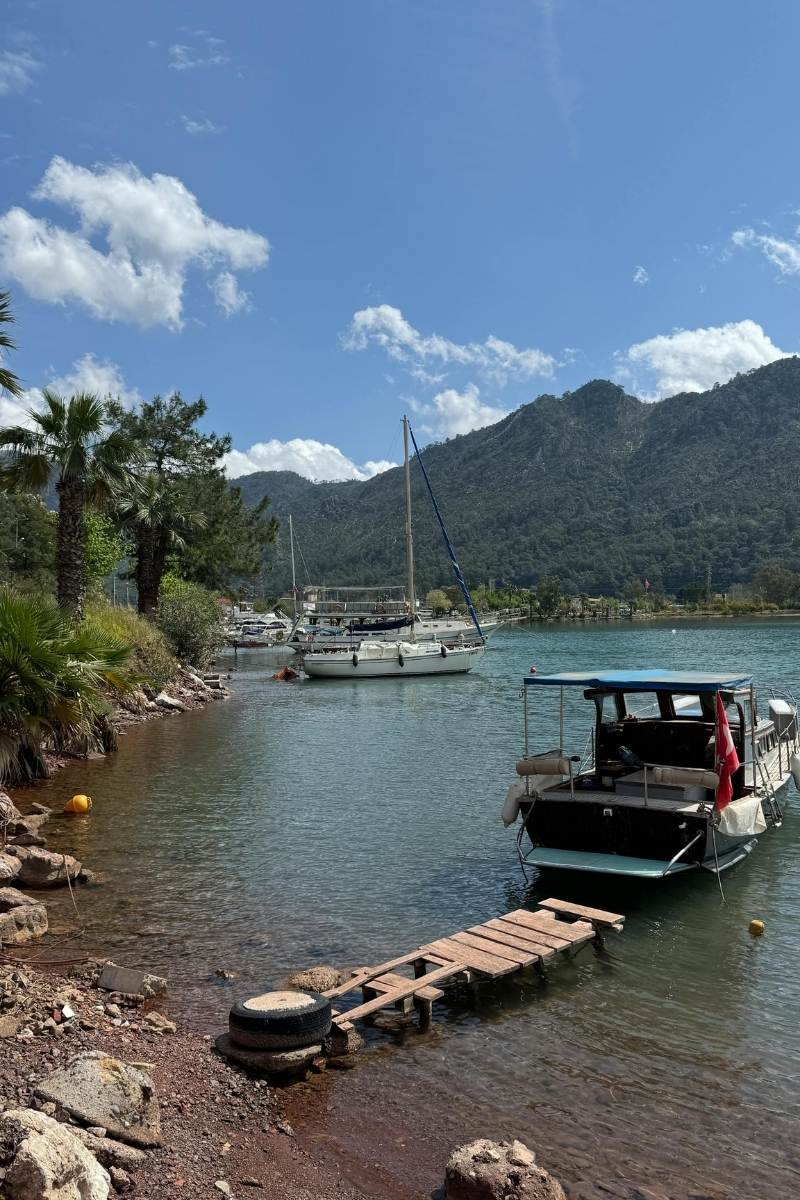
At the eastern tip of the Gulf of Gökova, 30 kilometres from Muğla, sits a small resort town called Akyaka. You turn off the main Marmaris road down a small lane — and find yourself somewhere that feels entirely different from the coast you just left.
Akyaka's identity begins with a single building. In 1971, a journalist and self-taught builder named Nail Çakırhan designed his own home here using the traditional vernacular of the Ula region — local timber joinery, two-storey wooden facades draped in bougainvillea, the characteristic Muğla chimney pots. He had no formal architectural training. The house won the Aga Khan Architecture Award in 1983, one of the world's most prestigious prizes in the field. And it was so admired that, gradually, every building constructed in Akyaka began to follow the same language. Since 1983, the town has maintained a consistent architectural style — Çakırhan's house is now open as an arts centre.
This is not Ottoman aesthetics. It is something more specifically local: the building tradition of southwestern Anatolia adapted for contemporary life. Before Çakırhan, of course, the land had its own history. The ancient city of Idyma — reachable on foot from the town centre — dates to the 4th century BC, with a formidable citadel, an ancient theatre, and rock-cut tombs carved into the hillside above Gökova Bay.
The town's real heart, though, is the Azmak River. Two kilometres long, crystalline, with a subaquatic plant world that looks from above like a tropical forest. You eat at the fish restaurants along its banks, hire a rowing boat, watch ducks drift past. Otters have been spotted in the reeds. Slow living here is not a marketing concept — it's simply how the place is built.
Lake Salda, Burdur — Swimming on the Edge of Mars
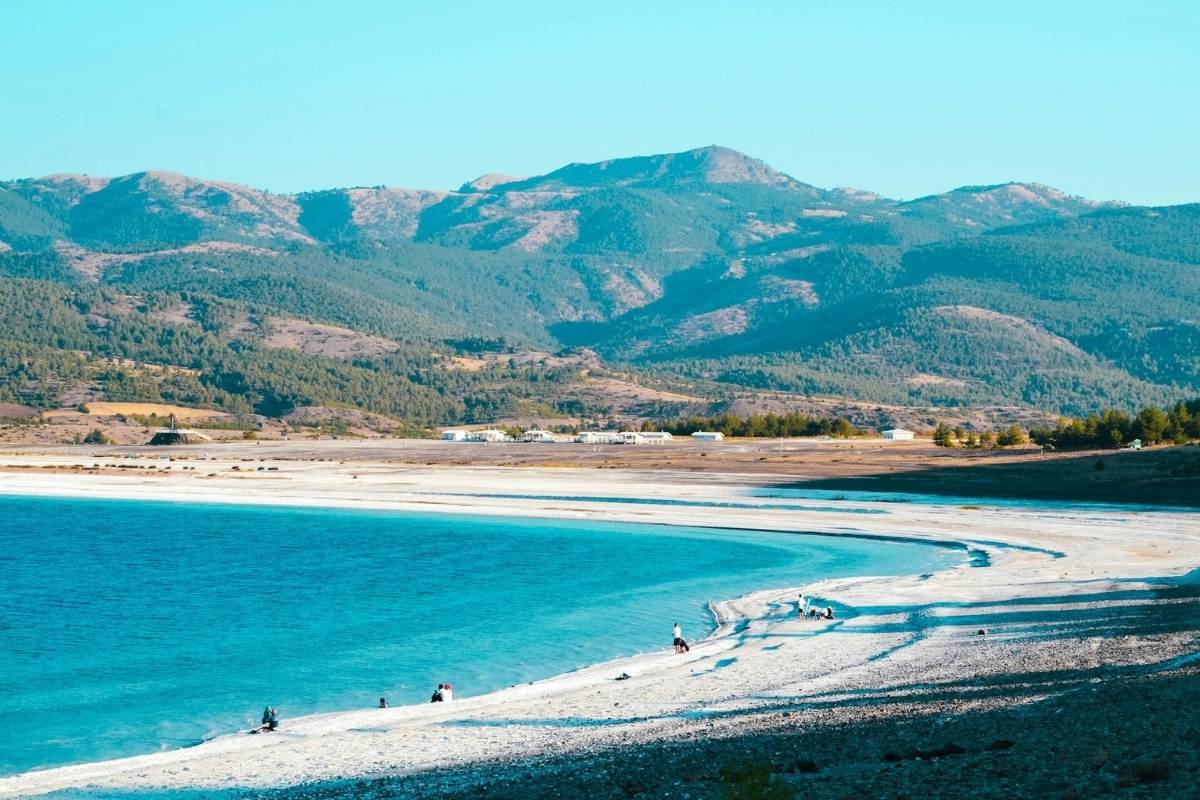
Turkey's "Maldives" — a nickname Salda has inherited and slightly outgrown, because the reality is far stranger and more interesting than any tropical comparison. In 2019, a team of planetary scientists studying the lake's shoreline sediments found that its mineralogy closely resembles the Jezero Crater on Mars, where NASA's Perseverance rover landed in 2021. Lake Salda is one of the only places on Earth where ancient stromatolite algae — the microbes that once dominated life on this planet — still form and grow. Scientists study it as a window into what early Mars might have looked like.
This scientific backstory only adds texture to a place that is immediately, viscerally beautiful. The water turns a vivid turquoise owing to the lake's high alkalinity and mineral content. The "beaches" are not sand — they are deposits of hydromagnesite, a magnesium carbonate mineral that forms a fine, powder-white crust along the shoreline. Walking on it feels unlike any shore you've stood on.
The lake covers 4,370 hectares and reaches a depth of 196 metres, making it one of the deepest inland bodies of water in Turkey. It sits at roughly 1,190 metres above sea level, surrounded by black pine forests, with the bulk of the shoreline accessible by trails through the trees.
A practical note: since 2019, Lake Salda and approximately 295 square kilometres around it have been designated a Special Environmental Protection Area. Mud bathing is prohibited. Some sections of shoreline have restricted access. The rules exist for good reason — the microbialite formations are ancient and irreplaceable. Leave nothing behind.
Halfeti, Şanlıurfa — The City Under the Water
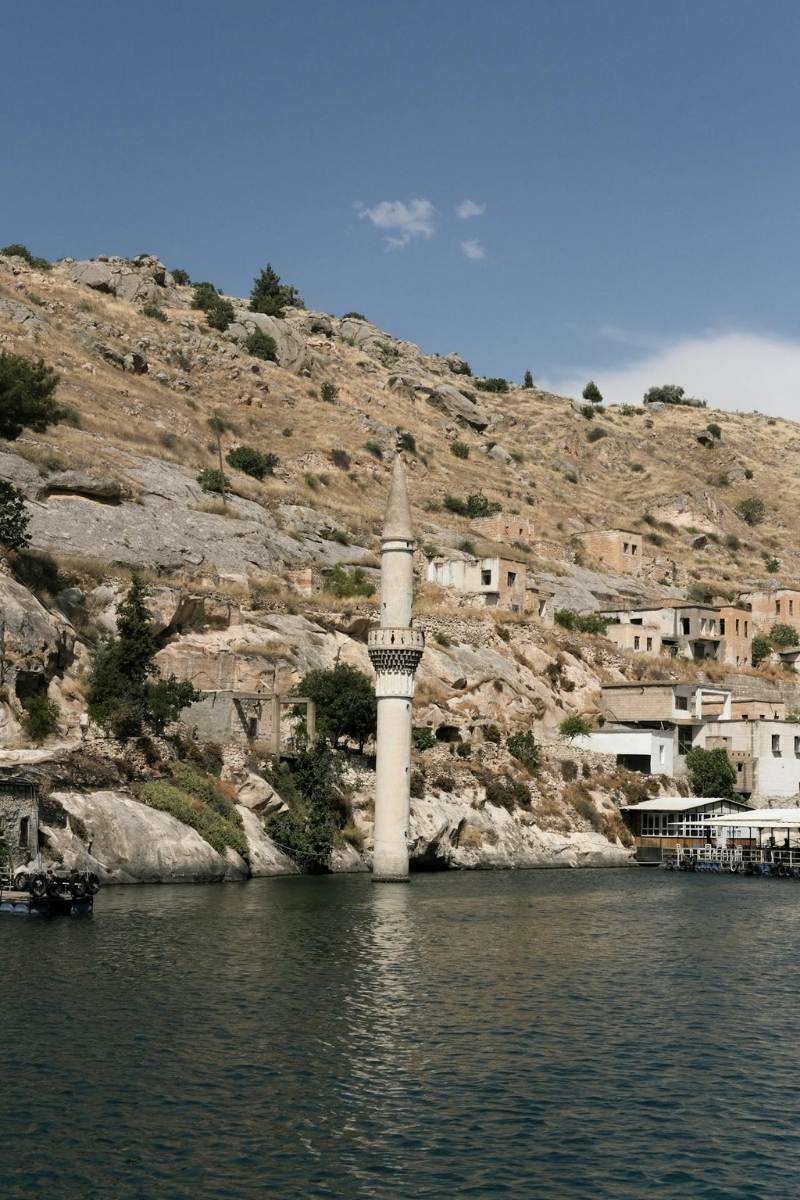
In 2000, the construction of the Birecik Dam on the Euphrates raised the water level and submerged most of Savaşan Village — its houses, its trees, its mosque — beneath the expanded reservoir. The residents relocated to a new settlement 17 kilometres away. What remained became something singular: a drowned city that you visit by boat.
The image Halfeti is famous for is the minaret of Savaşan Mosque rising directly from the water — the upper section of the building still visible above the surface, the rest somewhere below. You've probably seen the photograph. What the photograph doesn't convey is what it feels like when the boat slows alongside it: the particular weight of absence, the sense of a life that continued here until very recently and then simply stopped.
The standard boat tour runs for about 90 minutes, following a route from Kral Kızı Cave through Rumkale — an ancient fortress clinging to the cliffs at the confluence of the Euphrates and the Merziman Stream — then past the submerged quarter of Savaşan and back. Along the way you pass submerged houses, agricultural terraces, and a primary school that now sits on the riverbed. Go in the afternoon; the light at sunset is extraordinary on the water.
Halfeti has one more distinction that belongs entirely to it: the black rose. Known locally as karagül, this variety blooms deep crimson as a bud and darkens to a near-black velvet as it opens — a colour it draws, reportedly, from the specific pH of the soil fed by the Euphrates. It grows nowhere else in the world. The best window to see it in bloom is April and May.
Halfeti has been part of the Cittaslow (Slow City) movement since 2013 — the first in southeastern Turkey. That designation feels accurate. Sit in a tea garden by the water for long enough and the city's particular rhythm becomes clear: unhurried, shaped by the river, living with a history it can't quite shake.
Amasra, Bartın — Two Harbours, Three Thousand Years
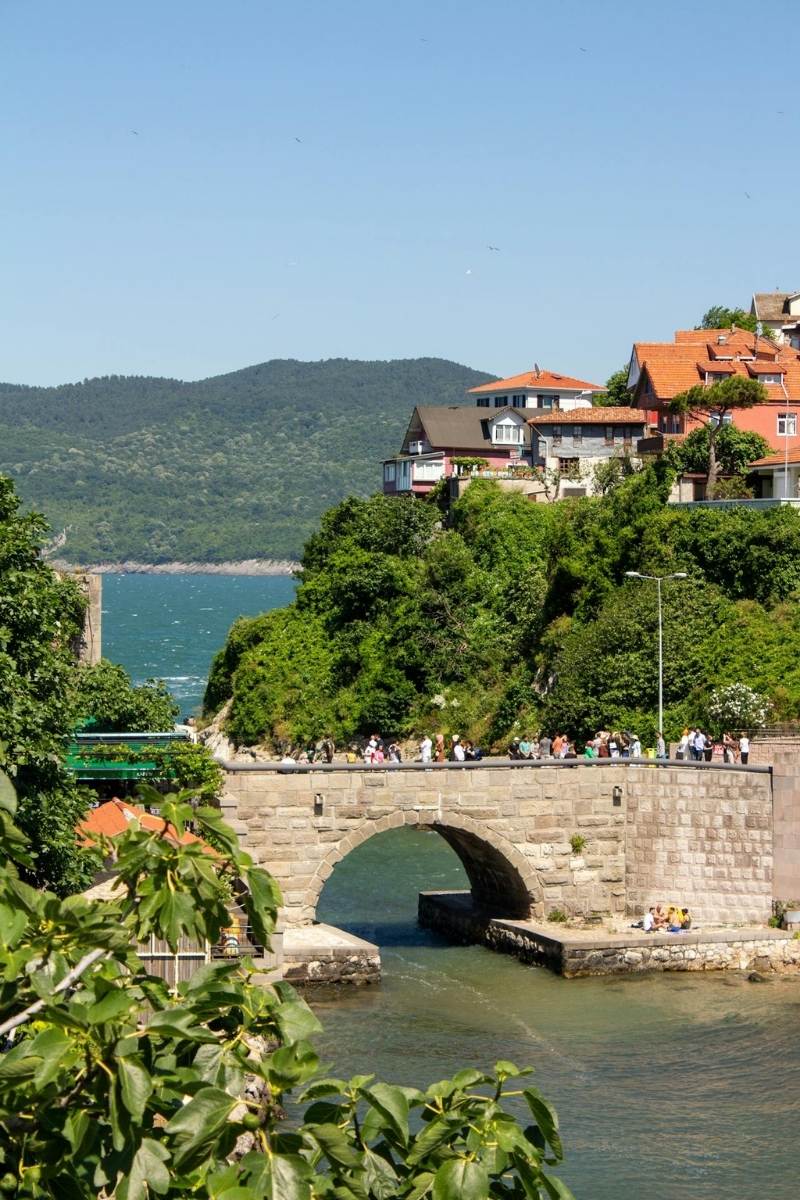
The history of Amasra stretches back to at least the 12th century BC, passing through Hittite, Phrygian, Cimmerian, Lydian, Persian, Pontic, Roman, Byzantine, Genoese, and Ottoman hands in sequence. That list reads like an overstatement until you walk the town: the castle walls built in the Roman period and repaired in Byzantine, Genoese, and Ottoman times; the 9th-century Byzantine church that Fatih Sultan Mehmet converted to a mosque in 1460 after his conquest; the Roman bridge still carrying traffic on the road to the island.
Amasra occupies a peninsula created by the joining of four small islands to the mainland — two natural harbours, Büyükliman to the east and Küçükliman to the west, with the castle rising between them. The fortress has 65-to-200-metre walls and eight towers. The town declared Turkey's first tourism resort in 1942, a title it wears without much fuss.
It's not as famous as Trabzon or Rize. That's the point. The narrow streets are walkable without crowds, the fish restaurants along the harbour don't require hours of waiting, and the castle at dawn — before anyone else arrives — gives you the Black Sea spread out below in every direction. The Karadeniz at Amasra is cold and dark green and entirely itself.
Sille, Konya — Cappadocia's Unknown Sibling
Eight kilometres northwest of central Konya, up a valley between two mountains, lies a village that most visitors to the city never find. Sille has been continuously inhabited for roughly 5,000 years. It looks like Cappadocia in places — rock-cut churches and cave shelters carved into the cliffs above the valley floor — but it receives a fraction of the visitors.
The centrepiece is Aya Elena Church, built in AD 327 by order of Helena, mother of Byzantine Emperor Constantine, during her pilgrimage to Jerusalem. She stopped in Konya, saw the early Christian cave sanctuaries already cut into the rock here, and commissioned a proper church. That church still stands — now a museum, free to visit except Mondays — with its dome frescoes of Christ Pantocrator and the Four Evangelists largely intact. Istanbul craftsmen were brought in to build the carved wooden iconostasis; it remains in place.
The population of Sille was historically mixed — Turks and Greek Orthodox residents living alongside each other for centuries, with the village reaching 18,000 people in the 19th century. The 1923 population exchange between Greece and Turkey sent Sille's Greek community to Greece and brought Turkish Muslims from Western Thrace. The physical trace of that layered history is everywhere: restored Greek houses now serve as cafés and artisan workshops along the stream that runs through the centre. Potters, carpet weavers, a working candlemaker who has kept his workshop running since 1977.
The Ak Manastır (White Monastery) carved into the cliffs above the village is among the oldest and most atmospheric spots in the area — rock-cut, built in the same technique as the Cappadocian churches, and connected by historical record both to a member of the Komnenos dynasty and, separately, to Mevlana Rumi, who is said to have retreated here. Muslim and Christian history sharing the same stone.
Ani Ruins, Kars — The Ghost Capital
At the Turkish-Armenian border, along the cliffs above the Arpaçay River valley, the wind is the only consistent sound. This is Ani — a city that once competed with Constantinople and Baghdad for population, wealth, and architectural ambition, referred to in medieval sources as the City of 1,001 Churches.
Between 961 and 1045, Ani served as the capital of the Bagratuni Armenian Kingdom. The city sat on the Silk Road — caravans from China crossing into Anatolia by way of the Arpaçay Bridge. That bridge still stands. At its peak, Ani had a population of somewhere between 100,000 and 200,000. It had palaces, caravanserais, a sophisticated water system, and religious buildings representing Armenian, Georgian, and early Islamic architecture. The Cathedral of Ani was designed by the Armenian architect Trdat — who later, in the Byzantine period, was called to Constantinople to repair the dome of the Hagia Sophia. That single fact locates Ani in the centre of medieval world history.
What the Seljuk conquest of 1064, subsequent earthquakes, the Black Death, and Timur's invasion could not achieve entirely, the shifting of Silk Road trade routes eventually did: by the 16th century, Ani was abandoned. Today archaeologists have excavated 50 churches, 33 cave chapels, and 20 chapels from the site, along with mosques, a Seljuk caravanserai, and the remains of the Zoroastrian fire temple. A UNESCO World Heritage Site since 2016, the ruins spread across a wide plateau and require a minimum of three to four hours to explore properly.
Practical note: the site sits at the zero point of the Turkish-Armenian border. Your phone will frequently connect to Armenian networks. Set it to manual network selection before you go, or expect a roaming bill.
Four More Worth Knowing
Bozcaada, Çanakkale
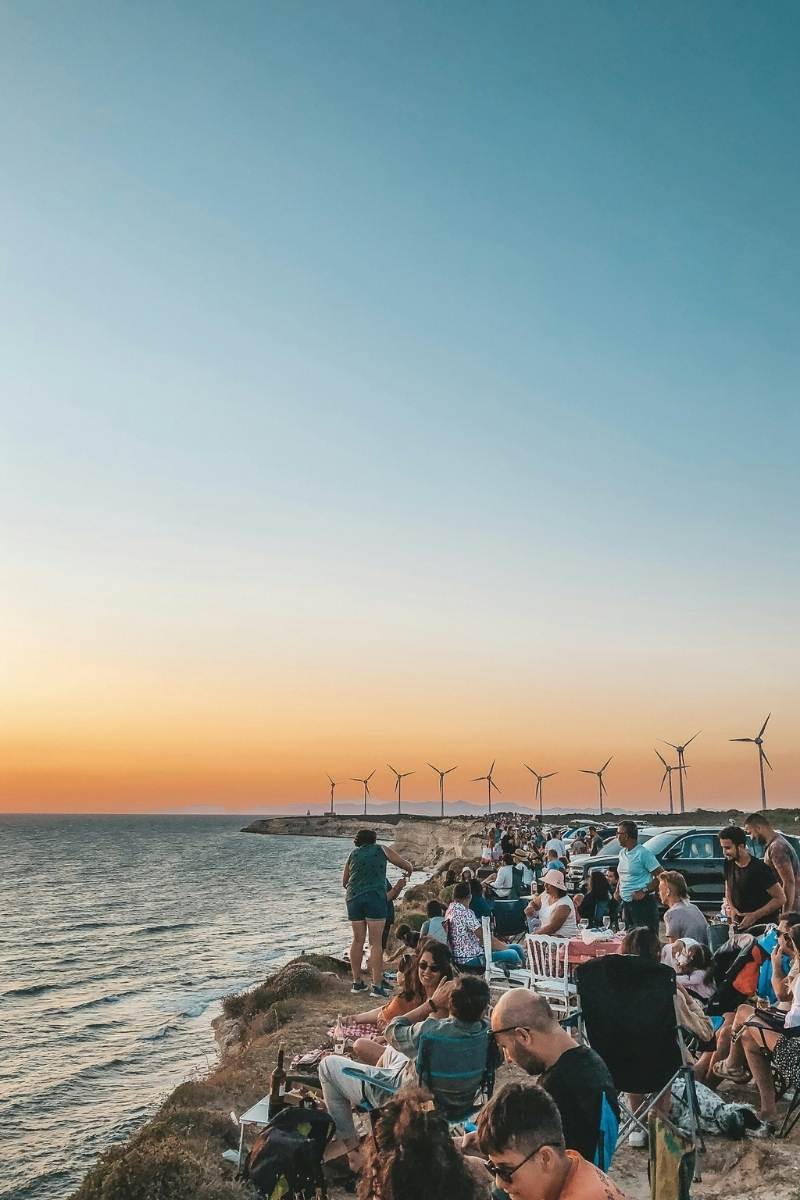
A small Aegean island with vineyards, windmills, and beaches that remain relatively uncrowded even at the height of summer. The wine harvest runs through August and September — the local winemakers are hospitable and the island's own varieties are worth the trip alone.
Datça Peninsula, Muğla
West of Marmaris, the long narrow peninsula terminates at the ancient city of Knidos — two harbours, a circular theatre, and the foundations of the Temple of Aphrodite, whose famous statue once stood here. The road from Bodrum is mountainous and long, which naturally filters the crowds. That length is a feature, not a problem.
Göynük, Bolu
Three hours from Istanbul, a district of well-preserved Ottoman wooden houses with their characteristic projecting upper storeys (cumba). If you want a quiet weekend surrounded by architectural history without the crowds of Halfeti or the distances of the east, Göynük is the quietest version of that.
Kars City Centre
If you're going to Ani — and you should — spend a night in Kars rather than rushing back. The city was planned under Russian administration in the late 19th century: unusually symmetrical for eastern Turkey, with wide boulevards and stone buildings that give it a different atmosphere from anywhere else in the region. The local kaşar cheese is among the best in the country. Orhan Pamuk set his novel Snow here. If you haven't read it, the train journey to Kars on the Doğu Ekspresi is excellent reading time.
Final Thoughts
Turkey mapped only by its tourist circuit is like reading only the first chapter of a long book. These nine places are not anti-tourist — they are for anyone willing to sit with a place long enough for it to become legible, for the layers of history to separate themselves, for the silence to stop feeling like emptiness.
When the boat slows alongside the minaret rising out of the Euphrates, or when you're standing on Ani's plateau with the wind coming off the Caucasus and the sound of the 11th century somehow present in the ruined stone around you — that is when Turkey becomes something beyond a destination.
Don't rush any of it. That's the only preparation the country requires.


