Rio de Janeiro Travel Guide: Carnival Fire, Jungle Mountains & the World's Most Dramatic City
April 7, 2026 · TripOnly

Why Rio Is Unlike Anywhere Else
There is a word Brazilians use — saudade — a longing for something you love that is absent. People who have been to Rio often feel it on the flight home. The city does something to you that is difficult to articulate and impossible to ignore: it makes ordinary life feel slightly insufficient by comparison.
This is a place where the Atlantic rainforest tumbles down granite peaks directly onto the sand, where the world's most famous statue watches over a city of seven million from a mountaintop, where Carnival transforms entire neighbourhoods into something between a religious experience and the greatest party ever thrown. Rio is loud and tender, dangerous and generous, heartbreakingly beautiful and entirely, defiantly alive.
It demands respect — for its complexity, its inequalities, and its capacity to surprise. Travelers who arrive with curiosity and leave their assumptions at the airport tend to have the time of their lives.
When to Go
December–March is summer in Rio — hot (30–40°C), humid, and the height of the social calendar. Carnival (February or early March depending on the year) is the centrepiece of the Rio calendar and one of the greatest spectacles on earth. Book accommodation six months in advance for Carnival week. Expect afternoon thunderstorms from December onwards; they pass quickly.
April–June is the sweet spot for most travellers. Temperatures cool to a pleasant 24–28°C, the crowds thin after Carnival, and the city returns to its own rhythm. The sea is still warm. Rain eases. Prices drop.
July–September is Rio's winter — mild and dry, with temperatures around 20–25°C. Cooler evenings, blue skies, and lower hotel rates. The beaches are quieter but still used; this is the high season for domestic tourism.
October–November warms up ahead of summer, with good weather and moderate crowds. A good shoulder season window.
Getting There & Around
By Air: Galeão International Airport (GIG) handles most international flights, 20 km north of the city. Santos Dumont Airport (SDU) in the city centre serves domestic routes. From Galeão, take the BRT Transcarioca to the metro, or a radio taxi booked at the official airport desk (avoid unofficial approaches).
Getting Around:
- Metro: Rio's two metro lines are clean, safe, and air-conditioned. Line 1 (orange) runs through the city centre and north; Line 4 (yellow) extends to Ipanema and Barra da Tijuca. The metro is the safest and most reliable way to move between major neighbourhoods.
- BRT (Bus Rapid Transit): Dedicated bus lanes connecting areas the metro doesn't reach. Useful but more complex for first-time visitors.
- Uber: Essential in Rio. More reliable and safer than hailing taxis on the street. Use it for any journey after dark and for areas outside the metro network.
- On foot: Copacabana and Ipanema are very walkable along the beachfront. The city centre and Santa Teresa reward slow walking. Elsewhere, pay attention to your surroundings and avoid empty streets at night.
- Cable car (bondinho): The historic yellow tram to Santa Teresa, departing from near Lapa. A charming and practical way to reach the hilltop neighbourhood.
Neighbourhoods to Know
Ipanema & Leblon — The Gold Standard
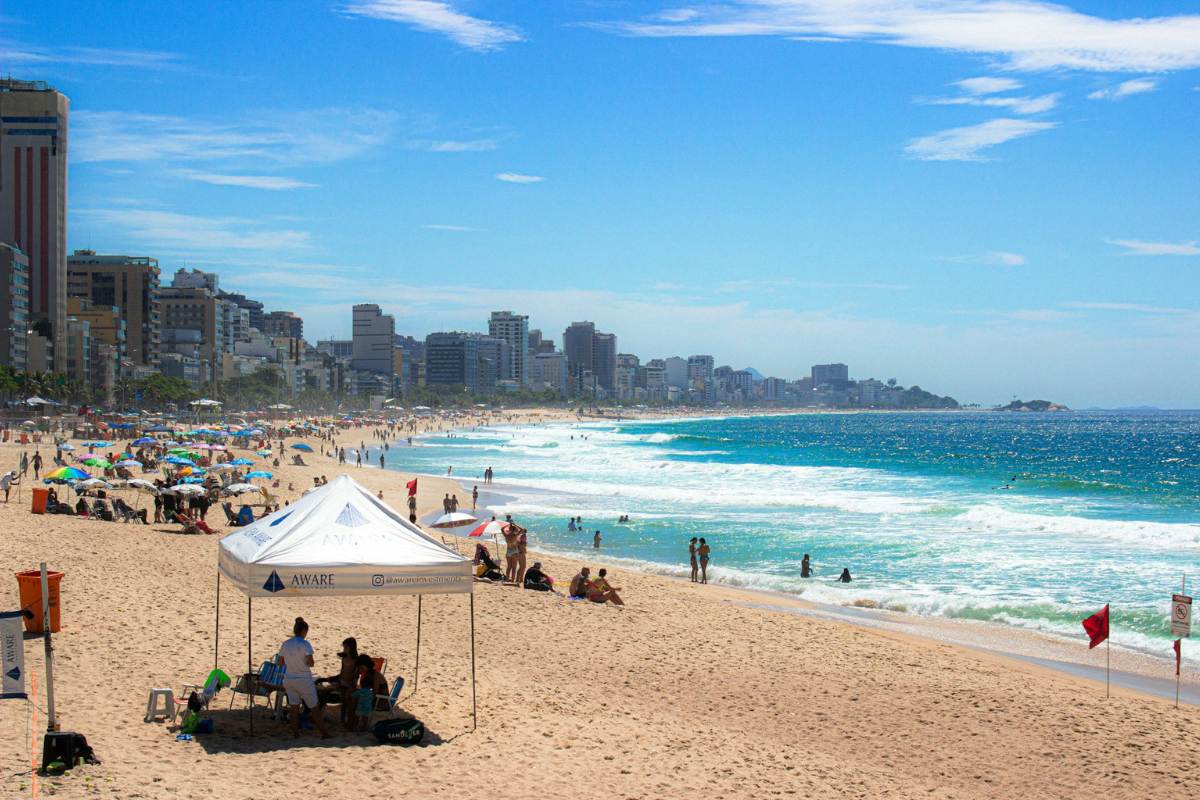
The most famous beach neighbourhood in the world, and it largely lives up to the billing. Ipanema beach is everything: beautiful bodies, caipirinha vendors, football, volleyball, surfers, and the Dois Irmãos peaks rising behind the southern end. Leblon, immediately west, is slightly wealthier and quieter. The streets behind both beaches are lined with excellent restaurants, bars, and boutiques. This is where most first-time visitors stay — for good reason.
Copacabana — The Icon
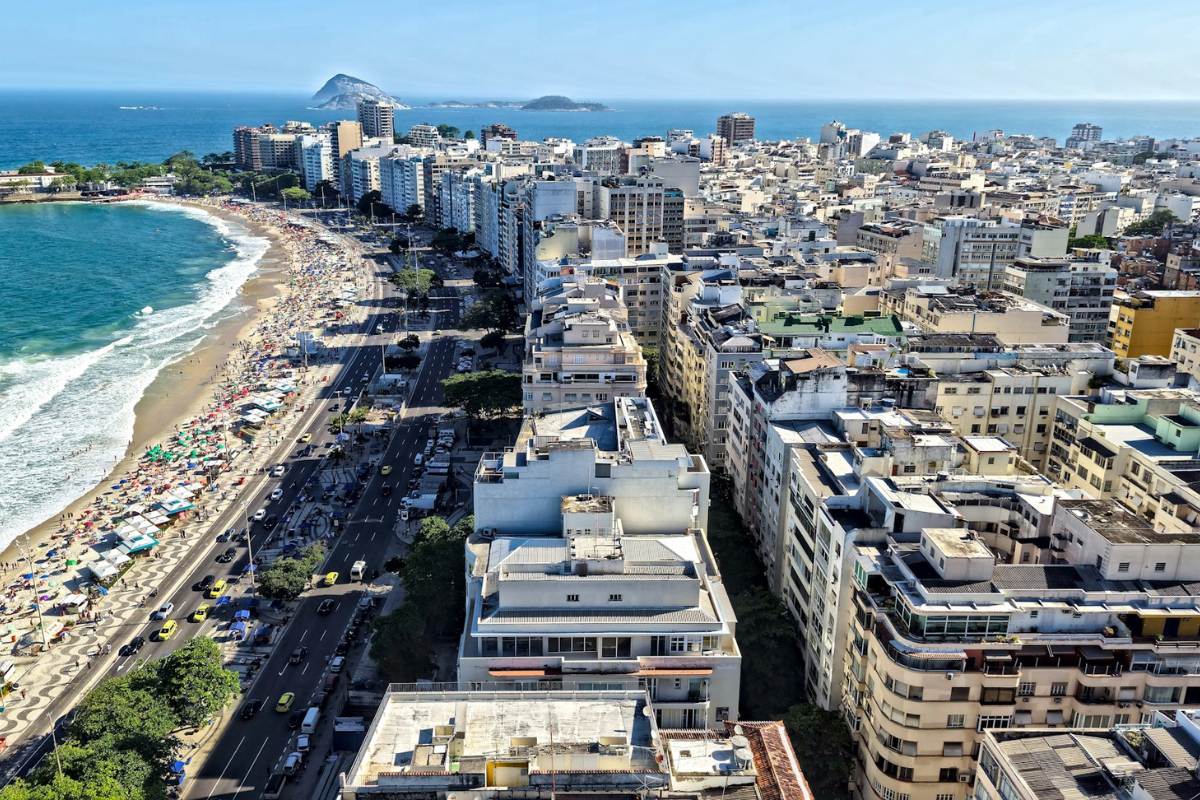
The 4-km curved beach that launched a thousand postcards. Copacabana is more democratic and more chaotic than Ipanema — older hotels, louder vendors, a wider mix of people, and an energy that never fully sleeps. The beachfront Avenida Atlântica promenade is one of the great urban walks in South America. Stay here for the atmosphere and the price point; eat and drink in Ipanema.
Santa Teresa — The Bohemian Hill
A hilly neighbourhood of cobbled streets, colonial mansions, artist studios, and some of the city's best restaurants and bars, perched above the city centre with views over the bay. Rio's creative and intellectual community has always gravitated here. Take the bondinho tram up, wander without a map, eat lunch at one of the neighbourhood restaurants, and watch the city below from a hilltop bar.
Lapa — The Night District
At the foot of the Santa Teresa hill, Lapa is Rio's most famous nightlife neighbourhood. The Arcos da Lapa (colonial aqueduct) frames a scene of samba clubs, open-air bars, and street parties that goes until dawn on weekends. It's rough around the edges and entirely authentic. Go in a group, keep valuables out of sight, and give yourself over to the samba.
Centro — The Historical City
Rio's historic downtown — colonial churches, grand 19th-century buildings, the Museu Histórico Nacional, and the Museu de Arte do Rio (MAR) — is largely a weekday business district that empties at weekends. Worth a morning for the architecture, the Real Gabinete Português de Leitura (one of the most beautiful libraries in the world), and the Selarón Steps connecting Lapa and Santa Teresa.
Barra da Tijuca — Modern Rio
West of Leblon past the Vidigal favela, Barra is a vast, car-dependent, Miami-style suburb with enormous malls and long uncrowded beaches. Not the Rio of postcards but useful to know — some good surf, and the lower prices attract Brazilian families. The Olympic Park from 2016 is here.
Santa Cruz & the North Zone
Beyond the tourist map, the working-class north of Rio is where the samba schools actually come from, where the Maracanã stadium stands, and where a more unfiltered side of the city lives. Not recommended for solo first-time visitors to explore independently, but worth knowing through a guided tour if you want to understand the city beyond the postcard.
The Essential Sights
Christ the Redeemer (Cristo Redentor)

The 38-metre Art Deco statue atop Corcovado mountain is one of the most recognisable images in the world — and seeing it in person is one of those rare experiences that actually exceeds expectation. The views from the peak extend across the entire city, the bay, and the Atlantic. Take the Corcovado rack railway from Cosme Velho (book online; it sells out). Go on a clear morning — cloud rolls in by afternoon most days. The statue is not the view; the view is the city below it.
Sugarloaf Mountain (Pão de Açúcar)
The granite monolith rising 396 metres from the water at the mouth of Guanabara Bay. Two cable car stages reach the summit; the second stage, from Morro da Urca, offers views that rival Corcovado but feel more immediate — you're suspended above the bay with the city, the beaches, and the ocean simultaneously in view. Go at sunset. Take the second-to-last cable car down to watch the city lights come on below you.
Carnival (Carnaval)
If your visit coincides with Carnival (February or early March), everything else on this list becomes secondary. Rio's Carnival is the largest party on earth by most measures — two million people on the streets of the city centre for the blocos (street parties), with the Sambadrome parade at its ceremonial heart. The Sambadrome parades — where the samba schools compete over two nights — are a dazzling, overwhelming feat of costume, choreography, and music. Get grandstand tickets early. But also go to a bloco: neighbourhood street parties with live samba bands, open to everyone, free, and often more joyful than the official events.
Tijuca National Park
The world's largest urban forest — 32,000 hectares of Atlantic rainforest within the city limits. Waterfalls, hiking trails, toucans, and the silence of dense jungle, ten minutes from Ipanema by car. The hike to the summit of Pedra da Gávea (the granite massif overlooking Leblon) is one of the great urban hikes in the world. The park also contains the Corcovado railway. Come early; trails get muddy after rain.
Selarón Steps (Escadaria Selarón)
Chilean artist Jorge Selarón spent 20 years tiling the steps connecting Lapa and Santa Teresa with colourful ceramic tiles from 60 countries, creating one of the most photographed spots in the city. Best in the morning before the crowds arrive. A short walk from Lapa's Arcos.
Maracanã Stadium
The cathedral of Brazilian football, rebuilt for the 2014 World Cup and 2016 Olympics. Even if you don't catch a match, a stadium tour is worth the visit — the history embedded in the stands (Pelé's 1,000th goal was scored here) is palpable. On match days, the atmosphere of a Rio–Flamengo derby is one of the great sporting experiences in South America.
Museu de Arte do Rio (MAR)
On the reimagined port waterfront in Centro, MAR houses rotating exhibitions of Brazilian and international contemporary art in a beautifully restored early 20th-century building. The rooftop view over the port and bay is worth the admission alone.
The Beaches
Ipanema Beach
Divided informally into sections by the numbered postos (lifeguard stations). Posto 9, near Rua Vinícius de Moraes, is the most famous stretch — historically the gathering point for artists, intellectuals, and the LGBTQ+ community. Posto 8 is family-oriented; the far southern end near Arpoador is the surf break. Pick your posto, rent a cadeira (chair) and guarda-sol (umbrella) from the beach vendors, and don't bring anything you can't afford to lose.
Copacabana Beach
More democratic, more chaotic, and more traditionally Rio than Ipanema. The full 4-km arc is best at dawn — runners, elderly couples doing tai chi, the city waking up. Later, the vendors arrive and the beach becomes a full social scene. Forte de Copacabana at the southern end is worth a visit for the history and the views.
Prainha
A small, wild beach tucked between cliffs in the far west of the city, about 45 minutes from Ipanema by car. Protected from development, no vendors, mostly surfers and locals. One of the most beautiful beaches near Rio and the least visited by tourists.
Grumari
Even further west than Prainha, Grumari is surrounded by forest reserve and feels like a different world. Almost no infrastructure. Bring everything you need. The drive along the coastal road from Barra is magnificent.
Arpoador
The rocky point between Ipanema and Copacabana where surfers ride and, at sunset, a crowd gathers on the rocks to applaud as the sun drops behind Dois Irmãos. Free, spontaneous, and one of Rio's most genuinely moving daily rituals.
What to Eat & Drink
Feijoada: Brazil's national dish — a slow-cooked black bean stew with pork in every form imaginable, served over rice with farofa (toasted cassava flour), couve (sautéed kale), and orange slices. Traditionally eaten on Saturdays. Order it at a traditional restaurant in Ipanema or Santa Teresa and plan to do nothing afterwards.
Churrasco: Brazilian barbecue, built on the rodízio system — a continuous parade of grilled meats brought to your table on skewers until you flip your token to "stop." The beef cuts, particularly picanha (rump cap), are extraordinary. Go to a proper churrascaria, not a tourist version.
Pão de Queijo: Cheese bread made from tapioca flour — chewy, warm, and addictive. Available everywhere, from padarias (bakeries) to street carts. Eat them fresh from the oven. This is breakfast.
Açaí: The Amazonian superfood berry is consumed in industrial quantities in Rio — thick, frozen, and served in bowls with granola and banana. Everywhere. Non-negotiable.
Coxinha: Deep-fried chicken croquette shaped like a teardrop. The definitive Brazilian snack. Order three.
Caipirinha: The national cocktail — cachaça (sugarcane spirit), lime, sugar, ice. Deceptively strong, completely delicious. The beach vendors make a serviceable version; a good bar makes a serious one. Never order a "caipivodka" in front of a Brazilian if you want to keep the friendship.
Fresh Coconut Water (Água de Coco): From vendors on every beach, cut open and served with a straw. Cold, sweet, essential in the heat.
Boteco Culture: Rio's neighbourhood bars — botecos — are the social infrastructure of the city. Cold beer (Brahma or Skol, always in small bottles), pastéis (fried pastry parcels), and conversation that goes on for hours. Don't rush a boteco session.
Nightlife & Music
Rio's nightlife is rooted in live music in a way that few cities can match.
Samba & Pagode: The heartbeat of the city. Lapa on weekends is the obvious starting point — bars like Rio Scenarium (three floors of antiques and live samba) are institutions. But the neighbourhood pagode rodas (informal samba circles) in Ipanema and Botafogo squares are often better. Sit down, order beer, listen.
Bossa Nova: Rio is the birthplace of bossa nova — the genre that gave the world "The Girl from Ipanema." The small bars of Ipanema and Leblon still carry its spirit. Vinicius de Moraes Bar on Rua Vinicius de Moraes is the obvious pilgrimage; less touristy spots exist if you ask locals.
Blocos: Outside of Carnival season, many neighbourhood blocos hold unofficial street samba sessions on weekends. Follow a local or check Rio's listings.
Club Scene: The club scene in Leblon, Barra, and Botafogo runs late — doors at midnight, peak at 3am. Electronic music and funk carioca coexist with more traditional scenes.
Day Trips Worth Taking
Ilha Grande
Three hours southwest of Rio by bus and ferry, Ilha Grande is a forested island with no cars, extraordinary beaches (including Lopes Mendes, rated one of the best in Brazil), and a laid-back energy entirely unlike the city. Two to three nights minimum — a day trip doesn't do it justice.
Paraty
A perfectly preserved Portuguese colonial town four hours from Rio on the Costa Verde, Paraty sits between the mountains and the sea with cobbled streets closed to traffic, a working fishing harbour, and some of the best cachaça in Brazil. Combine with Ilha Grande for a five-day coastal extension.
Petrópolis
70 km north of Rio in the Serra da Mantiqueira mountains, Petrópolis was the summer retreat of the Brazilian imperial family. The Imperial Museum (in the former palace), cathedral, and cool mountain air make it an excellent half-day escape from city heat.
Búzios
The St Tropez of Brazil — a peninsula of beaches east of Rio that became famous in the 1960s when Brigitte Bardot reportedly fell in love with it. Excellent beaches, a charming cobbled village, good seafood. Best for an overnight stay.
Safety
Rio has a deserved reputation for crime and a less deserved reputation for being uniformly dangerous. The reality is more nuanced.
The tourist zones — Ipanema, Leblon, Copacabana, Santa Teresa, Lapa, the city centre attractions — are visited by millions of people safely every year. Exercise the same awareness you would in any major city.
Practical rules:
- Use Uber, not street taxis, especially at night
- Don't walk with your phone visible on the street
- Don't wear expensive jewellery or watches
- At the beach, bring only what you need — no laptop, no camera, minimal cash
- Avoid walking through unfamiliar residential areas at night
- Stay aware in Lapa late at night — the energy is great but the area gets rougher after 2am
The funk bailes (community dances in favelas) and favela tourism more broadly should only be done with a reputable guide or local contact, never independently.
Rio rewards intelligent travel. The city's complexity is part of what makes it extraordinary — understanding it, rather than avoiding it, makes for a far richer experience.
Practical Tips
- Currency: Brazilian Real (BRL). ATMs are widely available but foreign card fees are high — bring some cash exchanged at a bureau or use a low-fee travel card.
- Language: Portuguese, not Spanish. A few words of Portuguese go an enormous distance with locals. "Obrigado/a" (thank you), "com licença" (excuse me), "tudo bem?" (all good?) — use them.
- Sun: Rio's UV index is extreme. Factor 50, reapply constantly, hat always.
- Water: Drink bottled water.
- Tipping: Not culturally mandatory but appreciated — 10% in restaurants is standard. Beach vendors and taxi drivers: round up.
- Electricity: 127V or 220V depending on the area (Rio city is mostly 127V). Bring a universal adapter.
- Time zone: Brasília Time (BRT), UTC-3. No daylight saving since 2019.
- Health: Yellow fever vaccination is recommended for travel to Brazil. Check current requirements for your nationality before departure. Dengue is present — use repellent.
Where to Stay
Ipanema: The best base for first-time visitors. Walk to the beach, excellent restaurants and bars on the doorstep, safe neighbourhood, metro access. Prices are higher than Copacabana but worth it.
Leblon: Quieter and more upscale than Ipanema, with some of the city's finest restaurants. A ten-minute walk to Ipanema beach. Good for those who want calm without sacrificing location.
Copacabana: More affordable than Ipanema. The beachfront hotels offer extraordinary value for the location. Good BTS and metro connections. Slightly rougher at the edges but entirely manageable.
Santa Teresa: For atmosphere over convenience. Boutique pousadas (guesthouses) in colonial buildings with Guanabara Bay views. A tram or Uber ride from the beach, but the neighbourhood itself is deeply rewarding.
Botafogo: An increasingly popular neighbourhood between the centre and the beaches, with excellent restaurants, a young local crowd, and good metro access. A solid mid-range option that feels genuinely local.
Final Thoughts
Rio de Janeiro requires something from you. It asks you to be present — not to look at it through a screen, not to rush between landmarks, but to actually sit in it for a while and let it work on you.
Watch the sunset from Arpoador with a cold beer. Eat feijoada on a Saturday with people who have nowhere else to be. Dance badly to samba in Lapa at 1am. Take the cable car to Sugarloaf at dusk and watch the city's lights come on below you across the bay.
The beauty of Rio is not just the scenery — extraordinary as it is. It's the city's insistence on life, its refusal to be anything other than fully, overwhelmingly itself.
Saudade starts on the flight home. Make sure you've earned it.


